













THIS WEEK IN VIOLENCE: The Stinging Tree
2026, Week 11
In Australia, there is a plant called Dendrocnide moroides, found primarily in the rainforest environments of New South Wales along the island’s eastern coast. Small and shrublike, it’s a member of the nettle family of plants, producing large, spade-shaped leaves covered in hairs, or trichomes which, when disturbed by physical touch, release a noxious cocktail of poisons into the skin, causing itching, hives and rashes, and extreme discomfort and physical pain.
What makes this plant so noteworthy is the severity and tenacity with which it inflicts its punishment upon those who make contact with it, wittingly or unwittingly. Each of the thousands of hairs that cover every millimetre of the plant's surface – leaves and stems – are structured like hypodermic needles; razor-sharp at the edge, and hollow on the inside. They respond to even the slightest physical contact, meaning even the most innocuous brush with one of its leaves will leave the poor victim punctured with hundreds of hairs.
The hairs of Dendrocnide Moroides leaves have also evolved to exhibit what are effectively structural fracture points, close to their tip, which compound that vicious response to disturbance. Once embedded in the skin, this breakage then allows for the release of those irritating chemicals, but also leaves thousands of tiny remnants of the hairs embedded within the skin, which then become virtually impossible to remove. One victim compared the sting sensation to being burned with hot acid and electrocuted at the same time.
Those who have been unfortunate enough to have made contact with the Moroides plant report experiencing excruciating pain and discomfort for weeks, sometimes even years. Symptoms can flare up again at any time, with or without cause.
The harm can persist for so long that it produces allergic reactions requiring steroid treatment. Historical reports abound of the packhorses of pioneers, forestry workers and similar individuals making unfortunate contact with the Moroides, being driven mad by the pain, leading to the animals having to be mercifully put down.
Dendrocnide Moroides is commonly referred to as Gympie-gympie, but is also well-known in Australia by its other, more explicit name: The Stinging Tree.
The United States and Israel’s military designs upon the Islamic Republic of Iran extend as far back as the Republic’s founding. Since the 1980s, successive US presidential administrations have made bellicose statements about the Iranian quote-unquote ‘regime’ and its necessary downfall. Simultaneously, prominent Israeli politicians have lobbied the US to take more decisive action against a state they perceive as an existential threat.
Understanding the origins of these two strands of enmity toward Iran helps one to understand how and why they were kept separate but proximate for so long, and how and why their sudden interweaving over these past few months has produced such a momentous cataclysm. So, let’s begin with a brief overview.
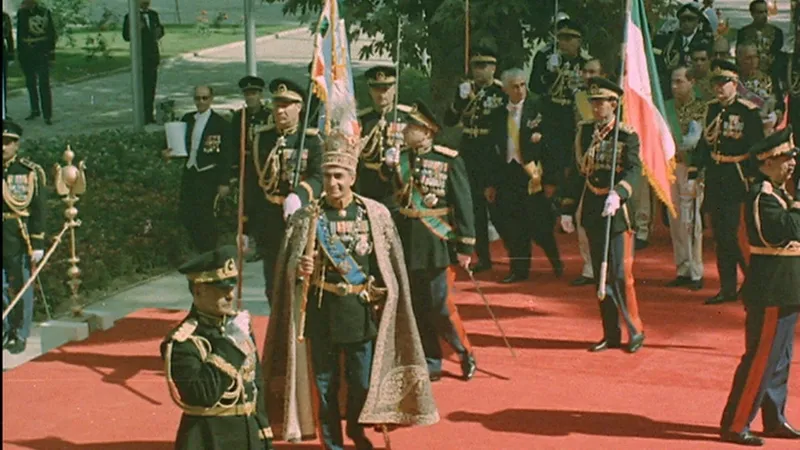
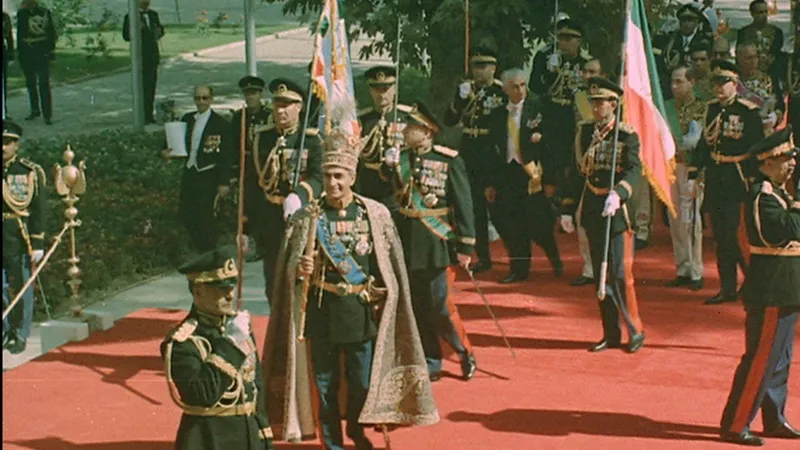
The Islamic Republic of Iran, or IRI, emerged from the popular revolution of 1979 which ousted the western-backed Shah Reza Mohammad Pahlavi. This was a revolution of numerous factions, not dissimilar to those which unfolded across numerous western countries a decade earlier in ‘68. Communists, socialists, workers, students and, yes, religious conservatives who are now referred to in the political idiom as ‘Islamists’ all participated.
Ultimately, it was the latter faction of religious conservatives who seized political control of the country following power struggles between revanchists and holdouts in the crumbling political system and the various collectives in the streets. Following the Shah’s flight into exile, the Shia cleric Ruhollah Khomeini, himself an exiled dissident living in France, was invited to return to the country.
Upon his return, Khomeini was able to unify the various resistance factions, even in spite of obvious ideological, social and cultural divergences from the more progressive and politically-radical communists and students who had played such a large role in the Shah’s ouster.
With the Islamist faction in ascendancy, a new republic, constitution and political structure was formed around this Islamic Revolution. This combined more recognisably republican tools of governance such as an executive or presidency, a judiciary, and a legislative assembly, along with apparatuses formed to explicitly defend and uphold not only the republic’s Islamic character, but also the revolution itself.
This is one reason, among others, that the IRI has both a regular armed forces, the aretsh, and also the Islamic Revolutionary Guard Corps (IRGC) or sepah. The regular military serves to defend the territorial integrity of the nation of Iran; the IRGC serves to defend the political integrity of the Iranian Revolution and the Islamic Republic it inaugurated.
And so, in spite of the obvious centrality of Shia political theology to the IRI, to reduce its political tendency to pure ‘Islamism’ is reductive. Though political opposition within the country has been marginalised and suppressed, the government nonetheless continues to express elements of that original eclectic mix of ideological drives out of which it emerged, including anti-imperialism, nationalism and self-determination.
Out of this mix, opposition to the State of Israel and its disruption of social and political arrangements in the region has become a central tenet of the IRI’s foreign policy. It should be remembered that the Islamic Revolution erupted as the final act of an historical period which had seen multiple Arab-led states declare war on Israel in both 1967 and 1973, the latter of which provoked both an international oil crisis and a years-long Palestinian insurgency in Lebanon, home to large populations of both Sunni and Shia muslims.
It should also not be forgotten that, with the exception of the OPEC oil price squeeze, Iran was virtually entirely absent from these events. Shah Pahlavi, eager to both ingratiate and associate himself with the political leadership of Europe, hewed closely to the western political line in regional disputes, supplying Israel with oil following the ‘67 war and pursuing a number of collaborative military projects which were largely kept secret.
Following the 1953 coup which restored the Pahlavi dynasty to power and greatly increased his political authority, the Shah formed a secret police which he would use to brutally kill and suppress dissidents, popularly referred to as SAVAK. This organisation was formed with the assistance of the CIA, who then trained the Shah’s secret police in covert operations, counterintelligence, surveillance, intelligence gathering and torture.
Later, they received further assistance and instruction from the Mossad, the intelligence organisation of Israel. An article published by The Jerusalem Post earlier this year described pre-revolutionary Iran as “one of the most permissive and valuable intelligence environments” for Israeli intelligence. An earlier headline of the article referred to the country as “Mossad’s playground.”
As for the United States, their interferences with Iranian politics reach back further and go deeper. In 1951, during the country’s brief but promising foray into democracy, the Iranian public elected Mohammad Mosaddegh as Prime Minister.
Overall, Mosaddegh was ideologically a somewhat middle-of-the-road conservative. Certainly, he was not well-disposed toward more radical political factions in the Iranian system like Tudeh, the Marxist-Leninist communist party which had achieved impressive influence during the preceding decades.
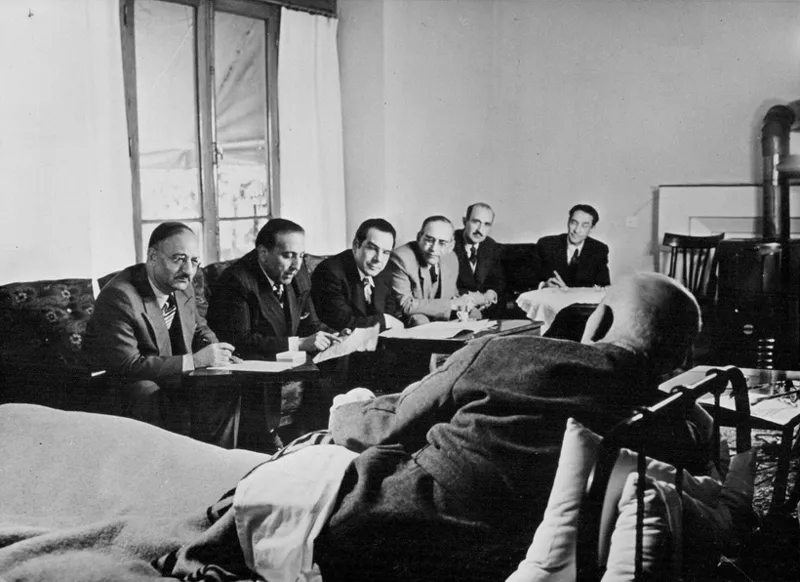
Already 69 when he assumed office, Mosaddegh was not a radical. Rather, he was a stalwart of the Iranian political system who had earned exceptional goodwill among the Iranian people and who was seen as a unifying political figure with broad enough appeal that he was admired without resort to charismatic showmanship or populist verve.
But if Mosaddegh was rote in his conservatism, he was more robust in his commitment to another ideological pillar: nationalism.
Since the early twentieth century, the British had enjoyed incredibly favourable oil concessions within Iran granted to them by one of the final rulers of the Qajar dynasty.
Operating as the Anglo-Persian Oil Company, later the Anglo-Iranian Oil Company—which, decades later, would evolve into British Petroleum, BP—the British used a suite of rhetorical, operational and financial tricks to maximise oil and revenue extraction out of the Iranian economy while minimising concessions paid to Iran.
Examples include promises of employing and training Iranian workers at drilling sites and refineries while the Brits retained control and operation of the infrastructure itself, as well as the levying of royalties to both the AIOC and the British government despite the former entity being majority owned by the latter.
In the earliest arrangement, Iran received a pitiful 16% of net profits from oil concessions while the remainder was spirited out of the country. (We would be remiss, at this point, not to mention that many of Iran’s woes in the twentieth-century can be traced to incompetent management by profligate royals.)
And so, central to Mosaddegh’s conservative nationalism was a belief that Iranians should have sovereignty over their own oil, resources and domestic political affairs, and that the British should return Iran’s oil concessions to their rightful owners.
It was, in essence, a proto-anticolonial movement which would have had particular salience following the country’s military occupation by both the USSR and Britain during World War II, instigated to maintain oil supplies to the Soviets and cut off any potential Axis invasion through Turkey.
Unfortunately, the British did not share Mosaddegh’s views, eager as they were to maintain their resource foothold in the Middle East and the fruits derived therefrom. Nor, for that matter, did the Americans, who suspected this softly-spoken sectagenarian with stomach troubles, who often conducted meetings in his pyjamas, occasionally from his bed, was in fact a radical communist revolutionary.
Revolutionary or not, the Americans were also eager to improve their own oil prospects within Iranian territory. A change of government to a more favourable partner was seen as a way of hastening developments in that area
The die had been doubly cast. Through a collaboration between British and US intelligence, Iran would be the first country in the developing world to experience a military coup courtesy of the Dulles brothers, Alan and John Foster, Director of the CIA and US Secretary of State under Dwight D. Eisenhower respectively.
Following the installation of the Eurocentric and eminently pliant Shah Mohammad Reza Pahlavi, the United States enjoyed incredibly favourable political, economic and diplomatic conditions in Iran for nearly a quarter of a century.
In many senses, the Shah represented the platonic ideal of an international partner for Washington and Westminster; one who understood clearly how he assumed the position he now held, who also understood how easily his circumstances could change, and who was too politically inept to pursue an alternate course independent of his foreign overseers.
When the Shah was eventually ousted in 1979, the compounded effects of several decades of outside interference in Iran’s domestic affairs by the US, Britain and Israel finally came to a head. Iranian society had long been wracked by paranoia regarding the roles the British and the Americans had played in the ‘53 coup.
Even the Shah himself was not immune to this condition. After fleeing Iran, he would spend several years bouncing around the globe searching for a country that would offer him refuge. The cold response he received from his erstwhile allies in Washington convinced him that his downfall had in fact been carefully orchestrated by the Americans.
As for Israel, events in the region during that historical epoch had produced a powerful antagonism between the Jewish state and the Muslim countries which surround it, one in which Iran’s predominantly Shia population had been made both victims and unwilling collaborators with Israel at the hands of yet another profligate monarch.
As a large and distinct ethnic group in a region which had otherwise been entirely captured or colonised under Sunni Arab rule, Persians often have a self-conception of themselves as set apart or even superior to their Arab neighbours.
More bourgeois and anti-Islamic sections of Persian society occasionally compound this attitude with an inferiority complex vis-a-vis European societies, to whom they view themselves as an earnest, but tragically neglected cousin.
Shah Mohammad Reza Pahlavi arguably embodied the most deleterious expression of these two combined tendencies. It is an expression which has persisted in the decades since, in pockets of the post-’79 Iranian diaspora.
Back in Iran, with the governmental, political, cultural and military structure of the Islamic Republic forming and ascending under Ruhollah Khomeini, the response to this injury would find its expression in a sense that, for decades, if not centuries, the Iranian people had been used as pawns and bit-players in the machinations of larger, oppressive powers – and a determination that this would never be allowed to happen again.
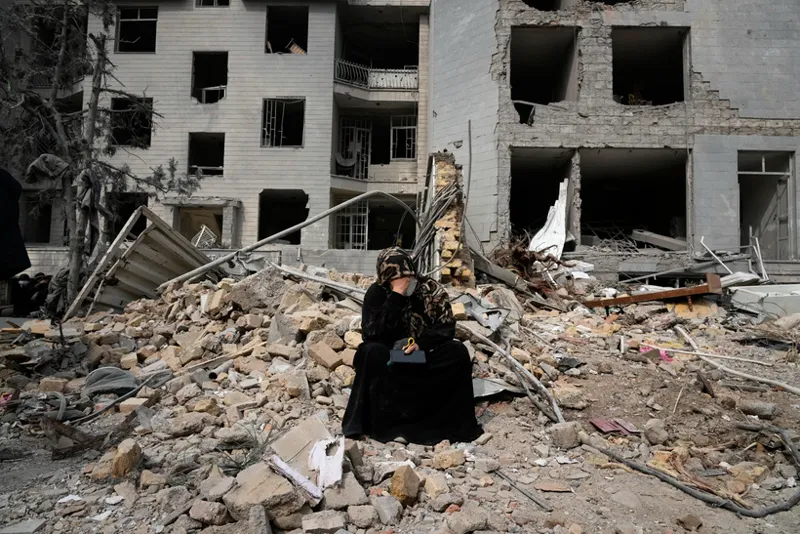
Developments in the ongoing US-Israeli war on Iran are rapid, fluid and unpredictable, and so providing a timely analysis in a weekly newsletter is a fool’s errand. Regarding analysis of developments in political, economic and military contexts, other outlets are doing outstanding work.
Former Blood Work guest Spencer Ackerman recently appeared on the American Prestige podcast providing an exceptional overview of military developments and the foolhardiness of American and Israeli strategy. The episode was previously behind a paywall, but was recently unlocked, and so it comes highly recommended.
Bloomberg’s fantastic Odd Lots podcast recently had Oil Market researcher Rory Johnston on to discuss the impact this war will have on oil prices, which also comes highly recommended.
Lastly, Robert Papes, a political scientist and long-time advisor to successive US Presidential administrations who has written extensively on the military strategy of aerial bombing and its efficacy (or inefficacy) in producing regime change and political transformations recently appeared on the Radio War Nerd podcast with John Dolan and Mark Ames. The conversation they had about the US-Israel aerial bombardment campaign and the ‘Escalation Trap’ the two aggressors are now entangling themselves in is also worth your time.
With those recommendations, hopefully for this newsletter we can provide some more general remarks on deterrence, and tendencies.
As we said up top, for a long time, the United States and Israel have had dreams of aggressions against Iran. To say that one or the other nation has been central to this push is incorrect. In both cases, it has been a steady and determined drive, just with one or the other party pushing harder or more doggedly at different times.
It should be remembered, for example, that in both the run-up and unfolding of the US and UK’s illegal war on Iraq, numerous influential politicians in Washington made clear their belief that Iraq was just the prelude. For the likes of Louisiana Senator Lindsay Graham, former Republican presidential candidate John McCain, and former counterterrorism advisor to Dick Cheney, now US ambassador to the UN, Mike Waltz, the main prize was, and always would be, Iran.
From the first Trump presidency onward, Israel has been determined to accelerate toward a decisive showdown, spurred by the Joint Comprehensive Plan of Action (JCPOA) or ‘Iran Deal’ agreed during the final years of the Obama presidency, which would have allowed Iran to procure nuclear materials for energy production in a heavily monitored and supervised fashion.
More troublingly, it also signalled a thawing of relations between Washington and Tehran following four decades of hostility between the two, which sounded out like a death knell to the Israelis, for whom regional power politics in the Middle East are, and can only ever be, zero-sum.
Indulging in the enthusiastic support and loose leash they enjoyed at the behest of both Donald Trump and Joe Biden, Israel has pushed fervently in its military endeavours and regional belligerence, knowing that it does so with the imprimatur of the United States war machine.
Since the events of October 7th, the ongoing unfolding of the Gaza genocide at the hands of the Israeli Defence Forces, further illegal incursions and annexations of Palestinian territory in the Occupied West Bank (which even Democratic politicians are now referring to using the Zionist nomenclature of Judea and Samaria), and the inertia, inaction and acquiescence with which leaders in the Americas, Europe and Middle East have responded to their actions, the Israeli government and military is now imbued with a sense of impunity and invincibility.
But there is a reason why, in spite of all of this bellicosity, and these many years of rhetorical and military buildup, the ever-imminent US war on Iran remained ever-imminent. American and Israeli lobbyists and lawmakers were loud and outspoken in their intention to attack Iran. That they did so with the apparent belief the Iranians either could not hear them or were not listening belies the contemptuous attitude they have toward the rulers of that country.
When we speak of deterrence in the modern context, we tend to think of it, reductively, through the nuclear lens. After all, nuclear weapons are believed to be the ultimate and decisive barrier to military aggression from hostile nations. And so, this can breed a misguided belief that if a nation does not possess nuclear weapons, it therefore does not have true deterrence.
In some sense, this may be correct. It is difficult not to look at what is being done to Tehran right now and not think of another nation hostile to the United States which has not (as yet) been forced to endure any of the escalating, illegal military attacks that the US and Israel have lobbed at Iran in recent years: North Korea. No other country on earth has made a greater case for the power of a nuclear arsenal to effectively halt American aggression at one’s own territorial boundaries.
It is true that without a nuclear arsenal, Iran would be, and is, incapable of deterring the direct attacks on its soil which it is now experiencing. The optimism and determination with which Tehran has periodically pursued detente with Washington since it came to America’s aid in the aftermath of 9/11 might represent one of the most earnest attempts at good-faith rapprochement in international relations of the twenty-first century. But the Islamic Republic’s failure to pursue and acquire nuclear weapons must also now be recognised as one of the most catastrophic blunders in governance of that same period.
Nevertheless, that Iran was foiled in its pursuit of a nuclear arsenal does not mean it was prevented from formulating an alternative strategy of deterrence. If Iran could not become the type of apex predator whose defence comes from the fact that no one else dares attack it, then it would instead become something else: a Stinging Tree.
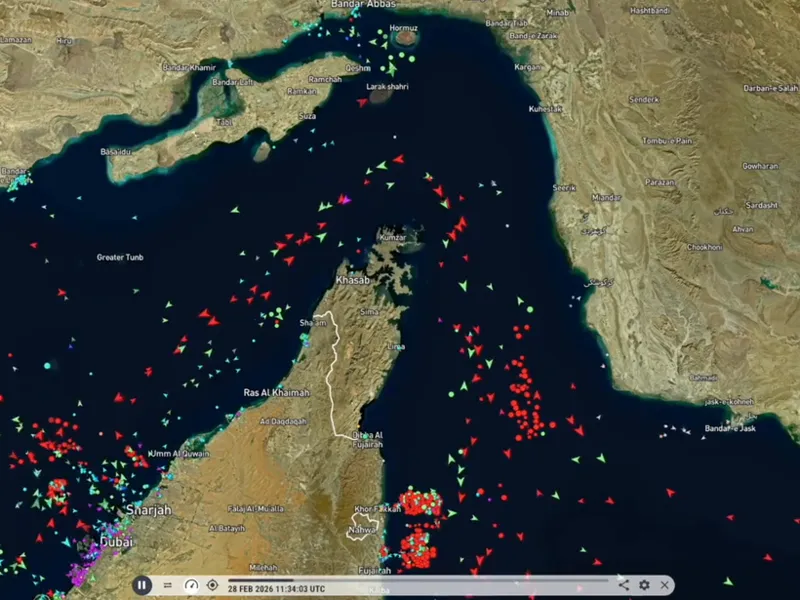
That Iran had the capacity to inflict severe economic and political harm on both the United States and its regional neighbours in the event it were attacked was not a mystery. Military strategists and intelligence analysts in Washington have war-gamed out an Iranian response to attack from the moment the Islamic Republic ratified its constitution. Potential responses rarely omitted actions like mining the Straits of Hormuz, attacking oil tankers, and firing missiles (and later drones) at key US military infrastructure in the region, as well as the fragile theme parks of finance capital it has constructed over the past few decades in Dubai, Qatar and Riad.
Every US president as far back as Ronald Reagan had been lobbied by the Israelis to attack Iran. The glorious war never materialised. Why? Because each of these presidents, whatever their cerebral shortcomings, was at least marginally smart enough to recognise that such a military adventure would be disastrous, inflicting devastating economic pain upon the US, the global economy and the fragile power arrangement it had constructed in the Middle East, long before it bore any fruits.
But with President Trump, Pete Hegseth, and Marco Rubio, Benjamin Netanyahu and the Israelis finally got the trifecta of political incompetence and ineptitude they needed to make that dream a reality: A doddering, senile, reality TV president who thinks in terms of big, spectacular deals, and is always looking for the next one which will, surely, cement his place in the history books; a virulently Islamophobic day-drunk who has sublimated his own masculine insecurities into a desire to rebuke the Geneva Convention with a rerun of the Crusades, directed by Michael Bay; and a one-time rising star of the neoconservative movement who blossomed into a perennial also-ran, so afflicted by Small Man Syndrome and aspirations to the throne that he plods around the halls of the White House in daddy’s oversized shoes.
Dreaming of doing a Maduro redux in the Middle East, these men convinced themselves they could pull off a one-and-done decapitation strike, reminiscent of Saddam in Iraq, or Gaddafi in Libya, against a country whose entire political and military apparatus is oriented not around one Supreme Leader, but an idea.
And not just any idea, but an idea that these two aggressors, specifically, were destined to one day attempt this, and that when that battle came, it would necessarily be existential. And they knew it would necessarily be existential, because those two aggressors had spent decades assuring them, in no uncertain terms, that it would be.
And so with that ill-judged decapitation strike, with Supreme Leader Ali Khamenei dead, the Islamic Republic did not collapse. Rather, it did what it had been strategically structured to do; it flattened, into a decentralised, disaggregated mosaic in which each composite part was empowered to operate with relative free rein, pursuing a simple and clear objective: To enact its own particular mode of deterrence.
With this sort of decentralised power structure, it is unlikely that the Islamic Republic and its Iranian Revolutionary Guard Corps will be organised and coordinated enough to inflict any one decisive blow against its attackers. But this also meant that theories of victory, which the US is so wedded to, could never be the plan to begin with.
If America wants to declare victory in this war, then the Iranian Revolution, in its disaggregated, multipolar form, must be defeated, in toto. By contrast, all that Iran needs to do to achieve victory, by contrast, is not lose.
And the longer this war drags out, draining American arms, materiel, money and resources, distracting it from the many other theatres in which it is involved, crippling global oil markets and by extension global economies, including and particularly those of its allies in developed nations, the more of a strategic defeat this becomes for the global military hegemon.
There is a plant in Australia known as the Stinging Tree. Just a single brush with one of its leaves can pierce the skin with thousands of tiny, needle-like hairs. Once inserted, they can linger for weeks, months and even years, causing chronic pain and suffering for its victims.
For many years, America has been led by people wise enough to heed the warnings about the Stinging Tree, and give that particular patch of the forest a wide berth. But now, Donald Trump and the US war machine, drunk on belief in their own invincibility, have strode headfirst, right into the Gympie-Gympie patch.
Not only has the Stinging Tree now released its needles into their skin, it’s grabbed onto them, and is holding on for dear life. And it’s not going to let go.
And however this ends – even if the plant eventually withers and dies – the attackers will be left with a very sharp, painful and lingering pain.
A signal to never try something as reckless as this ever again.
Deterrence.
Comments (1)
Man, this has stuck in my head all week. Excellent article