


THIS WEEK IN VIOLENCE: WEST MIAMI ANTISOCIAL CLUB
2026, Week 6
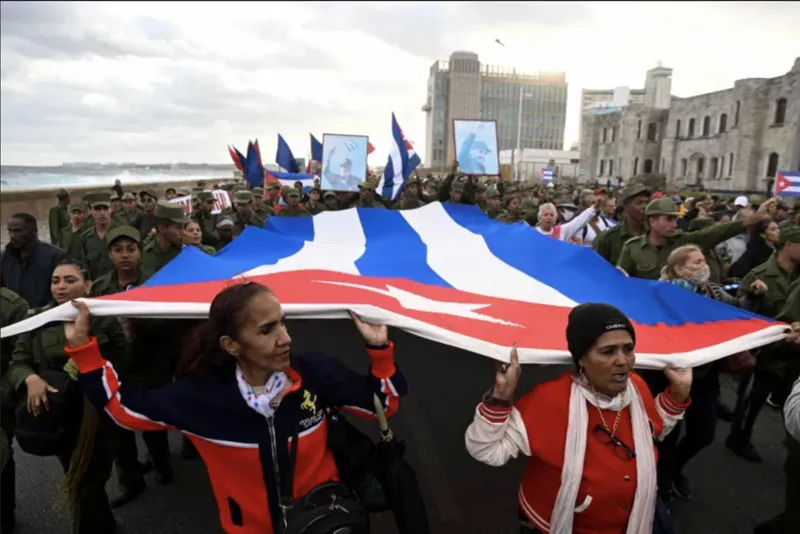
For the past few days, news has been emerging about the increasingly dire situation in Cuba. After over sixty-years of enforcing a brutal economic and diplomatic blockade on that island nation, the United States State Department, headed up by Marco Rubio, has grown impatient with waiting for Cuba’s imminent collapse, and has turned to a full-blown siege warfare strategy to starve the island into submission.
While the farcical double-speak of the rules-based international order unraveled at Davos a few weeks ago, the Cold War narratives that the United States has used to justify its ongoing hostility to Cuba endures even today, as the US’ embrace of a politics of cynical, brute force and domination becomes evermore unvarnished. As leaders in Washington switch schizophrenically between the poles of unilateral dominance and liberal narratives of a bygone era, it is important to not fall into the same trap.
For this week’s newsletter, we situate the United States’ latest wave of aggression against Cuba within the longer histories of the the twentieth and nineteenth centuries, stripping back the various narratives the western hemisphere’s imperial master has layered, like wallpaper, over its designs on Cuba over decades.
Cuba on the brink as Trump turns up the pressure: ‘There is going to be a real blockade’
The Guardian, Sunday, February 1, 2026
Reported by Ruaridh Nicoll
On Thursday, Donald Trump signed an executive order allowing extra tariffs to be slapped on any country that sells oil to [the island of Cuba]. The White House said the move was to “protect American citizens and interests” from a regime that provides “a safe haven for transnational terrorist groups, such as Hezbollah and Hamas”.
While no proof of this allegation was offered, the Trump administration has now made plain it is seeking to fell the 67-year-old communist regime. “Cuba will be failing pretty soon,” Trump said earlier in the week.
On Friday, Mexico’s president warned that Trump’s tariff’s “could trigger a far-reaching humanitarian crisis, directly affecting hospitals, food supplies and other basic services for the Cuban people”.
For Cubans, the situation is precipitous. Only one oil shipment has arrived this year – 84,900 barrels from Mexico – according to the data consultancy Kpler. Given current reserves, if no more tankers arrive, Kpler estimates Cuba will run out of fuel in the next three weeks, the Financial Times reported on Thursday.
[...]
Help does not seem to be on the way. A shipment due to arrive from Mexico has been cancelled – a “sovereign decision” according to that country’s president, Claudia Sheinbaum, despite clear pressure from Washington.
There have been no supplies from Venezuela, another traditional ally, since the US violently removed the country’s president, Nicolás Maduro, on 3 January. Other allies such as Russia and Algeria have been even less forthcoming, with shipments last October and February respectively, according to Kpler.
While China expressed “its deep concern and opposition to the United States’ actions”, promising “support and assistance”, it has traditionally bought oil from Cuba, which the Cuban government had received in aid from Venezuela.
[...]
On Wednesday, as the Cuban people prepared for more misery, the US embassy threw a party for Freedom 250, the anniversary of the US declaration of independence.
On January 1, 1959, the July 26th Movement (or M-26-7), led by Fidel Castro and his brother Raúl, succeeded in overthrowing the right-wing government of Fulgencio Batista y Salavar, better known simply as Batista.
Officially, Batista had been president of that island nation for seven years, ascending to the office on March 10, 1952. Unofficially, his rule reaches back two decades earlier. In 1933, the presidency of Gerardo Machado, an erstwhile businessman and industrialist whose rule had become increasingly despotic over the previous eight-years, unravelled amidst popular opposition to his policies and his reliance on violent oppression as a response.
In August of that year, he was forced to step down, creating a power vacuum which was concluded by the Sergeants’ Revolt of 1933, a coup d’etat which had been led by Sergeant Batista. From then until 1952, rule over the island passed between Batista and a series of puppet ‘interim’ presidents picked by the man himself.
Throughout this period, Batista cultivated a political-economic system of exploitation and corruption, turning the island into a vassal of US interests, both licit and illicit. It was a system in which wealthy landowners, self-dealing government and military officials, drug traffickers, gambling magnates and, of course, organised criminals won out, while the majority of the island and its population languished in impoverished peasant conditions, with agricultural workers enduring conditions tantamount to slavery.
This was the form of rule, and these were the conditions that the July 26th Movement sought to replace when they seized power at the beginning of 1959. By that time, both the movement and its leader had already been decisively labeled as communist by the US government and press.
Beginning in 1960, the administration of Dwight D. Eisenhower implemented an embargo on all trade with Cuba, the first step in an economic and diplomatic blockade on the island which has been steadfastly enforced, maintained and escalated by the United States ever since, with only a brief thaw occurring from 2015 to 2017.
In truth, Castro would not label himself as a Marxist-Leninist until a speech delivered in December, 1961, in which he stated that, while he had read certain communist texts in college, it was his experience of the revolution itself, and moreover the counterrevolutionary imperialist violence meted out by the United States not only against Cuba, but disempowered nations around the world, which crystallised the political ideology which would henceforth guide their government:
Could I have been called a thoroughgoing revolutionary on the first of January? No, I could have been called almost a thoroughgoing revolutionary. Could I be called a thoroughgoing revolutionary today? That would mean that I feel sati fled with what I know and, of course, I am not satisfied. Do I have any doubt about Marxism and do I feel that certain interpretations were wrong and have to be revised? No, I do not have the slightest doubt!
What occurs to me is precisely the opposite: the more experience we gain from life, the more we learn what imperialism is -- and not by word, but in the flesh and blood of our people -- the more we have to face up to that imperialism; the more we learn about imperialist policies throughout the world, in South Vietnam, in the Congo, in Algeria, in Korea, everywhere in the world; the more we dig deeper and uncover the bloody claws of imperialism, the miserable exploitation, the abuse they commit in the world, the crimes they commit against humanity, the more, in the first place, we feel sentimentally Marxist, emotionally Marxist, and the more we see and discover all the truths contained in the doctrine of Marxism.
The 1959 Cuban Revolution signaled the end of the Batista government and the comfort of a collaborationist vassal state that man had provided for over quarter-century, but as we discussed in our episode on the Monroe Doctrine, American designs upon that small island nation 90 miles south of the coast of Florida goes back further still. During the American Civil War, the southern states had visions of conquering the island and turning it into an island-sized sugar plantation.
Following the US’s victory over Spain in the War of 1898, they seized sovereignty over Cuba along with the remaining remnants of Spain’s colonial holdings. Soon thereafter, the Cuban Constitutional Assembly signed the Platt Amendment, a controversial piece of legislation whose seven provisions effectively formalised Cuba’s transformation into a US vassal state.
The timeline goes back farther still. Thomas Jefferson, 3rd President of the United States, articulated designs on Cuba as far back as 1820, and James Monroe’s infamous Doctrine emerged at a time that the United States was mulling dual desires to incorporate both Texas and Cuba into its federal arrangement, seizing the territories from the recently-independent Mexico and Spain, respectively.
The history laid out here is long and circuitous, but is important. Neither the imposition of the US blockade on Cuba over six decades ago, nor the uptick in the US’ hostility towards that country during the second Trump administration, can be disentangle from a larger historical arc in which the ever-expansionary US empire has long-viewed Cuba as its rightful possession.
Nor can it be separated from the United States’ longstanding, petulant desire to punish and degrade that island and its people for rejecting the compliant arrangement it had installed and maintained at the outset of the 20th century, denying it the effective, if not formal acquisition of that territory to which it had so long aspired.
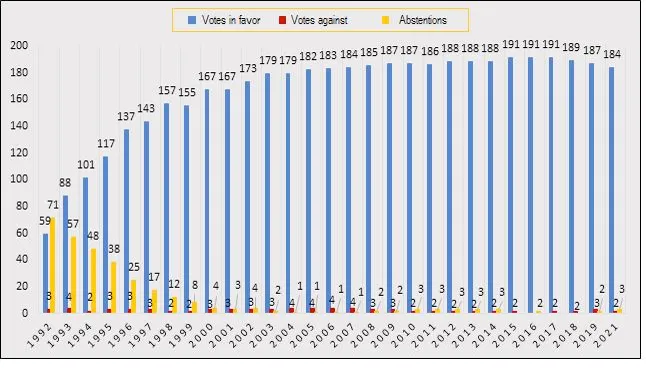
In the over half-century since it was first implemented, the credibility and legitimacy of the United States’ blockade on Cuba has descended into farce. Beginning in the 1992, the United Nations has voted on a resolution titled ‘Necessity of ending the economic, commercial and financial embargo imposed by the United States of America against Cuba’.
From an initial vote of 59 in favour, 3 opposed, and 71 abstentions, international support for ending the blockade has ballooned to such an extent that votes in favour have not gone below the triple-digits since 1995, while opposition has languished in single digits, with abstentions dwindling to that same level.
October 2025 marked the 33rd consecutive year that the international body has voted on the resolution. In that vote, 165 nations voted in favour, with seven voting against, and twelve abstaining. Throughout the resolution’s history, two nations have consistently voted in opposition: The United States and Israel.
When Donald Trump returned to the Oval Office in January 20th, 2025, his first pick for Secretary of State, Marco Rubio, was confirmed unanimously by the Senate the very same day.
Like most figures who climb the ladder of the GOP, Rubio is ideologically greasy. In the early 2010s, following the defeat of Mitt Romney in the 2012 Presidential elections, Rubio was pipped as a prospective standard-bearer for a new, ‘racially-progressive’—one might even call it woke—Republican Party.
The then-young (in senatorial terms) Cuban-American son of immigrant parents, fluent in Spanish, hailing from the reddening state of Florida, was viewed as a figure who could soften the GOP’s white, nativist image for an electorate whose demographics were trending brown and immigrant.
In the 2015 Republican primaries against Donald Trump, Rubio was one of many conservative stalwarts who sought to tar Trump’s racist, reactionary and xenophobic tenor as anathema to the Republican Party, out of step and out of time. And like most of those challengers, when Trump swept the field, dominating both the party and then the national elections, Rubio fell in line, assuming the compliant disposition which would ensure a high placement in Trump 2.0.
Why does this matter? Well, because as supple as Rubio’s true foundations might be, he holds one belief that is steadfast: a pathological hatred of the Cuban government and a concomitant desire to see it overthrown in his lifetime. One of the cornerstones of Rubio’s autobiography is how his family arrived in the United States fleeing the horrors of Cuban communism. In reality, his family immigrated in 1956 during the Batista dictatorship, over two years before Castro’s ascendancy.
One reason Rubio might be loose with this particular detail is due to the place of his upbringing. Like many actual Cuban exiles who would leave the island from 1959 onwards, Rubio’s family lived in Miami, Florida. These Cuban exiles, many of whom hold extreme right-wing and reactionary political views, has defined much of the ideological parameters of Republican politics in Miami and Florida more broadly.
Ever since Rubio entered Florida politics via the West Miami City Commission in the late ‘90s, beginning his ascent up the Republican Party ladder, he has hewed close to that same reactionary line, opposition to the Cuban government being one of the few political positions he has held consistently ever since.
This stance is exemplary of a political project broadly defined as ‘anticommunism’. Though at first glance straightforward, this designation is deceptive. For though anticommunism in the Western hemisphere may draw its legitimacy from the Red Scares which periodically swept the United States throughout its history, the anticommunist project, as history has shown, is far from strictly oppositional.
Throughout the twentieth century, moral panics about communist encroachment and Soviet advances were exploited by the United States and its right-wing allies around the globe to provide pretext for military interventions, full-blown invasions and general overseas meddling whose courses had already been predetermined by US foreign policy objectives or the interests of private capital.
Whether deployed against peasant populations and union organisers in the southern cone, anticolonial struggles on the African continent, politico-military subterfuge across continental Europe or any other number of conflagrations that the US pursued under the aegis of the Cold War, anticommunism was rarely cited to oppose an actual, existing communist menace—less still one which posed a genuine threat to the capitalist bloc’s military hegemon—as it was deployed to conjure the spectre of an ontologically evil tyranny needing to be swiftly, assertively and violently put down to protect and secure a global interest which happened to be coterminous with those particular to big business and the US foreign policy blob.
Amidst this tentative phase away from the convenient fiction of the rules-based international order which has ordered and organised global affairs under the unilateral hegemony of the United States since the 1990s, we are now witnessing the world’s superpower shedding the veneer of humanitarian intervention and patrician uplift which had once been used to legitimise violent military actions against weaker nations.
As we have already seen with Venezuela, and are now seeing with relation to both Cuba and Iran, the United States, under the helmsmanship of Donald Trump, Stephen Miller, Pete Hegseth, Marco Rubio and numerous other cronies, is no longer concerned with justifying its imperial aggressions with recourse to some soothing liberal lullaby. The melodies have been stripped away, and all that remains is the beating of the drum. “This is an arrangement determined by force, power, and will. Decades of diplomacy have demonstrated that you neither can, nor will oppose us. And so, we are no longer asking.”
It is this backdrop which then makes Cuba such a peculiar and depressing case study. As predicted, it is now becoming clear that one rationale behind Trump’s attack on Venezuela and kidnapping of Maduro was a desire not simply to seize control of that country’s oil production, but to disrupt the flow of Venezuelan oil to Cuba.
With the spectacular imagery of US aircraft bombing targets across Venezuela, and Maduro being renditioned out of the country under cover of night, Trump and Hegseth appear to have got the main thing they came for: Trump, a prospective ‘deal’ over US oil extraction rights in the country which even the corporations for whom the deed was done believe is a non-starter; for Hegseth, a highlight reel of explosions and carnage which he can use to buttress his own fragile, embattled masculinity—an embattlement which, naturally, he believes to be America’s. And he’s right, though not for the reasons he thinks.
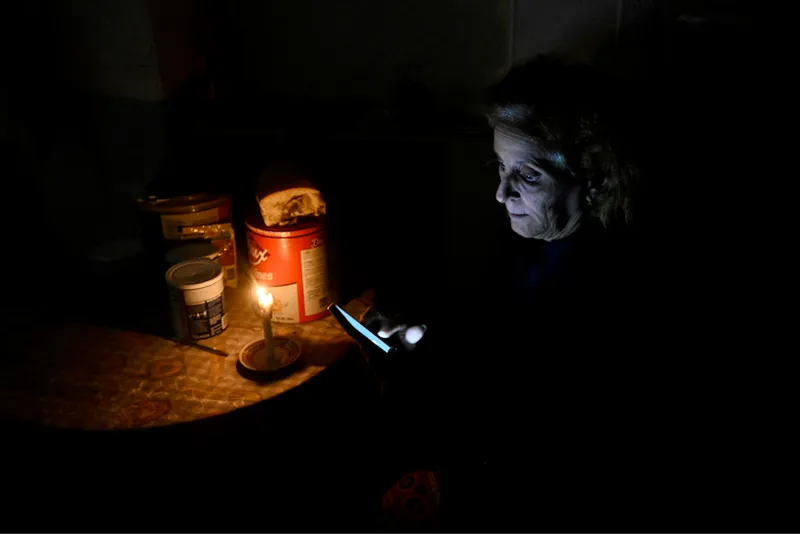
With those two appetites sated, and with Miller preoccupied with his dreams of an American version of Pinochet’s DINA in Minneapolis, it becomes Rubio’s turn to feast. And so now the Venezuelan adventure becomes a fulcrum around which another interference can turn. With the island of Cuba now fully blockaded by the United States, denied even access to fuel, it is possible that the entire island could soon go dark.
With the tightening of the United States' blockade on the island, cutting off of supplies from Venezuela, and Mexico's recent 'sovereign' decision to send no oil to the island, it is alleged that Cuba has not received any oil shipments since early December. If recent reporting by the Financial Times is accurate then at the time this newsletter is published, Cuba could have as few as five days’ worth of fuel remaining for the entire island.
After over 60 years of blockading an island nation that dared to defeat and reject it, and many decades more of imperial meddling and interference, the United States has grown tired of maintaining the pretense which it has used to justify the ever-tightening screws it has put to the Cuban government. The fundamental, pathological dishonesty which resides at the heart of anticommunism is now finding perhaps its purest expression, inflicted against one of its paradigmatic adversaries.
“Communism is a despotic and tyrannical system which inflicts starvation and comprehensive human misery. Those who suffer under it must, therefore, be liberated. And we will do this. By inflicting comprehensive human misery—and starving you.”
Comments (1)
Inshallah these evil clowns will be hanging from street lights in my lifetime 🙏