



THIS WEEK IN VIOLENCE: OLD WORLD AFK, NEW WORLD BRB
In December 2019, shortly after the UK General Election, I was sat on a Northern Line underground train to Morden with a dear friend – the son of a firefighter, and a worker for the NHS. As we contemplated the defeat we had both just experienced, and what this portended for the future, I turned to my friend, and recited that well-worn line from the Prison Notebooks.
“That’s all there is to it man. The old world is dying, and a new world is struggling to be born. In this interregnum, a great variety of morbid symptoms appear.”
At that moment, an older woman leaned over and said, “I’m sorry, may I ask where that quote is from?”
“Antonio Gramsci.”
“Thank you.”
You’ve no doubt heard the line before. Most people know it from Slavoj Žižek, who gave the final clause a pithier translation: “Now is the time of monsters.”
I never really liked that translation. Maybe because of how it detaches and embodies the agents of our maladies within an external actor, presenting our despairing condition as something which arrives from outside, rather than the, in our opinion, more appropriate depiction of a diseased body becoming evermore engulfed by the malignant, metastasising, rotting cancer which always lay latent within the cells of its organs. At times such as these, it is perhaps a comfort to imagine the cause of our discontent as Cthulhu, Godzilla, or some other destructive entity who arrives from without, rather than be confronted by the knowledge that so much of our condition is, rather, that which was always inside engulfing what healthy tissue remains.
And yet, on a week like this, I concede that Žižek’s translation has its uses. Mainly in how it reminds us of something which is perhaps empirically true, in a cosmic sense, to wit:
Monsters are real.
Special address by Mark Carney, Prime Minister of Canada
World Economic Forum, Davos, Switzerland
January 20, 2026
In 1978, the Czech dissident Václav Havel, later president, wrote an essay called The Power of the Powerless, and in it, he asked a simple question: how did the communist system sustain itself?
And his answer began with a greengrocer.
Every morning, this shopkeeper places a sign in his window: ‘Workers of the world unite’. He doesn't believe it, no-one does, but he places a sign anyway to avoid trouble, to signal compliance, to get along. And because every shopkeeper on every street does the same, the system [persists] – not through violence alone, but through the participation of ordinary people in rituals they privately know to be false.
Havel called this “living within a lie”.
The system's power comes not from its truth, but from everyone's willingness to perform as if it were true, and its fragility comes from the same source. When even one person stops performing, when the greengrocer removes his sign, the illusion begins to crack. Friends, it is time for companies and countries to take their signs down.
For decades, countries like Canada prospered under what we called the rules-based international order. We joined its institutions, we praised its principles, we benefited from its predictability. And because of that, we could pursue values-based foreign policies under its protection.
We knew the story of the international rules-based order was partially false[,] that the strongest would exempt themselves when convenient, that trade rules were enforced asymmetrically. And we knew that international law applied with varying rigour depending on the identity of the accused or the victim.
This fiction was useful, and American hegemony, in particular, helped provide public goods, open sea lanes, a stable financial system, collective security and support for frameworks for resolving disputes.
So, we placed the sign in the window. We participated in the rituals, and we largely avoided calling out the gaps between rhetoric and reality.
This bargain no longer works. Let me be direct. We are in the midst of a rupture, not a transition.
It seems like only yesterday that people were talking about the decline of Davos. The Swiss resort town where political bigwigs and business titans meet annually to hobnob and strategise about free-market supremacy appeared to be suffering from its own success. The market had put politics in a chokehold, affairs had become truly global, and so capital’s pioneers, as pioneers are wont to do, were casting their eyes to finance’s new frontiers.
For several years, political dignitaries and financial heavyweights had been reorienting around the Middle East as the new locus of both financial and political exchange and mediation; when not focused on hard-selling the US’s deeply cynical Abraham Accords to normalise relations between Israel and the Gulf States and submit Palestinian statehood to a slow, silent death, foreign policy chatter was becoming increasingly focused on the coming confrontation between America and China; and congregants of the broader MAGA church, like Marco Rubio and Pete Hegseth, were more openly expressing their disdain for European affairs.
Only suddenly, reports of Davos’s death, much like those of the songwriter of Maxwell’s Silver Hammer once did, appear to have been greatly exaggerated – for now at least, and not for the reasons its organisers and European attendees would have liked. The good news: Europe is firmly back on the table. The bad news: There’s a portion of beef-dripping chips next to it, and the American contingent is perusing the Wine List.
Following the ‘rip-roaring successes’ of his hit & run triple-bunker buster bombings of Iran’s alleged nuclear facilities in Fordow, Natanz and Isfahan last year, and now the hostage-taking of Venezuela’s Head of State under the aegis of combatting so-called ‘narco-terrorism’ in the Western Hemisphere, DJT is now eyeing up his next big foreign policy ‘win’. No doubt with ample encouragement from his inner circle, the US President has circled back around on an older fixation, which elicited chuckles when he first raised it in 2019 during his first term.
Sadly, after a week which has seen Trump launching broadsides at US allies in NATO, making veiled threats to numerous foreign leaders and posting screenshots of private Signal chats on his Truth Social platform, that joke doesn’t seem so funny anymore. Now, more than a decade since he first descended the golden escalator in Trump Tower to announce his first presidential run, leaders from across the Global North are scrambling to turn in their homework on adjusting to a world helmed by a man described as a “sociopath” by Jeffrey Epstein.
In the league rankings of putting on a performance of defiance, Canada’s recently-elected Prime Minister Mark Carney ranks pretty high. During that country’s elections early last year, the Liberal Party candidate rode popular outrage against Trump’s chaotic, recently-unveiled tariff regime to position himself as a maple-clad resister to Trump’s Yankee bluster.
One memorable campaign ad depicted Carney dressed in ice hockey gear by an ice rink, discussing Canadian trivia and national pride with comedian Mike Myers. Carney’s combative stance rallied him to victory against his main opponent, Pierre Polievre, a Canuck Trump Clone whose affinity for the US President had quickly transformed from an asset to an anchor in the prevailing political climate. (The name of that Carney ad, which became a sort of unofficial slogan for his campaign, was borrowed from a slang for the defensive posture hockey players take when preparing to go up against an opponent: ‘Elbows Up, Canada’)
Upon assuming office, most accounts indicate that Carney, who succeeded fellow Liberal Justin Trudeau and who served as Governor of the Bank of England from 2013 to 2020, has governed pretty much the way you’d expect a guy taking over from Justin Trudeau and who helmed the Bank of England through the apex of Austerity and through the tumultuous fallout of the Brexit vote would, deploying a familiar blend of dull technocracy, state-shrinking austerity measures and pandering to right-wing talking points.
Nonetheless, throughout his career Carney has proven himself to be a reliable team player and a star player for establishment centrism who knows how to pick his moments. His decision to use his speech at Davos to signal the end of the so-called ‘Rules-Based International Order’ and call for so-called ‘middle powers’ to abandon current visions of a ‘world of fortresses’ in favour of international diversification based on ‘genuine cooperation’ was a prime example. That his speech was delivered 24-hours before the inevitable marquee speech from Trump on Wednesday meant it was guaranteed both to generate headlines and elicit a by-name response from the big man himself.
All of that being said, Carney’s speech remains worth reading. Theatrics aside, it’s a striking speech both rhetorically and in the substance of the message being conveyed. Moreover, it makes a number of startling admissions about just what this ‘Rules-Based International Order’ has actually been about all this time. Perhaps a more appropriate four-word title for it would be, ‘This thing of ours’.
In particular, Carney’s admissions, as you heard at the opening of this section, about the RBIO being something we all knew was a useful fiction, and a false deformation of international law which enabled those aforementioned ‘intermediate powers’ to pursue foreign policy initiatives and enjoy financial stability under the aegis of US political, economic and military hegemony, was a heck of a use of the Royal We. One can’t help but be reminded of Tonto’s famous retort to The Lone Ranger: “What do you mean, ‘we’, white man?”
Understandably, much has been made of the import of the speech. Some have even suggested that Carney’s and Trump’s two speeches represent the one-two punch of the end of the post-WWII liberal international order. It’s a sign of the times that this does not feel like hyperbole. According to the New York Times’ Canada Bureau Chief, Carney took office in early 2025 already clear-eyed that this old order was on its way out and the nascent one was waiting to be forged.
Progressives and the left should be neither triumphalist nor optimistic about the promise of this new political realism, however, and remember who the herald of this change is. Carney is a creature of liberal centrism and finance capital, and his speech makes clear that he continues to speak from that vantage point.
His regret was less the asymmetric and differential distribution of power and privilege which American hegemony conveyed, but that this arrangement was no longer insured. He spoke to the Davos crowd in the Davos language of risk management and collective investment. And the hierarchy he used to anchor his speech – one in which ‘middle powers’ must convene and assert their power collectively to avoid being engulfed by the ‘great powers’ – conspicuously neglected the third implied power in that hierarchy, whose continued position was perhaps clarified by another line in the speech:
“The middle powers must act together, because if we're not at the table, we're on the menu.”
After a decade of naive optimism, Carney and others are beginning to accept that the liberal order’s respectable veneer has been conclusively smashed, and that Trump has laid bare the barbarism which lies behind it: piracy, plunder and imperial power plays. But don’t let his asides about collectivism and cooperation fool you: The vision is of a coalition of intermediate powers that can both avert the risk of being swallowed whole by the US or Russia. But the hope is also that, collectively, they will also have big enough teeth to continue taking bites out of lesser powers.
For now, people are basking in the glow of Carney’s warm rhetoric about the ‘end of fortresses’ and ‘genuine cooperation’. In time, the limits of that promise will be made known – and the fortress walls will spring back up. Carney wasn’t declaring the end of the old hierarchy. He was auditioning for the top spot in the one now cresting over the horizon.
Netanyahu to join Trump ‘board of peace’ despite previous objections
The Guardian
Wednesday, January 21, 2026
Reported by Lorenzo Tondo
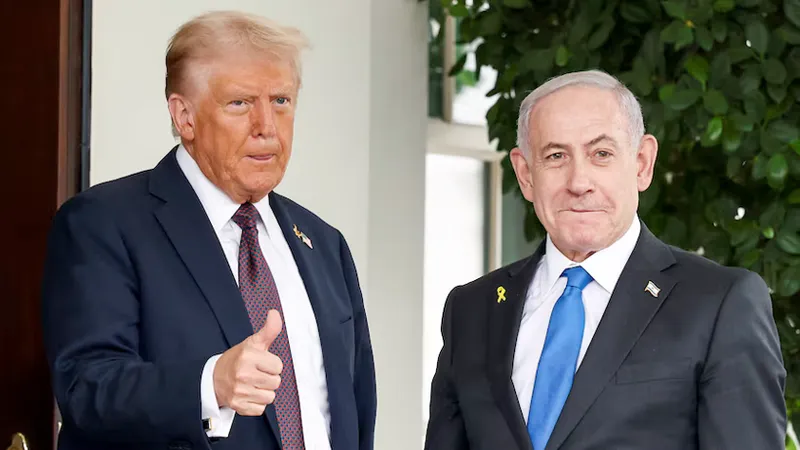
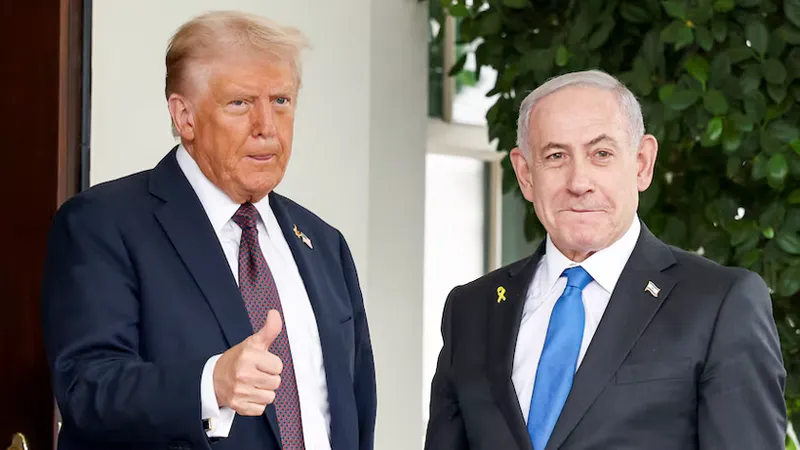
Israel’s prime minister, Benjamin Netanyahu, said on Wednesday that he had agreed to join a US-backed “board of peace” proposed by Donald Trump, despite his office having earlier criticised the composition of its executive committee.
The body, chaired by the US president, was initially presented as a limited forum of world leaders tasked with overseeing a ceasefire in Gaza. More recently, however, the initiative appears to have expanded well beyond that remit, with the Trump camp extending invitations to dozens of countries and suggesting the board could evolve into a vehicle for brokering conflicts far beyond the Middle East.
Diplomats have warned that the board could harm the work of the UN.
When asked by a reporter on Tuesday if the board should replace the UN, Trump said: “It might.”
According to that aforementioned Canada Bureau Chief, Mark Carney took office “already in the fifth state of grief: acceptance.” Certainly, it is a positive sign that his milieu are coming to terms with Trump’s dismantling of the post-war liberal order. Unfortunately, on one matter in which they played a much more active (or passive) role, western leaders remain permanently in the first stage: denial.
Gaza.
In the immediate aftermath of October 7th, I and many others found ourselves immediately shifting to pre-emptive grieving, because we knew that what would follow would be a cataclysm for the Palestinian people. Meanwhile, political figures across North America and Europe set about pre-emptively legitimising any and all actions Israel planned to unleash upon Gaza.
Recently-elected British Prime Minister Keir Starmer, long touted by the press as a formidable human rights lawyer, assertively declared on LBC radio that Israel had the right to cut off food, electricity and water from the Gaza Strip. The dark triumvirate of the Democratic administration – Joe Biden, Anthony Blinken and Jake Sullivan – offered various bromides about balance and proportionality at the dais while working behind the scenes to ensure Israel was both armed to the teeth and completely unimpeded as it carried out its onslaught.
And in a crowning irony, German politicians touted their country’s legacy as culprits of the most murderous genocide in recorded history to assert both their authority over the ontology of genocide as well as their moral duty to assist Israel in the commission of its own systematic slaughter.
But that’s just the backdrop. The real, substantive diplomatic drama lay in western leaders’ ceaseless, deliberate attempts to delegitimise and discredit the international bodies who had been founded ostensibly to adjudicate over precisely the kinds of horrors being livestreamed out of Gaza but which now posed and existential threat to Israel’s true function of operating as the US’s rabid attack dog in the Middle East, permanently destabilising the region, frustrating prospects of regional unity among the Gulf States and keeping the resource-rich region in a state of permanent disarray which could be exploited for favourable export, extraction and security arrangements.
Looking at the carnage that has now been unleashed against Gaza, Lebanon, Syria and Iran with nary a peep of dissent from the western institutions, it is clear that, as Lloyd Austin warned in the early months of the genocide, there was no theory of victory; only an ironclad certainly that Israel not be allowed nor even seen to have lost.
And so when the international bodies and NGOs who for years had been revered as paragons of the western liberal paradigm began to bluntly and dispassionately name the thing we could all see unfolding in front of us, the only acceptable response from their erstwhile champions was to smear and discredit them. Amnesty International, Human Rights Watch, B’Tselem, Oxfam, Doctors Without Borders – all were corrupt, biased, antisemitic or, of course, infiltrated by Hamas.
Of course, it could be no different when various organs of the United Nations and the International Court of Justice raised similar alarms. The same heads of government, diplomats and dignitaries who had leaned on the inviolability of international law in the case of Russia’s invasion of Ukraine now turned, on a dime, to discrediting the very institutions founded to defend and uphold that law on the international stage, often on spurious charges hurled out by the very state whose open, brazen, barbarous conduct was in question.
And so it was that countries including Britain, Germany, Italy, the Netherlands, Switzerland, Finland, the United States, Australia, Canada, Estonia, Japan, Austria and Romania cut funding to the UN Relief and Works Agency in Gaza – an organisation with around 30,000 employees – on the basis of allegations that a dozen of its employees had been connected to the October 7th attacks. This decision to effectively assist Israel in its blockade and siege of Gaza (later reversed by some countries) was accompanied by broader attacks on the legitimacy of the UN, as well as smears against the ICJ when that body began investigating South Africa’s Application of the Convention on the Prevention and Punishment of the Crime of Genocide.
One thing I always feel compelled to stress, when writing about our political leaders and their assistants in the halls of powers, is the importance of remembering that these are not stupid, ignorant or incompetent people. They are, in fact, highly educated, extremely well-informed and immensely competent.
None of the politicians who piled on to assist Israel in its assault on the UN and the courts in service of perpetuating its genocidal ambitions were under any illusions as to what they were signing on to, the reasons they were doing so, and the ultimate carnage their collaboration would obtain.
As Mark Carney acknowledged, just the other day, all understood that their erstwhile pontifications on International Law were little more than paeans to a convenient fiction which allowed them to further their own individual and collective interests, and that these hallowed institutions and values would all be readily cast aside in favour of brute force, power and ‘Might Makes Right’ the moment they became inconvenient. And in the case of Gaza, decades of built-up values and principles about humanitarianism, proportionality, the innocence of non-combatants, the sanctity of human life, and so much more, became precisely that: Inconvenient.
And so these highly educated, extremely well-informed and immensely competent people pooled their many talents to tear down the very institutions upon which they had built their own credibility and legitimacy – rhetorically at first, in actuality wherever possible. Again, the ramifications for these actions were well known and understood. As early as 2024, US diplomats and aid workers in the Global South were warning that the west’s credibility in places like Subsaharan Africa had been shattered to glass by the disparity between their tone, rhetoric and actions with regard to Russia’s illegal invasion of Ukraine, and their passive acceptance and even active collaboration with Israel’s ongoing massacre of a captive civilian population in Gaza.
And so no one should be surprised, now, with Joe Biden and Kamala Harris out of the White House – in part due to disgust with their own complicity in Israel’s crimes among a sizeable portion of their own voter base, which their party still refuses to acknowledge – that their hard work led us here: To a place where the most flagrantly corrupt, amoral and sociopathic individual their own country was capable of producing is working to replace the bodies they helped to marginalise with his own pay-to-play Board of Peace mafia racket, in which the perpetrator of the Palestinian genocide will now be invited to dictate the terms of their further abasement and slaughter.
If you’ve ever watched footage of some kind of catastrophic structural failure – a bridge caving in, an apartment coming down, and so on – you will be familiar with that specific moment, after the initial signs of danger can be identified, but before the collapse itself, when the certainty of the fall itself becomes clear. That is the moment we are living in. You are here.
Amidst this terrifying uncertainty, you may have heard the following aphorism: You’ll miss the liberal international order when it’s gone.
If this is true, then it is unfortunate that this message failed to reach the leaders who tasked themselves with the maintenance of that order. Its body now lies in the killing fields of Gaza, buried beneath the corpses of the men, women and children it refused to acknowledge, let alone save.
Here’s another aphorism for you:
You break it, you bought it.