







THIS WEEK IN VIOLENCE – Hit & Run
Hi all, Gregk here with another TWIV for you.
Firstly, I hope you enjoyed this week’s episode. The decision to cover Attica actually came at a whim. It was only while re-reading for a different topic that I realised it was a story I’d heard referenced so much but never properly looked into. When I did, what I found shocked me beyond what I’d even expected. And so, while it was an uncomfortable story to both read and talk about, I’m hoping it will form a useful foundation for other episodes that connect to it over the coming months.
This week, I’ve got a trio of recent articles about contemporary wars – one recently ended and its still-unfolding aftermath, one continuing to evolve as it enters its fourth year, and one tentative, but still thrumming with determinacy as those endeavours of the United States war machine so often do.
While Donald Trump and Pete Hegseth’s desired war on Venezuela remains nascent, the manner in which the Department of Defense/War has conducted itself with regards to the South American state is resonant with the way we’ve seen other militarised states conduct hostilities elsewhere in the world, so it’s worth examining for a case study in how the (tacitly approved) rogue actions of a smaller state with aspirations of being a franchisee regional superpower then feeds back to legitimise the same behaviours from its larger backer.
And to close out, I’ve got some thoughts that crossed my mind while rewatching The Zone of Interest, some of which will feature prominently in our next episode dropping this Tuesday: They Kiss Horses, Don’t They?
So, check that out if you want a little primer on what’s to come.
New York Times – For Shooting Suspect, a Long Path of Conflict from Afghanistan to America
27 November 2025
Campbell Robertson, Hamed Aleaziz & Jack Healy
Mr. Lakanwal was raised in a village in the province of Khost in southeastern Afghanistan, growing up in a country at war. At some point, he joined a Zero Unit, according to a person briefed on the investigation and an Afghan intelligence officer familiar with the matter. Zero Units, which were formally part of the Afghan intelligence service but operated outside the usual chain of command, were largely recruited, trained, equipped and overseen by the C.I.A., according to Human Rights Watch.
These units specialized in night raids and clandestine missions; Taliban officials and human rights groups described them as “death squads.” Human Rights Watch said it had documented several instances in which the units were responsible for “extrajudicial executions and enforced disappearances, indiscriminate airstrikes, attacks on medical facilities, and other violations of international humanitarian law.” The C.I.A. has denied such allegations of brutality, saying they were the result of Taliban propaganda.
Shout out to the listener who drew my attention to this quickly-developing story with the remark, “Getting a lot of Blood Work vibes from this.” They were correct.
For those unfamiliar with the story, two National Guard soldiers, patrolling D.C. as part of Donald Trump’s urban security theatre performance against allegedly ‘crime-ridden’ Democrat-run cities, were shot on the afternoon of November 28th. One of the victims, 20-year-old Sarah Beckstrom, has now succumbed to her injuries while the other, 24-year-old Andrew Wolfe, remains in critical condition.
The shooter has now been identified as an Afghan national who was evacuated out of Afghanistan and granted asylum in the United States as part of Operation Allies Welcome during the US drawdown and withdrawal from Afghanistan at the end of its (failed) twenty-year occupation. The war ends, but the battles continue.
While the story does indeed echo the long tail of America’s collaborations with the ISI and funding, training and arming of fundamentalist militants during the Soviet occupation of Afghanistan, I’m reticent to think of it as pure ‘blowback’ in the same sense as US-backed al-Qaeda militants returning the payload to sender in the form of the 9/11 attacks.
Rather, reading about Rahmanullah Lakanwal’s history working as a deputy commander in a unit operating in the ever-expanding grey zone between the United States’ official military actions and its clandestine activities coordinated by the CIA, I’m more inclined to read it as a commentary on the selective legibility on American exceptionalism, and the selective legibility of the vulnerability of the human psyche between America’s homegrown soldiers and the desperate locals it makes use of in its endeavours.
If the details emerging about Rahmahnullah Lakanwal prove to be true, then it seems likely that he was afflicted by the same trauma experienced by many US veterans of America’s military misadventures in Afghanistan, Iraq and other foreign theatres – originating from perpetration of many of the same deeds.
Of course, it would be irresponsible to psychoanalyse Lakanwal from a far, or to attempt to infer a specific political or ideological motive behind the attack. One can’t help but wonder, however, how it might feel to have lived from the age of five in a country under occupation of a foreign superpower; to have given one’s own life to serve that cause (in whatever unsavoury circumstances); and to have managed to escape almost certain death in that superpower’s hasty retreat.
And all of this, only to learn that the superpower you served is now wracked with a xenophobic fervour in which you, and so many others, are perceived and treated as an invasive, hostile foreign body to be removed.
If I can say one thing for sure, it is that I doubt Rahmahnullah will be fortunate to experience the same rogue-to-riches rehabilitation story as former US Navy Seal Eddie Gallagher who, having been convicted and then pardoned by Trump for war crimes committed in Afghanistan, now makes a comfortable living as part of the lucrative ex-Navy Seal podcast circuit.
All of it patterns.
Reuters – Exclusive: US to launch new phase of Venezuela operations, sources say
23 November 2025
Phil Stewart & Idrees Ali
The United States plans on Monday to designate the Cartel de los Soles a foreign terrorist organization for its alleged role in importing illegal drugs into the United States, officials said. The Trump administration has accused Maduro of leading Cartel de los Soles, which he denies.
U.S. Defense Secretary Pete Hegseth said last week that the terrorist designation "brings a whole bunch of new options to the United States."
Trump has said the upcoming designation would allow the United States to strike Maduro's assets and infrastructure in Venezuela, but he also has indicated a willingness to potentially pursue talks in hopes of a diplomatic solution.
Anyone old enough to have lived through 9/11 and its aftermath probably feels like the Global War on Terror has begun to sound a little tired. Two decades of heavily-armed US military soldiers and private mercenaries securing and patrolling villages in the Levant and Afghanistan don’t seem to have produced many tangible results – at least, not for the locals. (Patterns.)
With America’s final departure from Afghanistan in 2021 under Joe Biden – 8 years after their beleaguered exit from Iraq, whose hollowed state would then serve as the staging ground for a little outfit called Islamic State – it seemed as though, at least in its ‘classical’ form, the GWoT was finally coming to a close. Resource extraction efforts in Syria, partnerships with the House of Saud vis-a-vis the Houthis in Yemen, and perennial ‘security’ projects concerning Israel and its neighbours notwithstanding, perhaps the sun was finally setting on the modern era of counterinsurgency.
Unfortunately, the decline of one mode of warfare merely raises the question of what comes next. As it stands, things currently feel a bit like a wedding: Something old, something new, something borrowed, all of it blue, in the sense of obscenity.
For the past two years, Israel’s genocide of the Palestinian people in Gaza merged the semiotics of a modern GWoT counterinsurgency with tactics more akin historical wars of annihilation in their variegated forms (religious; civilisational; siege; total) That’s the old and borrowed.
At the same time, Israel’s increasing use of ‘bomb now, promise explanations later, then hypernormalise’ strategy when obliterating schools, hospitals, refugee tents and aid workers (and even other non-hostile countries) is already beginning to bear fruit. Though they can’t claim full credit for its instantiation – that honour, again, goes to the US, particularly Barack Obama and his campaign of ‘surgical’ drone strikes on weddings – Israel has certainly done its part in consecrating the ‘Hit & Run’ as the new hottest mode of warfare.
As I expressed in Part Two of our History of the Car Bomb, forms of violence rarely dwell in one locale once they’ve moved from the potential to the actual. Now, the US is eagerly replicating Israel’s MO in its recent (illegal, murderous) bombings of ‘drug boats’ (more likely fishing boats) off the coast of Venezuela.
For anyone familiar with the hand-in-glove relationship between the American and Israeli military security apparatuses, the shell game the US has been playing vis-a-vis Venezuela is nakedly transparent: bomb and provoke the hostile state (read: intended victim) in the hopes of provoking some type of reaction (read: defence), then use this as the pretext and casus belli to justify the war you always wanted and had already planned to do.
Many asked what would happen if the base thuggery, criminality and cynical brute-forcing that midwifed and legitimated Iraq, Afghanistan and the GWoT went unpunished. Unfortunately, the agreed-upon position among the ruling class was to treat that whole, sad fiasco like the black sheep of the family – a terrible thing which it is improper to speak about with polite company.
However, some things have a funny tendency to keep coming back around. It’s been a few years, and there’s a familiar knock at the door. There they are; and look how they’ve grown. (Patterns.)
Happy Thanksgiving.
Politico – Ukraine’s kill zone: How drones ended trench warfare
18 November, 2025
Veronika Melkozerova
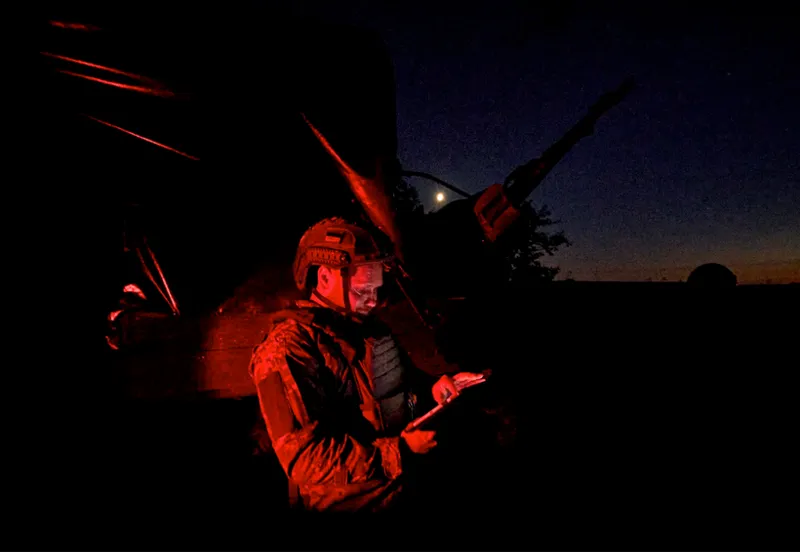
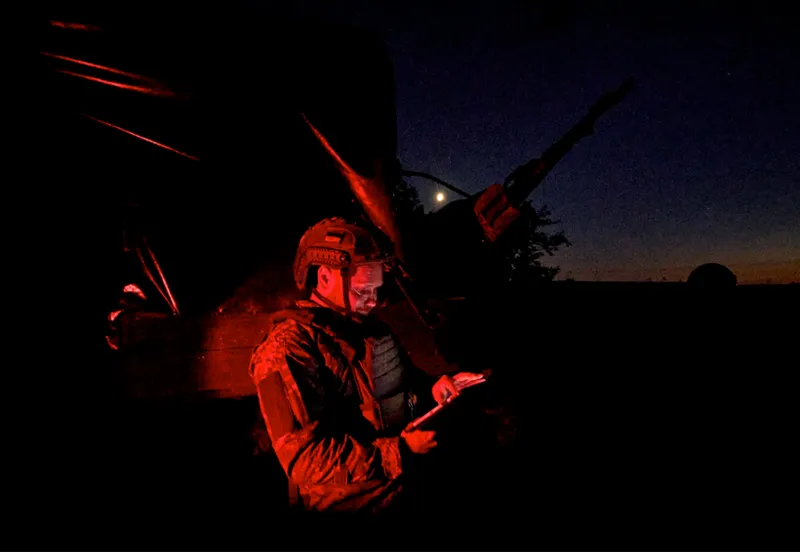
The skies over battlefields are now blackened by drones. Some carry cameras and thermal detectors, others are equipped with bombs and guns; some merely lie on the ground beside paths and roads until stirred to life by a passing soldier or vehicle. They use electronic signals or are steered by impossible-to-jam fiber-optic cables. Counter-drones aim to block them while also hunting for the drone pilots hunkered down dozens of kilometers from the front.
The result is a gray area of chaos stretching some 20 kilometers from the front, where drones hunt for soldiers, the wounded are left to die because it's so difficult to evacuate them, and supplies of ammunition, food and water are almost impossible to move up to the fighting troops.
Now for a different blend of old and new. While Russia’s war on Ukraine appeared to begin as a 21st-century blitzkrieg (though the sincerity of every front of Russia’s all-out assault in the beginning of the invasion has been disputed), as the months slogged on, the conflict took the shape of a throwback to a century ago.
Though the timeline has been punctuated by offensives and counteroffensives of varying success, for the most part the early phases of the war was reminiscent of WWI; a frontline hundreds of miles long, with each side making use of artillery and long-range munitions hoping to exhaust and attrit the enemy, producing space for a decisive manoeuvre.
As time progressed and the possibility of manoeuvre became less likely for both sides, the war for Ukraine has morphed into laboratory and proving ground for that quintessential emblem of 21st century warfare: the drone.
Over the past two years, much attention has been paid to Ukraine’s budding industry of decentralised, DIY UAV manufacturers, as well as contributions by big-name Western players like Palmer Luckey’s Anduril. Ukraine’s enthusiastic (and perhaps necessary) reliance on a vast array of suppliers has been hailed as proof of the country’s hardscrabble, innovative edge over their ossified, Soviet-redux opponents. In this context, Ukraine’s war machine is somewhat neoliberal in character, pulling resources from numerous private players and letting the winners and losers prove themselves in the market.
Unfortunately, however, this approach brings with it downsides. Betting on a large number of smaller horses means some of them are bound to lose, and in the event that you stumble on a manufacturer with a worthy breakthrough, they might not have the capacity to meet your demand.
This stands in stark contrast to Russia’s approach, identifying means and methods that work, and then throwing the weight of state capacity into producing them en masse – which, in turn, brings economies of scale. However impressive Palmer Luckey’s boutique gadgets might be, their technological superiority multiplies their potential for failure and security issues. Economics is an extension of the battlespace, and when Anduril’s drones cost hundreds of thousands of dollars while Russia is producing units for as little as a few hundred, the final analysis for Ukraine can be a strategic loss – whatever the tactical gain.
In any case, as the article linked up top points out, what has now metastasised out of this drone warfare is a situation in which both of the two fundamental strategies of warfare, position (i.e. trenches) and manoeuvre (i.e. assault) have begun to dissolve.
By destroying huge swathes of the front, creating miles-deep open space, Russia has rendered it impossible for Ukrainian troops to advance and mount assaults without being detected and taken out by one or several forms of militarised UAVs (and vice-versa). Supply lines are equally vulnerable, making it harder and harder for Ukraine to bring food and munitions to units (not as much of a challenge for the Russians). The front is then transformed into a smooth space, with soldiers pocketed in tiny clusters attempting to avoid detection.
In the place of a traditional line, then, the Ukrainian front has taken the form of a sort of ‘holey space’, with Russian soldiers advancing solo or in couples at a painstaking pace, slowly amassing behind Ukrainian lines in the hopes of eventually encircling and ambush their clustered opponents. The front becomes a no man’s land in a double sense – absent soldiers and dominated by unmanned aerial vehicles – while the actual soldiers perform the gruelling work of picking the operators off, where they can, one by one.
In his book Theory of the Drone, Gregoire Chamayou observed how the drone negates the traditional compact of war, in which two individuals meet on the field understanding that each might kill the other, and that each in turn might be killed. The drone, high in the sky, operated from miles away, against an opponent who may not even be aware of its presence, turns the encounter into a lopsided equation more akin to a manhunt.
If people looking at Obama’s drone wars had questions about where this would ultimately lead, Ukraine might be providing the answer, and it’s the same as Gaza and Venezuela, in a different form: Hit & Run. Patterns.
Down in the Stables
Fascist imaginaries and the annihilation of intimacy
While writing and researching for this week’s coming episode, I rewatched Jonathan Glazer’s 2023 masterpiece The Zone of Interest. Two moments stuck out in particular on this watch.
(If you haven’t seen the film, spoilers. But for goodness’ sake, watch it already.)
The first occurs late in the film, after Höss has been notified that he is being transferred to Oranienburg to oversee the administration of the entire concentration camp system, leaving Auschwitz behind.
His wife, Hedwig, is furious that the move might deny them the paradise they have built in the Auschwitz Interessengebiet. Their argument is resolved when husband and wife agree that Hedwig can stay, and he can go. They can go long distance. The five children will get by without their father. The domestic dispute is resolved in the manner of two managers divvying up tasks in the office.
That night, in preparation for his departure the next morning, Höss heads to the stable to spend one last moment with his horse. Gazing at them affectionately, he rests his head against theirs, gently caressing them. In an anguished voice, he tells them:
“It’ll be hard for you too. I know that. Don’t you think I know that? I love you.”
This occurs shortly before a scene in which it is implied Höss has engaged in (in all likelihoods coerced) sexual intercourse with a very young girl – a local, a camp prisoner, it is not made clear – while his wife lies in their bedroom, in her separate bed, alone.
The second instance occurs earlier in the film, in passing. On the morning of the garden party, a shot depicts the staircase of the Höss house with the gates of Auschwitz visible in the distance. On the left of the screen, cast in shadow, we can see one of Höss’ sons sat on a pile of firewood with a girl, presumably the daughter of another camp guard. Clearly, the two are smitten with one another, kissing each other with smiles on their faces.
In a film about the domestic life of the ideal Volkisch family, it is the only image we see of something approximating genuine affection. Perhaps Höss’ son is yet to have been relieved of this sentimentalism. But then you pay closer attention to the body language of the two. The girl is almost wrapped around her lover, her legs curled up toward him, her hand holding his face in a gentle caress. The boy, meanwhile, sits limp, unmoving, like a ragdoll arranged into a pose.
In a film where love and tenderness have been entirely evacuated, it is the only shot in which we see something approximating intimacy. If this is the same son who later forces his younger brother into the green house and barricades the door before simulating the sound of gas hissing into the room, then we can be assured that whatever flame flickers in that shot has been decisively snuffed before the film’s conclusion.
More on this in Tuesday’s episode: ‘They Kiss Horses, Don’t They? / Four Fascist Concepts’.
Stay tuned.
