
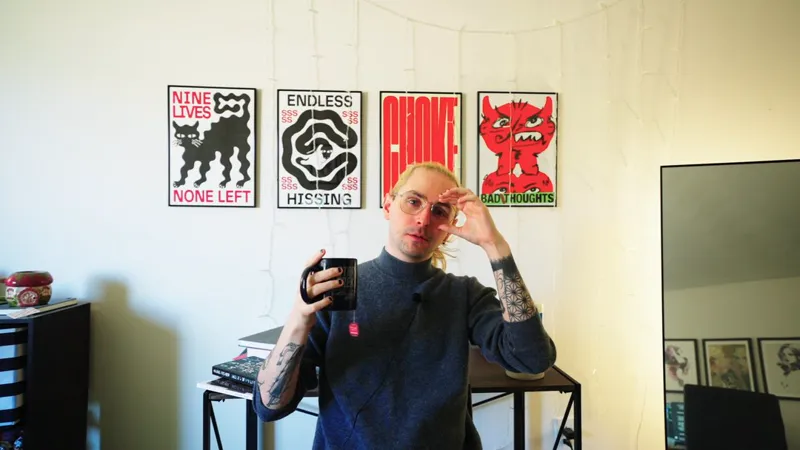

BOOK CLUB 1 - GHOSTS OF MY LIFE/AFTER THE FUTURE PT1
gamers, today is the first video of the book club. rejoice. or despair. your call. I am rambling about my thoughts, and I have prepared some questions for you to think about. YOU DO NOT NEED TO ANSWER ANY OR ALL OF THEM. these are thought starters, but if you want to ignore em and comment on whatever you found interesting, go for it.
"The Slow Cancellation of the Future"
1. What does Fisher mean by "the slow cancellation of the future"?
2. How does nostalgia function in the culture Fisher critiques?
3. What role does popular culture play in the "cancellation" Fisher describes?
5. Fisher often contrasts earlier eras of cultural innovation with the 21st century.
6. What emotional or psychological impacts does Fisher associate with the disappearance of the future?
"Why Hauntology?"
1. What does Fisher mean by 'hauntology,' and how does he contrast it with traditional understandings of time and culture?
2. According to Fisher, why has the 21st century failed to produce genuinely new cultural forms?
3. How does Fisher relate hauntology to music, and what are some examples he uses?
4. What role does nostalgia play in hauntological culture, according to Fisher?
5. How does Fisher link hauntology to political and ideological changes, especially in the post-1979/Thatcher/Reagan era?.
6. What is the significance of Fisher’s statement that “the slow cancellation of the future has been accompanied by a deflation of expectations”?
Questions for After The Future: Chapter 1
1. What does Berardi mean by "the century that trusted in the future"?
2. According to Berardi, what caused the collapse of this belief in the future?
3. How does Berardi describe the role of the avant-garde (art and ideological movement) in shaping 20th-century visions of the future?
4. What is the emotional and psychological effect of the future's collapse, according to Berardi?
5. How does Berardi's view of the future’s end compare and contrast Mark Fisher's?
6. Does Berardi think the death of the future is final—or is there hope for something else?
tell me if you like this or if it's shit, next video will will be middle of june, still working on a good timeline/cadence for this so please tell me your thoughts.
thank you for giving me money so I can give you homework.
Comments (4)
Ghosts of my life I found it to be a difficult read. The ideas seemed to be strung together like a stream of consciousness. This makes sense considering that its a collection of blog posts and articles that have been collated for publishing and only re-written in part. (At least that's my takeaway from the Acknowledgements). I can also tell it was written for a niche of readers with a similar cultural background as Fisher himself, which is not a bad thing but left me a bit lost on certain references, particularly the political ones. But moving on... While I don't know if I fully grasped all of the concepts Fisher wrote about, I will elaborate on a few thoughts I had while reading. The slow cancellation of the future. Fisher claims that the temporality of the 60s, 70s and 80s are more distunguishable than the decades between the 90s and now. I have my own theory on this. Having been born in the 90s, I don't have first-hand experience of this shift in temporality. So from my perspective, this stratification is largely attributed to the the stylized and selective portrayal of culture through media: film noir is a good example of this. Production was limited to styles, themes and locations because of how expensive it was. There were also tighter restrictions on what could and couldn't be produced. But as production became easier to make and restrictions lessened, movies started coming from all over the world and included more diversified culture and ideology. Since we now have a broader understanding of and exposure to what life is, its harder to shave it down into something iconic. The second part of this, which Fisher discusses, is that films, games and music are also constantly making reference to and simulating the past, albeit imperfectly. And while this further solidifies the stratification of prior decades, it also creates a sense of anachronism (which is the point he was getting at). The next thing Fisher discusses is how capitalism directly ties into this modern-day 'dischronia'. I really enjoyed this section. Fisher mentions that capitalism has systematically deprived artists of necessary resources to be innovative and, as an animator, I proclaim a resounding, "yep". Fisher elaborates on what happened in the UK, which I found fascinating, and clearly these events were echoed over the entire world: inflation and the decline of creativity because we all have to work so damn hard to pay rent. Hauntology TIL what circumlocution means... This chapter heavily focused on philosophy which is a topic I am endlessly fascinated with but poorly educated in. Fisher discusses and elaborates on a few philosophical terms, namely 'hauntology', but leaves the rest for me to Google. This slowed down my momentum a touch but I ended up enjoying how informative the whole chapter was. "Psychoanalysis is also a ‘science of ghosts’, a study of how reverberant events in the psyche become revenants" is such a great description, succinct and visceral. I also really enjoyed his exploration on how hauntology is expressed in music culture (music being another topic for which I have endless enthusiasm and scant education.) In conclusion... Slow start but I'm getting into it. I look forward to reading more. Haven't read After the Future but I'll post my thoughts when I have (probably... we'll see). Also! In your video, I really loved how you coined light-side nostalgia and dark-side nostalgia to explain regular nostalgia vs hauntology. Made me chuckle because it's so simple but so perfect.
Okay I'm a chapter and a half in and really enjoying it, thank you for the recommendation! I'll probably drop new comments over the rest of the talking points as I find the time, but here's a start "The Slow Cancellation of the Future" 1. What does Fisher mean by "the slow cancellation of the future"? I see this as a description of how culture is simply regurgitating itself over and over again, rather than producing new ideas or experiences. But this ouroboros-like repetition of contemporary culture—compared to how "we used to feel"—isn't unique to our time. It feels, to me, like something that comes with aging, as we lose the ability to imagine potential futures the way we could with our starry-eyed youthful minds. Reality seems to stagnate in comparison. I’m reminded of a passage from Robert M. Pirsig’s Zen and the Art of Motorcycle Maintenance, where he describes culture as a winding river that has broken its banks. The river is now wide and fast-moving, but shallow—lacking direction or purpose. There’s more culture than ever, more people engaging with it, but it moves past us so blisteringly fast that everything just becomes the “silt of tomorrow.” I found that image quite poignant in describing our current hyperconnected world. But what strikes me most is that Pirsig wrote this in the 1980s—describing what I see as our reality, long before I was even born.
yaoi
so true queen