




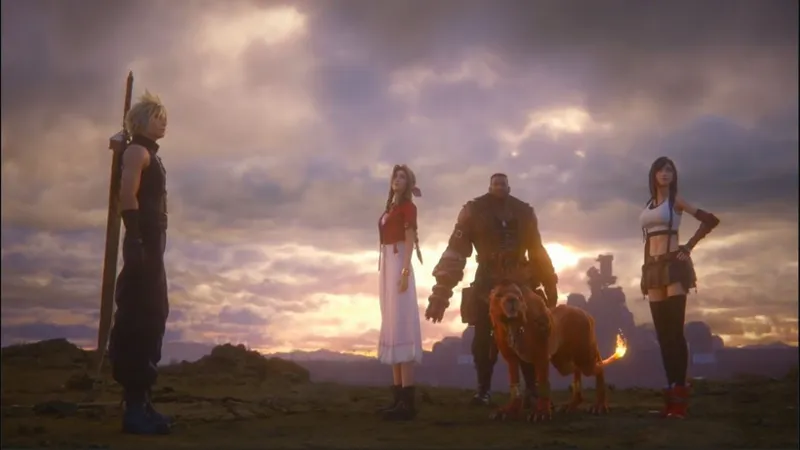
Final Fantasy VII Rebirth - Story Rant
Massive spoilers for Remake and Rebirth ahead. Wanted to get my thoughts down but I ended up writing way more than expected, so I figured I'd just post it here! Enjoy!
Finished Rebirth. Gameplay wise it was pretty fucking great and felt like a solid step up from Remake. Synergies were a really fun addition and I never felt like any one character was done dirty over the others—they were all uniquely fun to play as in their own ways. I really can't think of a better way to handle real-time combat with multiple characters than this, so kudos to the combat crew for thoroughly cooking. The same cannot be said for the writers, but we'll get to that later.
Overall I really enjoyed the "video game" portion of the video game. I felt comfortable doing all of the side content as I unlocked it, only really feeling a dip in quality from Chapter 12 onwards. Some of the minigames sucked, but most of them were enjoyable and didn't overstay their welcome. I even loved the semi-open world and clearing world intel, even if it does get a little repetitive by the time you reach Nibelheim (which is thankfully a much smaller space). Gameplay wise, it's a really solid game!
...but so was Remake. And while Remake had one of my favourite combat systems to date, the ending and mistreatment of Sephiroth really killed my opinion of the game by the time credits rolled. I didn't really expect that to improve with Rebirth, but I still found a lot of joy out of just playing the game even though it went the same route. I'm not really that mad this time around, but I'm just baffled at how this team can be filled with people who created the original narrative, while not respecting the original intent behind the choices they made. It's become a weird habit with this writing team specifically, and I'd like to try and explain why the narrative choices they're making don't really resonate with me, nor do I think they work at a fundamental level to begin with.
Essentially, what was once one of the best JRPG casts of all time has somehow regressed into a circus of metanarrative puppets designed to inject fanservice into old and new fans alike. In trying to give these characters more agency by "defying their fate," they've ironically removed the agency they originally had, devolving them into hollow husks of what they once were.
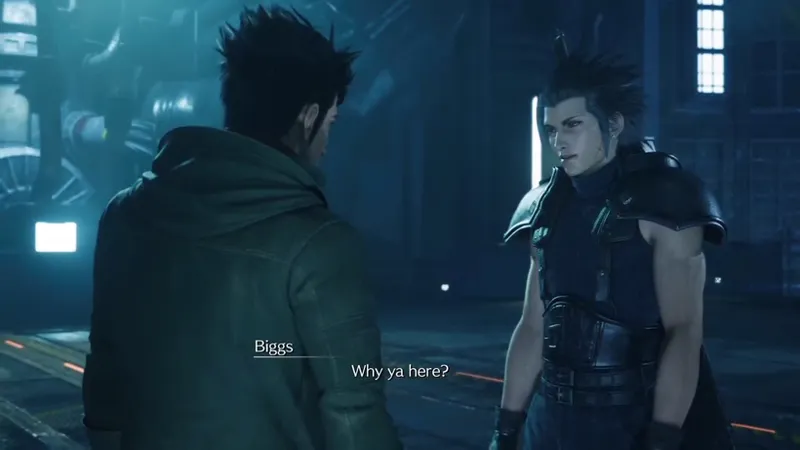
Funnily enough, when I started playing the game I tried to go into it with an open mind and actually got somewhat invested. Ideologically I'm not really a fan of Zack's storyline here, but I thought pairing his sequence with Cloud's unreliable narration in Nibelheim was a great way of tying the two characters together thematically. Still, the problem with Zack's inclusion here is that any time he's on screen, he lowers the overall stakes of the story.
Zack's dead. We saw him die. He has an extremely emotionally resonant death that added more weight to Cloud and Aerith's story. It worked. But the second he's back on screen (regardless of the reasoning that got him there), he acts as a constant reminder of several things that harm the narrative for me:
1. In this world, fate is a real concept with actual power.
2. This isn't the same Zack I was emotionally invested in.
3. This is being done for his fans, not for his character.
4. Death is no longer a permanent consequence.
Firstly, if fate is a real concept then the choices made in the original FFVII weren't driven by characters—they were driven by fate. If the Whispers never revealed themselves until Remake, then every choice prior to it was presumably in alignment with their will.
Secondly, the Zack I was invested in was killed, so this Zack is essentially just a random "other" Zack plucked from a timeline in which he's still alive. Same "character," sure, but the tragedy of his sacrifice is what makes his character. Without it, he's not the Zack that's relevant to FFVII's story.
Thirdly, these choices weren't made because any single character acted to actually bring Zack back to life (as far as we know)—he was deliberately chosen to survive by the writers. They wanted to see him interact with the main cast again, so they created a circumstance in which he could.
And lastly, if a multiverse exists where dead characters are still alive and can be cherry-picked based on who the writers wish to see again, then the entire story lacks consequence. These characters cannot make meaningful choices if their actions never have consequences, and that's what I mean by his existence lowering the overall stakes of the story. All he does is remind me of a better character with the same face.
Throughout most of the game, the cast is more or less retracing their steps from the original story. Overall, this is pretty good! Some sections are unnecessarily padded, but most of them enhance what the original story was trying to do. It's only when we cut back to the metanarrative that the logic starts to break down. It happens very slowly throughout the game (especially considering its length), but it's around Chapters 12-14 where it really starts to pick up with Sephiroth's convergence of the multiverse.
FFVII did not originally have a multiverse. All of its spin-offs tied directly back into the original game, building off of the world and story it established. The issue of the multiverse was not a franchise-wide problem that needed to be solved—it was an artificial problem created exclusively for this trilogy. It attempted to solve a problem that didn't exist.
What the writers actually wanted from the multiverse was a means of giving themselves creative freedom. Simply remaking and embellishing the original story (which was highly influential and well-received overall) wasn't enough. It had to "surprise" both old fans and new by changing the story while keeping it the same. In Remake it was bad, but it felt like a risk; in Rebirth it just feels like indecision.
But even CHANGING the story wasn't enough. The changes had to be justified in-universe by the characters literally killing their world's concept of fate in order to express their free will. But in doing that, what the writers effectively told us is that the original choices made by the cast from '97 weren't their choices, but choices determined by fate itself. What an incredible way of removing the agency of the entire original cast.
But even if we remove OG from the conversation, Rebirth's new story really isn't trying to do or say anything outside of enabling fanservice. For a game over 100 hours long (for completionists at least) that drip feeds you information as to what's going on, you'd expect the pay off to have some form of meaningful purpose outside of just getting to see Zack and Cloud perform a team attack. But when Sephiroth starts enacting his plan, all the rationale and grounded worldbuilding of the original is sacrificed for vague, abstract concepts that essentially handwave over the explanation in favour of the result. It's not a real "plot" driven by character, it's just a sequence of events.
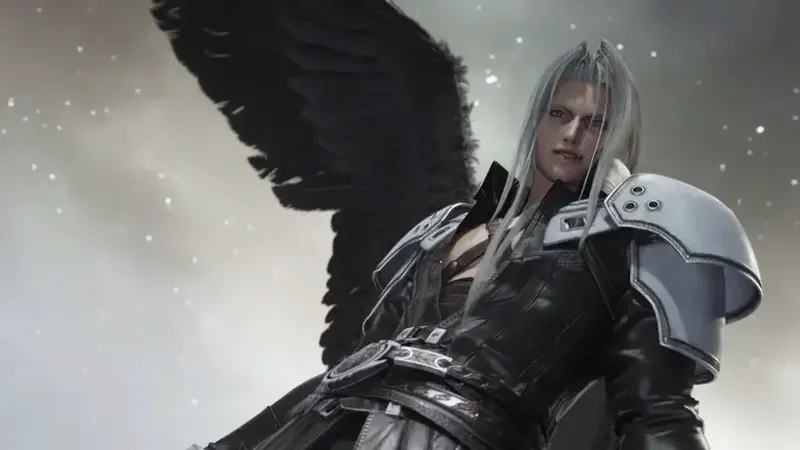
Speaking of character, holy fuck, how can one of the most iconic video game antagonists be treated with such an incredible lack of respect? The original mystery and intrigue of who Sephiroth actually is was pretty much dead after Remake, but at this point he's almost a satirical version of himself. He playfully teases Cloud like a kid with a crush, he never takes the time to meaningfully explain his choices or how he personally came to the conclusion of "merging all worlds," and he's so omnipotent that even after having a multi-phase boss fight including the entire main cast fighting him across the multiverse, he smirks and flies away, seemingly unscathed (for the second time in a row now).
The crazy thing is that they've gone to such incredible lengths to justify changing this story, but the story hasn't actually changed. There have been large reality-breaking set pieces that would suggest significant change has occurred, but every single time, be it for a flashzack or the destruction of literal fate itself, the characters more or less always end up back where they were in the original game. It really begs the question: what was the point of all this?
Currently, the new story is hyping itself up on the intrigue of how the original story will be changed. But when the finale comes out and those answers aren't satisfying, the intrigue will be gone and we'll be forced to have an honest conversation about the story we actually got. But what has that story even been? We've spent two entire games now building up the idea of change without actually making meaningful change. Has this resulted in a story that surpasses the original? Well considering it came at the cost of the grounded, topical worldbuilding of the original and the agency of its characters, not really.
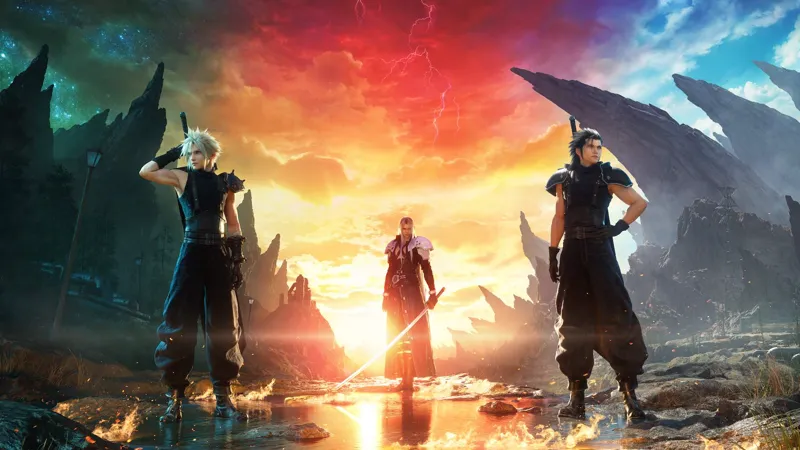
To the writers, the point is being able to use a team attack between Cloud and Zack against Sephiroth. To them, that point is worth undoing Zack's heroic sacrifice that emotionally broke us when we first experienced it. It's worth overplaying Sephiroth to the point of killing his intrigue and effectively ending on the exact same final boss two games in a row. To them, character "moments" are more important than character. Their sense of priority has been so warped that they're relying on fanservice while actively damaging the beloved characters the fanservice is centered around! It's a walking contradiction.
Zooming out a bit though, there's a level of disrespect to all this that really just makes me sad. FFVII is an extremely beloved game, and you can FEEL that love in the way its world has been so thoughtfully modernized and expanded. Whenever the team is building on top of the original, it usually works out beautifully and shows an incredible love and respect for what that original represented. But the need for change shows a lack of confidence in that original vision, suggesting that it wasn't a strong enough narrative (even with their embellishments in mind) to maintain the attention of modern audiences. What a load of shit.
Good stories are timeless. They represent beautiful encapsulations of the human spirit conveyed purely through the dynamics of character. The feelings that stick with us afterwards—resonating with a character's choices or wishing they'd made different ones—those are the reasons we enjoy storytelling. To think that a game with an entire CAST of characters people all over the world have resonated with wouldn't be able to maintain interest is incredibly disrespectful to the quality writing that brought those characters to life in the first place. It reeks of insecurity.
When you start the final chapter in Rebirth, one of the first things Aerith says is "Just go along with it for a little while, okay?" Lines like this on top of the whispers being very obvious analogues for the fanbase being against change (along with the story not actually changing much anyways) really suggests a lack of confidence when it comes to their commitment to the new narrative. Where Remake felt like it was asking permission to make changes, Rebirth felt like it was threatening you with them. But both games try to tuck this metanarrative underneath the laurels of the original story, letting it be slowly devoured by an almost spiteful abstractionism.
Every time I see Sephiroth floating in the sky with his Nomura juice swirling around him, I don't see the actual character of Sephiroth. I don't see the troubled son disheartened by what was done to his mother—the obvious parallel to Aerith and her own story. I see a vessel, a conduit for hubris with no agency of its own, like a lifeless toy being played with. The other characters are no different. They act when the plot tells them to act and they refuse to express their thoughts or actually talk to each other about what's going on. I mean seriously, the game starts with the party returning from an alternate dimension in which they've literally KILLED THE CONCEPT OF FATE ITSELF, and they don't even have a conversation about it afterwards. It's just not real drama.
Ultimately, I think the point is made by the fact that you could quite literally just delete all of the cutscenes and gameplay tied to the new narrative and you'd essentially be left with the original story. No matter what changes they make, the characters always end up in the same place. I'm sure a larger point will be made about the futility of it all, but at that point why did we even bother going through the process of trying to change it?
The original story isn't made better by making the path to its conclusion more convoluted. It's made better by improving what worked and tossing what didn't. Gameplay-wise, I think they did that in spades. Narratively, free will wasn't worth it.