

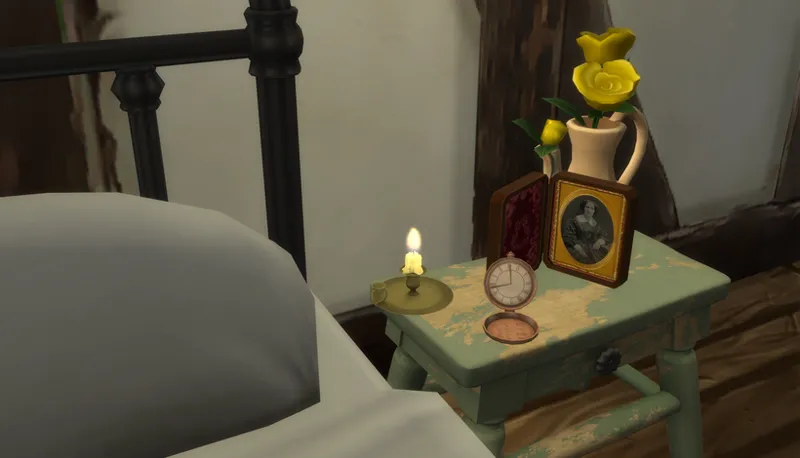
Full Case Daguerreotype - Faces of The Met
I collect daguerreotypes, so when I noticed that the Paranormal pack has a "Book of Silhouettes" which looks exactly like a daguerreotype case, I really wanted to turn it into an actual daguerreotype case (on my to-do list for a long time).
from the Daguerreotype page on Wikipedia - for some context:
Daguerreotype was the first publicly available photographic process, widely used from the 1830s to 1850s. "Daguerreotype" also refers to an image created through this process.
Invented by Louis Daguerre and introduced worldwide in 1839, the daguerreotype was almost completely superseded by 1856 with new, less expensive processes, such as ambrotype (collodion process), that yield more readily viewable images. ...
...
To make the image, a daguerreotypist polished a sheet of silver-plated copper to a mirror finish; treated it with fumes that made its surface light-sensitive; exposed it in a camera for as long as was judged to be necessary, which could be as little as a few seconds for brightly sunlit subjects or much longer with less intense lighting; made the resulting latent image on it visible by fuming it with mercury vapor; removed its sensitivity to light by liquid chemical treatment; rinsed and dried it; and then sealed the easily marred result behind glass in a protective enclosure.
The image is on a mirror-like silver surface and will appear either positive or negative, depending on the angle at which it is viewed, how it is lit and whether a light or dark background is being reflected in the metal. The darkest areas of the image are simply bare silver; lighter areas have a microscopically fine light-scattering texture. The surface is very delicate, and even the lightest wiping can permanently scuff it. Some tarnish around the edges is normal.
Several types of antique photographs, most often ambrotypes and tintypes, but sometimes even old prints on paper, are commonly misidentified as daguerreotypes, especially if they are in the small, ornamented cases in which daguerreotypes made in the US and the UK were usually housed. The name "daguerreotype" correctly refers only to one very specific image type and medium, the product of a process that was in wide use only from the early 1840s to the late 1850s.
I get emails from eBay with the latest daguerreotype listings, and I love to see these pictures of real people from the 1840s-'60s.
In The Sims, I don't really like the portraits made with Sim people, and prefer real ones; so I wanted to be able to showcase some daguerreotypes that are free to use; thus I decided to use pictures in the collection of The Metropolitan Museum.
Here we have two sizes of daguerreotype - half-plate, and quarter-plate.
There was a standard size for daguerreotypes, and generally were half, quarter, 6th, and 8th - a full plate is very rare, and I always wonder at them: usually a family or a club picture (really, a half-plate is usually big enough for a group of people). The "Plate" refers to the piece of polished copper, in which the picture adheres to. "Full case" refers to the case the daguerreotype is held in.
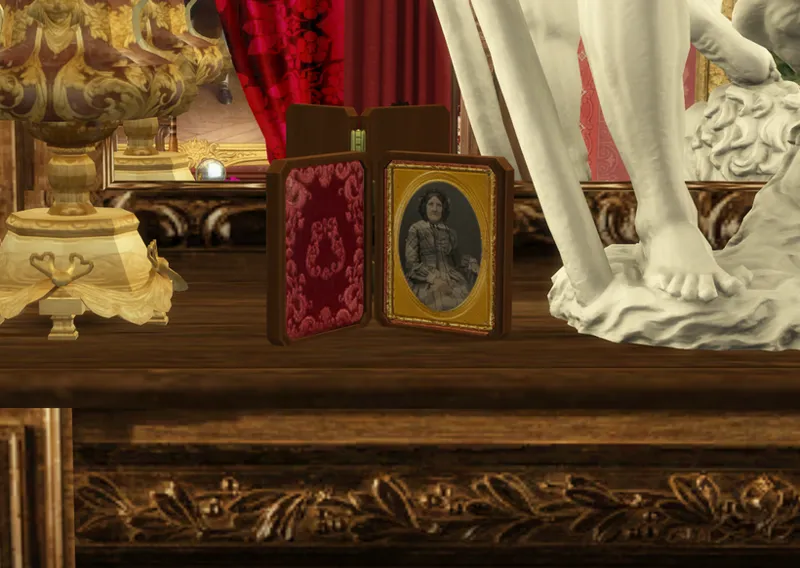
A LOT of daguerreotypes sold are only "half case" - many of the hinges were only held with paper and a paper thin layer of leather, so the velvet pad on one side was frequently estranged from the side with the plate. Naturally, I prefer to buy full case ones! Unfortunately as I am now unemployed, I can no longer afford to buy them - but I can still window shop!
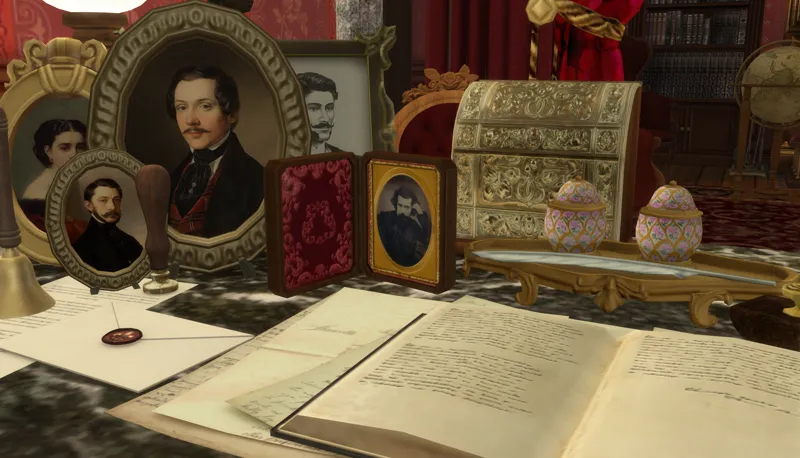
The velvet pad is so beautiful, so soft to touch. I don't know why they decided this was a thing, but pretty much all the ones I've seen are one image plus one velvet pad. Sometimes there are two pictures, of course. The velvet is cut with a beautiful pattern, and came in a variety of colours.
I could have made a quazillion swatches with different pad colours, but it was soo much that I decided to just use red.
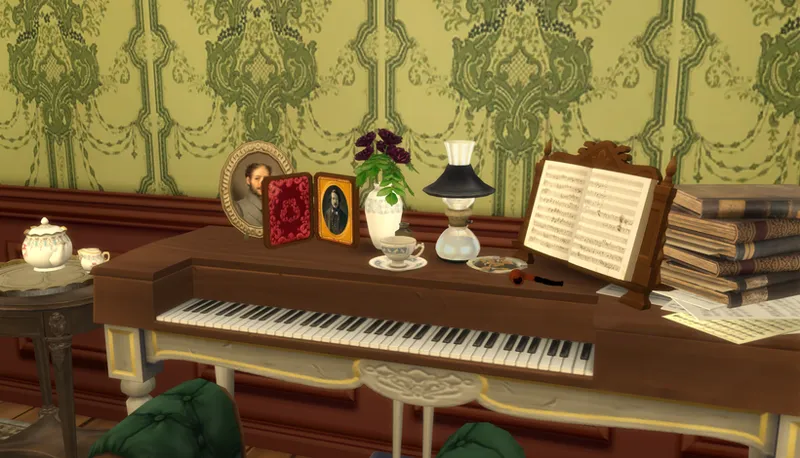
So, I have done 30 different swatches of real daguerreotypes in the collection of The Met, set in an oval frame, and a beautiful red velvet pad. These are held in a wooden case with metal hinges. The case is open, and can be placed on any surface for display.
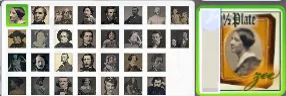
because they're all essentially the same colour, I have made the swatch colour picker have little pictures to try help you choose what you want at a glance:
I have put these into the categories: Painting; Clutter; and, Decoration Miscellaneous. (§18, and §19); and this is Base Game Compatible.
I hope you love them!!!
Okay, as a little helper for those who do recolours, I decided to clean up the PSD file I used for making the swatches, and include it here for you to use yourself!
In it, I have three colours of the velvet pad, the body of the case, and the oval frame with a hole in it, for you to put any picture behind it; as well as the UV map location.
The Normal and Specular maps I have used in my file include the decoration of the velvet pad, and the frame - so if you want to change these bits, you will need to change the Normal and Specular maps as well.
à bientôt!
~~ Terms Of Use ~~
Comments (5)
So beautiful and thank you so much for sharing your knowledge of daguerreotypes. I have always found them very beautiful but I had no idea they were so fascinating as well
I just love them so much! If I had a proper job still, I probably would have bought so many more! (I have collected 11 thusfar)
Beautiful! I'm in 1400 in my save so i'll resist downloading it for right now but it almost makes me want to switch to the 19th century right away xD
Wow once again you have done an amazing job these are so cool I love antique photos and furniture and ..who am I kidding I love most of the things from the Victorian era. A
Awesome and tysm for the .psd also!!!!