Who’s in Charge? Air C2 and Close Air Support in Afghanistan (2/3)
Understanding the C2 structure in Afghanistan - part 2
In my previous post, you've discovered the main players in Close Air Support: from the JTAC on the ground, to the ASOC that manages requests, to the CAOC planning the overall air war. We also looked at how these different units fit together in a larger command and control network.
Now it’s time to follow the CAS mission as it actually happens.
We’ll begin on the ground—where the JTAC identifies a threat and sends a request for air support through the TOC. We’ll see how that request is validated, prioritized, and passed up the chain. Then we’ll follow that request from the ASOC to the aircraft itself. You’ll see how available fighters or helicopters are chosen, handed off through the CRC or AWACS, and finally placed under the JTAC’s control for the strike.
3. On the Ground: From Troops In Contact to the Tasked Aircraft
Every CAS mission starts the same way: someone on the ground needs air support. But depending on the situation, the process can be fast and reactive—or calm and prepared.
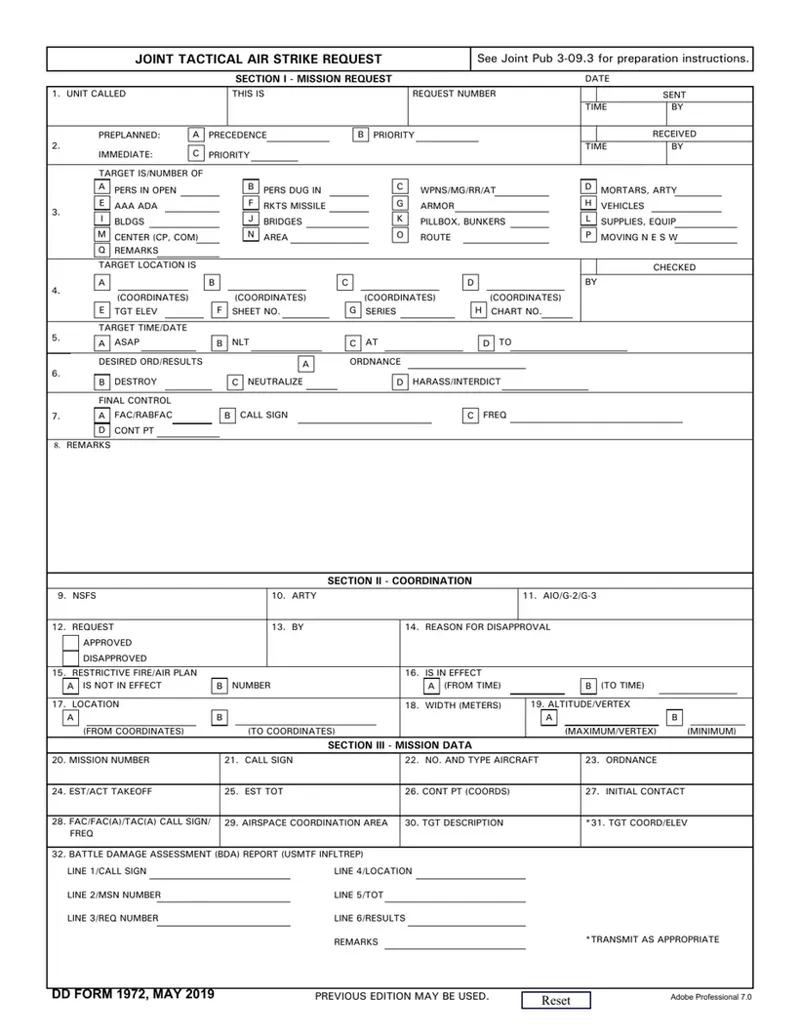
That’s where the Joint Tactical Air Request (JTAR) (or ASR) comes in—I already covered it in a previous article. Whether the mission is planned hours in advance or called in during a firefight, the JTAR is the document that moves a CAS request up the chain.
Emplty JTAR form.
There are two Types of JTARs: Pre-Planned and Immediate
3.1 Pre-Planned request
Some missions know in advance that air support might be needed—like a raid, a high-risk patrol, or a convoy passing through known enemy territory.
In these cases, the JTAR is prepared before the mission begins, often during the planning phase in the TOC.
JTACs fill out the JTAR with estimated target areas, timing, and desired effects.
It is sent through tactical communication systems to the TOC and then to the CAOC.
The CAOC can assign a CAS window in the ATO (Air Tasking Order), reserving aircraft to be on station during that slot.
This kind of CAS is predictable and integrated into the ground plan, but still flexible.
3.2 Immediate CAS
When things go wrong and friendly troops are suddenly under fire, the JTAC initiates an immediate JTAR. This is most often tied to a TIC (Troops In Contact) declaration.
Here’s what typically happens:
The JTAC calls a TIC over voice radio.
They begin preparing a JTAR with precise coordinates and priority.
In parallel, the TOC begins moving that JTAR up the chain via chat (still the fastest and most reliable method during OEF).
The ASOC receives the request and searches for available aircraft already in the area or ready to re-task.
In high-priority cases, the ASOC can respond in minutes—sometimes assigning aircraft already overhead on another mission.
3.3 Communication: From JTAC to TOC to ASOC
While the JTAC builds the 9-line, the TOC handles comms with the ASOC. During OEF, this relied heavily on:
VHF/UHF radios for voice coordination
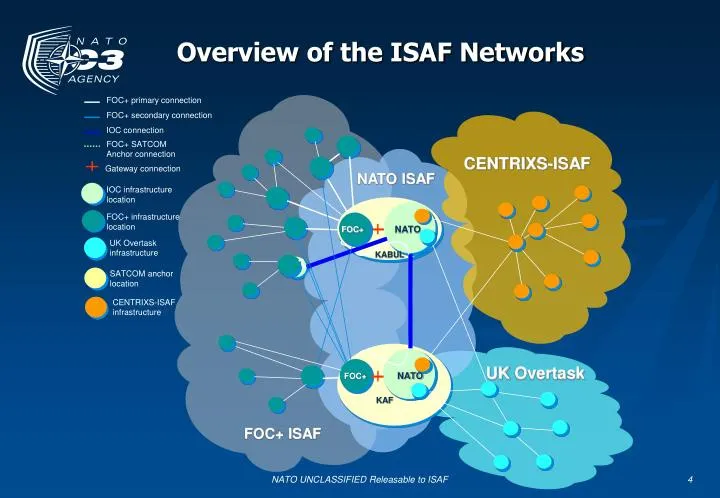
Tactical chat rooms (mIRC, CENTRIX, JADOCS) to formally pass JTARs, coordinates, and strike details
“Chat was everything in Afghanistan… It became the single most dependable method of coordinating air support.” AFCEA SIGNAL Magazine
In most operations, both voice and chat were used together to ensure no detail was missed.
Overview of the ISAF networks during OEF.
Once the JTAR is approved at the TOC level:
It is sent up to the ASOC
The ASOC checks for airspace conflicts, ROZs, and priorities
A Fighter Duty Officer (FDO) picks a suitable aircraft and alerts the CRC or AWACS to bring it in
In practice, the chat window often included:
JTAC
TOC battle captain
ASOC FDO
CRC/AWACS crew
Intelligence officers
This made the coordination near real-time, even across the country.
3.4 Common Frictions
Even in a well-structured system, friction points are common—especially in high-pressure environments like Afghanistan.
A slow or unclear JTAR could delay a response, even during a TIC. If the coordinates weren’t accurate, if friendly positions weren’t clearly identified, or if priority wasn’t stated properly, the ASOC might hold the request until everything was clarified.
In larger operations, multiple units might call in CAS at the same time. The ASOC then had to triage: who was truly in danger, who had friendlies in proximity, who had the best visibility. That decision wasn’t always easy—and not everyone would get air support immediately.
And sometimes, the problem wasn’t urgency but awareness. TOCs without experienced air personnel—like an Air Liaison Officer—might forget to check airspace conflicts or restricted zones. As a result, even a well-written JTAR could be denied because it violated airspace control measures.
Experienced JTACs adapted to these problems. They often pre-filled JTARs during mission planning for likely targets or killboxes. They used chat templates to paste JTARs quickly and reduce errors. And they became masters of multitasking—monitoring FM radios for the ground fight, UHF for aircraft, and chat feeds for air support status—all at once.
It wasn’t just about knowing the process. It was about making it work, fast, under pressure.
4. In the Air: ASOC, CRC, AWACS, and the Aircrew
Once the TOC sends a CAS request up the chain, the focus shifts from the ground to the sky. At this stage, the responsibility for managing the mission moves to the Air Support Operations Center (ASOC) and the airspace controllers—either at a Control and Reporting Center (CRC) or onboard an AWACS—who coordinate the aircraft entering the operational area.
This part of the mission is about selecting the right aircraft, assigning it to the right controller, and ensuring it reaches the fight swiftly, with clear instructions and full situational awareness.
4.1 The ASOC Tasks an Aircraft
At the ASOC, the Fighter Duty Officer (FDO) receives the CAS request from the TOC and begins looking for available assets. These may include:
Aircraft already airborne, with sufficient fuel and ordnance—typically air-alert CAS (X-CAS).
Fighters or helicopters on ground alert (G-CAS) at bases like Kandahar or Bagram.
Aircraft assigned to lower-priority missions that can be re-tasked.
During OEF, the ASOC in Kabul maintained real-time visibility of aircraft on station and their assigned missions from the Air Tasking Order (ATO). To coordinate, the ASOC used tactical chat rooms (like mIRC and CENTRIX) alongside traditional voice communications. If needed, they could reach out to the CAOC to approve changes or re-taskings outside the current ATO.
Example of real-time view of the air assets in Afghanistan, a decisive decision tool for the FDO.
Once an aircraft was selected, the ASOC would pass the tasking to the appropriate controlling agency—either a ground-based CRC or an airborne AWACS.
4.2 The CRC or AWACS Takes Control
As explained previously, the Control and Reporting Center (CRC) is a radar-based command node that manages a defined section of airspace. If the aircraft entered a sector managed by a CRC, that unit would assume airspace control and begin deconflicting the new aircraft with other missions, no-fly zones, and restricted fire areas.
During specific hours or specific missions, the job was handled by the AWACS, such as the E-3 Sentry with the callsign Wizard. Wizard typically operated on a daily schedule (e.g., 1100–1900Z), providing airborne radar coverage and radio relay across a wide area, supplementing the limitied existing radar and radio coverage. AWACS crews were often in the same chat rooms as ASOC and CRCs, which meant aircraft check-ins and mission handoffs could happen seamlessly in real time.
4.3 Aircrew Receives Tasking
Once the aircraft is under tactical control, the assigned controller (CRC or AWACS) provides it with a routing order toward the JTAC’s location. This includes the callsign of the JTAC, check-in frequency, and airspace control measures such as killbox boundaries, usually in CGRS format.
Communications during this phase were typically conducted over Secure Voice, often prompted with the brevity terms “Go Secure” or “Go Green.” This ensured that sensitive mission details were protected.
KY-58 Secure Voice module, as it can be installed in the aircraft's cockpit. P = Plain (or Red), C = Ciphered (or Green, Secure). 1 to 6 = encryption key selection.
As the aircraft approaches the terminal area, control is passed to the JTAC. Only then does the final phase begin: the 9-line briefing, the “cleared hot” confirmation, and the actual attack.
While this last exchange is the most visible part of a CAS mission, it’s only the final link in a long chain of coordination. Everything that came before—from the ASOC selecting the right aircraft, to the CRC or AWACS managing the air picture, to the pilot’s structured check-in—was essential to delivering firepower at the right place and at the right time.
Conclusion
We followed here a CAS request from the moment it was triggered on the ground to the point it reached the cockpit. We saw how JTACs build the request, how TOCs validate it, how the ASOC assigns aircraft, and how CRCs or AWACS manage the flow of assets through a crowded and dangerous battlespace.
In the next part, we’ll bring this system to life through real-world examples: war stories from Helmand, moments where the system worked perfectly, and others where it nearly broke. Then, I'll try to identify key takeaways for sim pilots and mission builders in DCS.