
Behind the cameras.
I find it important and interesting to be able to share some things related to the creation process in question. As you may already know, my
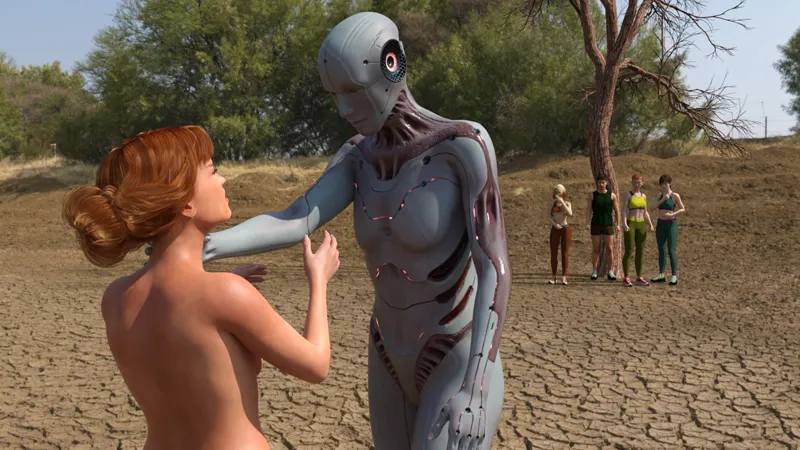
I find it important and interesting to be able to share some things related to the creation process in question. As you may already know, my video card is real garbage, however I am fully engaged in the creation of this game, as the rendering of the image above shows. That was created with a 2 gb Nvidia GTX 1050, an AMD processor that's more or less 15 years old and 8 gb of RAM... How the hell does he do it? You may be wondering... Sometimes I wonder the same thing.
Well, it all starts with the creation, the visualization of the scene itself. The models are put in position, the poses of the characters are created and one or more appropriate camera angles are chosen to help tell the story... But in my case, due to physical limitations, I must plan very well how are positioned the characters and/or extra objects in the image. The problem may be the cast shadows. Yes, something as simple as a shadow in the wrong place can be a problem. I have to be careful with the shadows because it's impossible for me to render an image like that in one go. I must break down what under normal circumstances would be a single image into several, and that includes the shadows of each model. If at the time of putting everything back together, a shadow is poorly projected on some object or character, the illusion is broken... and we don't want that.
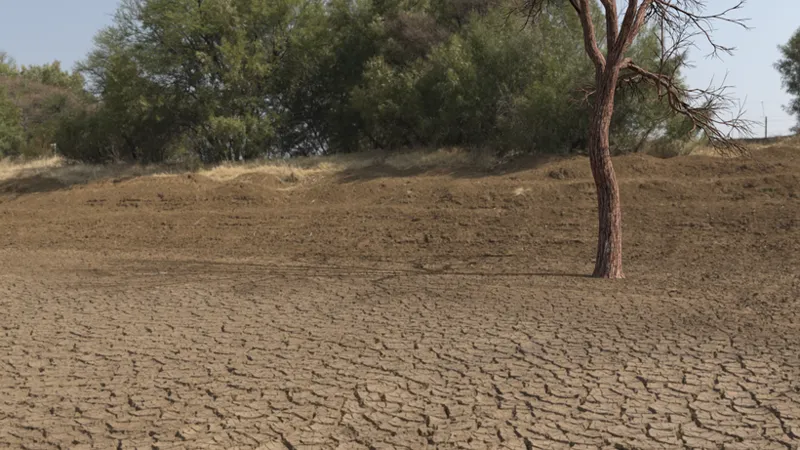
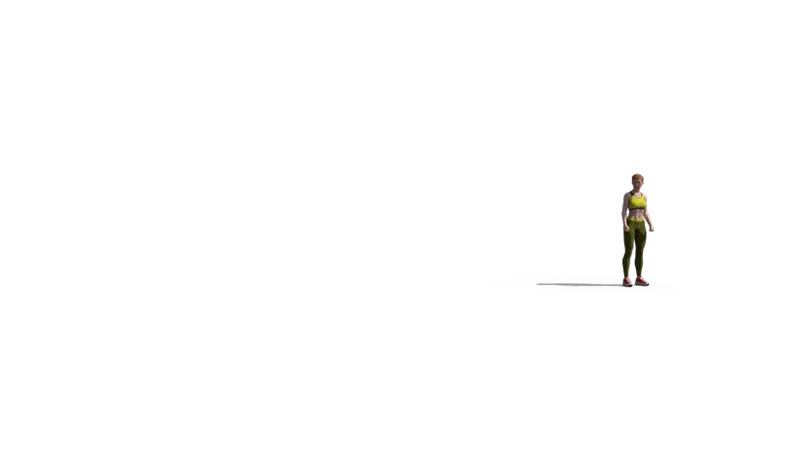
So in this particular case, the final image is actually the union of 6 images... First the background landscape, which in this case is an HDRI (High Dynamic Range Image) and which provides a very good source of natural light. Here the model of a dead tree, without leaves, has been added. Not as filler but because it plays a certain relevance in previous events. Render time was less than a minute.
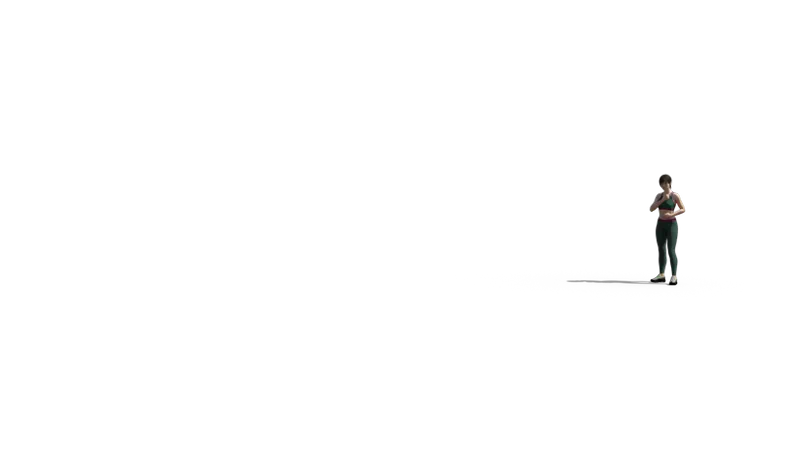
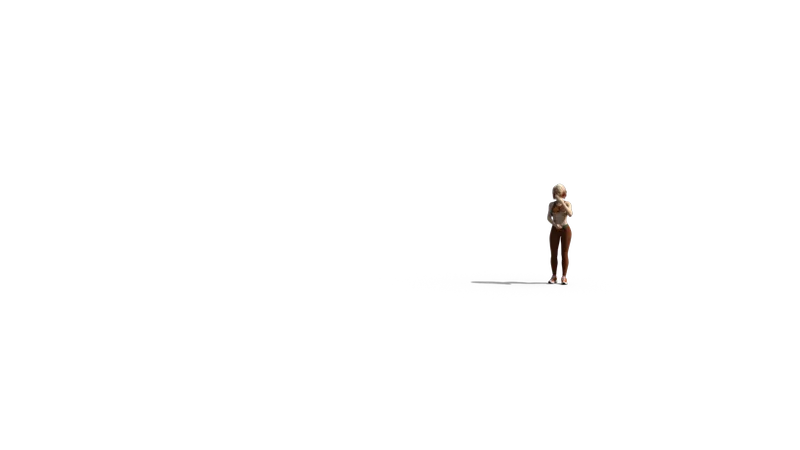
Second image is Rachel. I must note that all images of characters in the background have been properly treated to reduce rendering times. Everyone's textures have been reduced to half the original size and the models are in their base shape and not the normal high resolution shape. This reduces the polygon count, which also contributes to lower rendering times. As the characters in question are far from Camera, the difference is impossible to notice. The rendering times for each of the following images vary from just under a minute to almost a minute and a half.
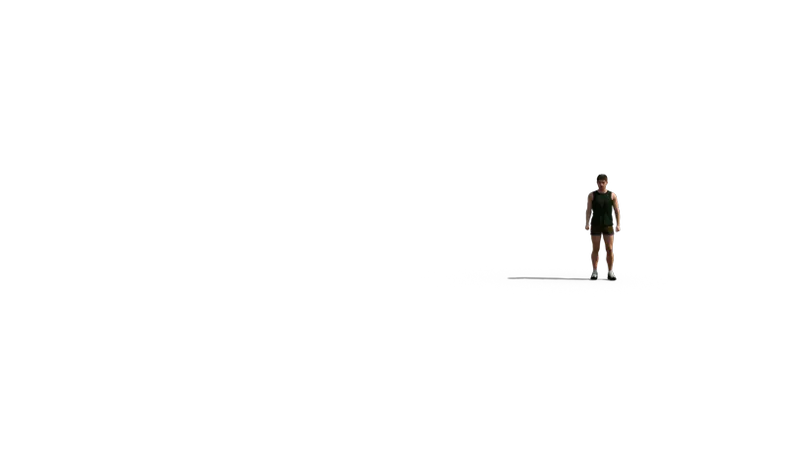
Third image, our dear MC...
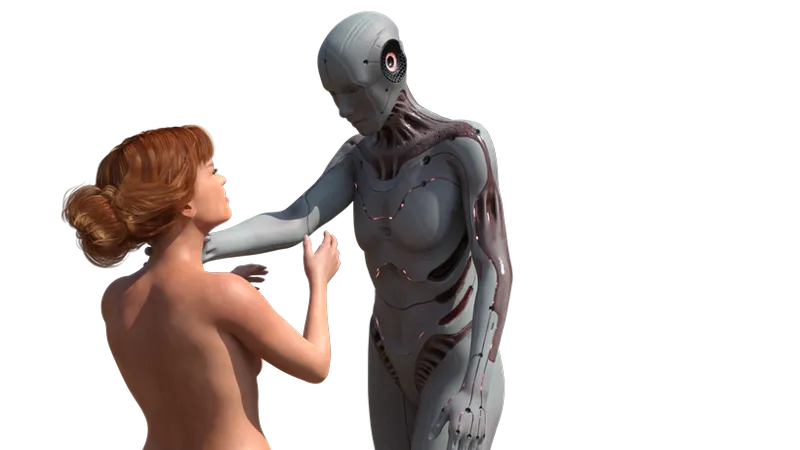
Below is the last image, the most complicated due to the complexity of one of the models. The android model is quite complex and he is also accompanied by Sally. Sally's model, with reduced textures. She's not even close enough to Camera that I'd be forced to use normal textures. Normal textures are for really close images. The difference is not much at this distance unless you have a trained eye and some comparison point, but it does help reduce rendering times. On the other hand, Sally, she's already close enough to Camera to force me to use the regular HD model of her. Sally's pants and sneakers, as they are off camera, have been hidden to reduce rendering times...
The android... The damn android... The very definition of a headache for a machine with few resources. Detailed model, detailed textures and also with some extra layers that give it a more unusual touch. Textures reduced by half, no problem. The model reduced to its base version... problems.
The shadows on the model did not look good with its lower polygon version. So with the pain of my soul I had to take the drastic measure of rendering it in HD. The first time after more than half an hour I realized that it was something absurd. If I had left the image rendering normally until it was decent, it would have probably taken me a couple of hours...
I have never liked using the Denoiser because for my taste, sometimes everything looks too smooth, very "plastic". So I had to be patient and experiment with the Denoiser further. The final result is this image, rendered in a little over 20 minutes, obviously using the DAZ Denoiser. The denoiser was a big help after all because the Android doesn't have a normal "skin". But in the future I will continue not using the Denoiser for normal human models. There's a reason I call myself "AllNatural".
Another thing that I can't help but say because it's very important... Every time I render an image, once the process is finished, I close DAZ. I wait a few seconds until my RAM has recovered (I have been using something called "Cacheman" for many years and this program allows me to know at all times how much RAM I have available). When I'm sure the RAM is back to normal levels, I proceed to open DAZ, load the following image and render. And after that all over again... If I didn't restart DAZ it would be impossible for me to render in such a short time. It's totally necessary and I hope this little advice is useful to someone...
Once all these images are rendered separately, I proceed to unite them. You don't need anything extra or ostentatious to do it. The Paint 3D that Windows 10 comes with is enough and more than enough. It's a matter of a minute at most.
When all the images form one, the file is saved and I proceed to give it a small extra touch of color, nothing too advanced or exaggerated. In fact it can be done with the same Windows tools and that's how I remain "AllNatural". After that, I go to my favorite website to convert the format from PNG to JPG and lower the file size... and that's it. I don't have the means to buy Photoshop, and I don't have the time to learn how to use it. And as you see, it's not necessary. But be careful, I'm not saying that using Photoshop is wrong. It's a very good tool and sometimes very good filtered images are achieved. But I have decided to have a more natural touch to the images, without saturating them with filters. It's just my option.
See you later...
Comments (2)
It's refreshing to learn that with some patience and knowledge such things can be achieved. it's also in my humble opinion very heroic of you to share such things. So now I'm just sitting here curious as to how other developers can consciously feel fine about taking in such large sums monthly and yet still release sub-par updates 3-4 times a year. This was a gem to dive into and you are a true diamond in the rough in the adult visual novel world. i eagerly await your next release!
Wow. Thank you very much for your words. Well, a while ago I started to really hate "milkers". I don't want to mention anyone directly but I know my rendering times with a bad computer for rendering, and frankly the math doesn't add up. I know perfectly well that in a rendering that takes me 40 minutes, with a decent computer, which everyone who dedicates themselves to this 100% has, often takes less than 5 minutes. So if, on any given day, spending 8 hours, I can do up to 10 or 12 renders, it's totally absurd to have to wait even a whole year for an update to your game. And it's not that I'm a genius at DAZ either. I learned how to use DAZ about 6 months ago. It's super easy to use. I don't dedicate myself to this at all, sometimes I can work on this for 8 or more hours in a row and many other times I can't. I have work and family. But I would have to be truly shameless, a scoundrel, to release an update after a year.