




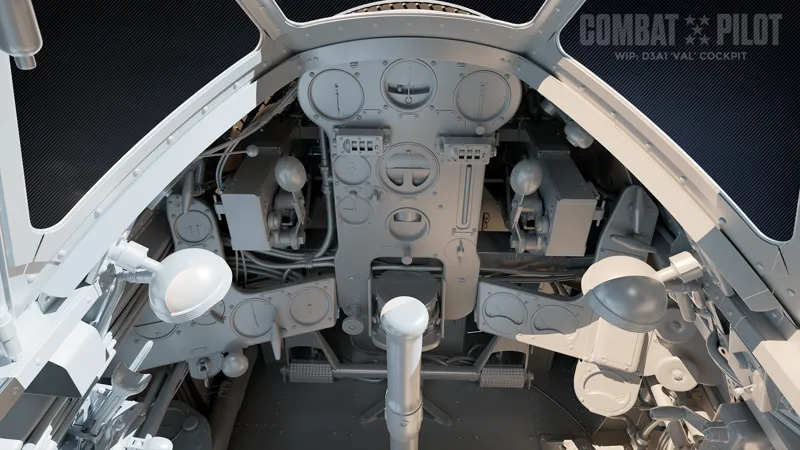


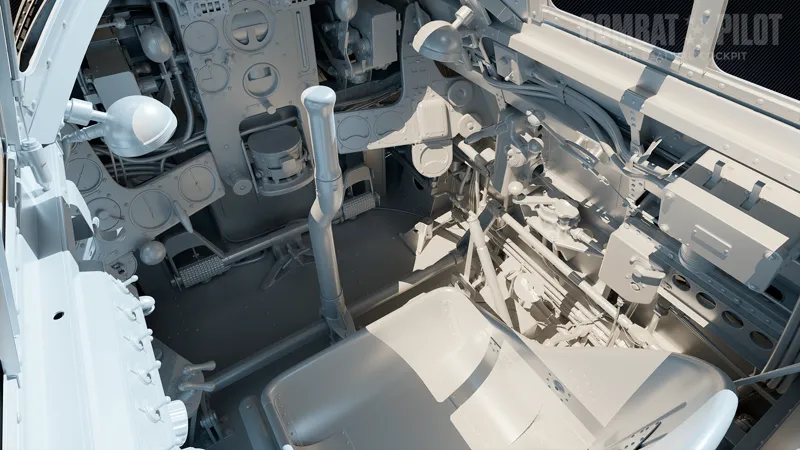
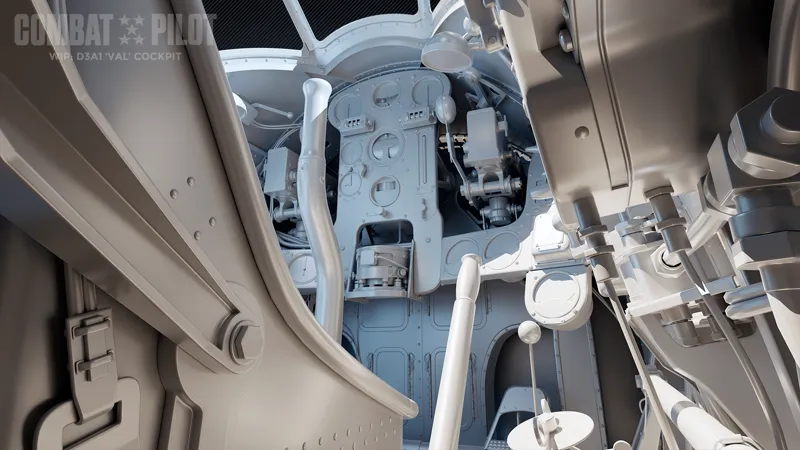


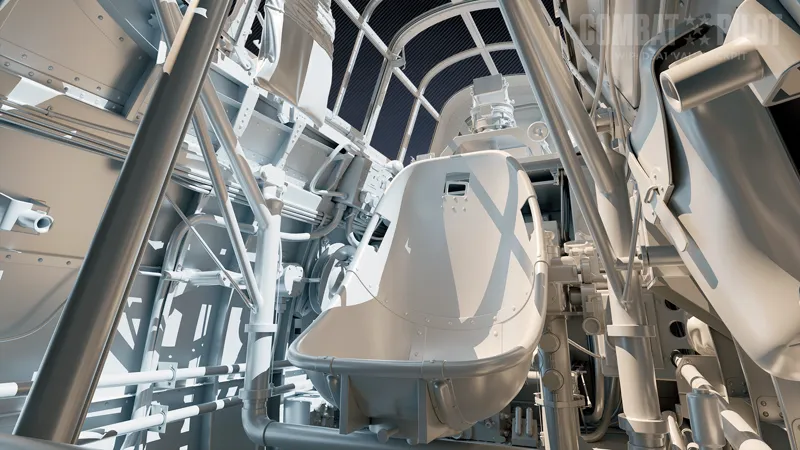
Combat Pilot - DD #17 - Aichi D3A 'Val' Dive-Bomber
The Aichi D3A, nicknamed “Val” by the Allies, was Japan’s primary carrier-based dive-bomber during the early stages of World War II. Designe
The Aichi D3A, nicknamed “Val” by the Allies, was Japan’s primary carrier-based dive-bomber during the early stages of World War II. Designed in the mid-1930s, it played a significant role in the Imperial Japanese Navy’s (IJN) operations, most notably during the attack on Pearl Harbor and other major Pacific campaigns. Renowned for its accuracy and reliability, the D3A was a cornerstone of Japan’s naval air strategy until its obsolescence by 1943 due to advancing Allied technology.
The D3A was developed to meet a 1936 IJN specification for a carrier-based dive-bomber to replace the outdated Aichi D1A. Aichi Kokuki KK, under designer Tokuhisa Tsuruta, drew inspiration from German dive-bombers like the Heinkel He 70, incorporating a low-wing monoplane design with fixed undercarriage. The prototype, designated D3A1, first flew in January 1938. After refinements, including improved engine power and dive brakes, the aircraft entered service in 1940.
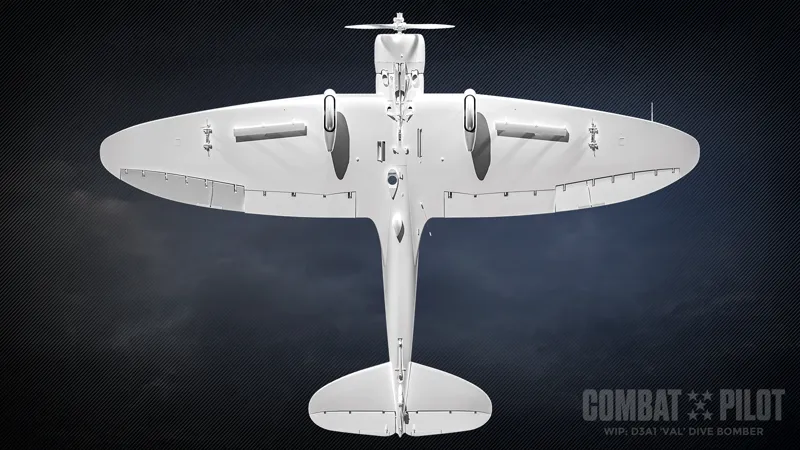
The D3A’s design prioritized maneuverability and bombing precision. Its elliptical wings, reminiscent of the Heinkel influence, provided excellent lift and stability during steep dive attacks. The fixed spats-covered undercarriage reduced drag while maintaining structural simplicity, though it became a liability against faster Allied fighters later in the war.
The Val entered combat in 1940 during the Second Sino-Japanese War, where it honed its dive-bombing tactics against Chinese targets. Its defining moment came on December 7, 1941, during the Pearl Harbor attack. D3A1s from six Japanese carriers sank or damaged numerous U.S. ships, including battleships like the USS Arizona, with their precise 250 kg bomb strikes. The aircraft’s ability to dive at angles up to 80 degrees made it deadly against stationary or slow-moving targets.
In 1942, D3As excelled in campaigns like the Indian Ocean Raid and the Battle of the Coral Sea, sinking ships such as the British carriers HMS Hermes and HMS Cornwall. However, their vulnerability became apparent at the Battle of Midway (June 1942), where U.S. fighters and anti-aircraft fire decimated D3A formations. The aircraft’s fixed undercarriage, light armor, and lack of self-sealing fuel tanks made it an easy target for faster, better-armed Allied fighters like the F4F Wildcat and later F6F Hellcat.
The improved D3A2, introduced in late 1942, offered better speed and climb performance but couldn’t keep pace with Allied advancements. By 1943, the D3A was largely relegated to secondary fronts and later kamikaze missions, where its stability and payload capacity were still useful. Production ceased in 1944, with approximately 1,486 total units built (470 D3A1s, 1,016 D3A2s).
Technical Specifications
Crew:
- Two (pilot and rear gunner/radio operator)
Dimensions:
- Length: 10.2 m | 33 ft. 5 in.
- Wingspan: 14.37 m | 47 ft. 2 in.
- Height: 3.85 m | 12 ft. 8 in.
Weight:
- Empty Weight: 2,408 kg | 5,309 lbs. (D3A1) or 2,570 kg | 5,666 lbs. (D3A2)
- Maximum Takeoff Weight: 3,650 kg | 8,047 lbs. (D3A1) or 3,800 kg | 8,378 lbs. (D3A2)
Engine:
- Mitsubishi Kinsei 44 (D3A1) or Kinsei 54 (D3A2)
- Type: 14-cylinder air-cooled radial
- Max Power Output: 1,070 hp (D3A1) or 1,300 hp (D3A2)
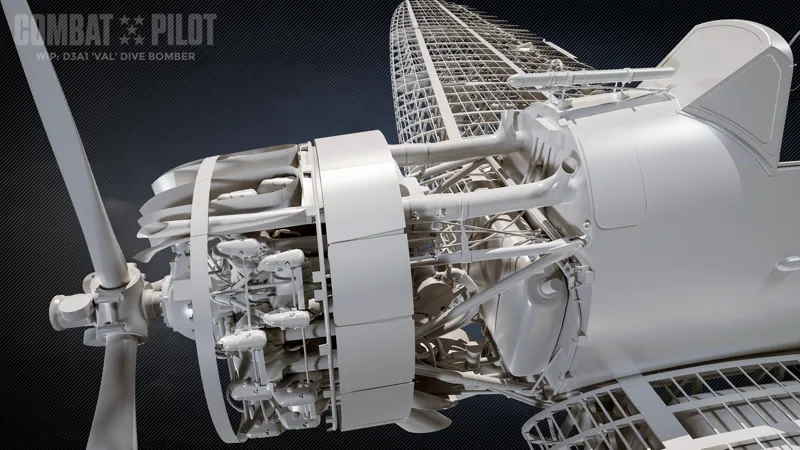
- The Kinsei 44/54 engines provided reliable performance, with the D3A2’s upgraded engine improving speed and climb rate.
Performance:
- Maximum speed: 389 km/h | 242 mph (D3A1) or 430 km/h | 267 mph (D3A2)
- Range: 1,472 km | 915 mi (D3A1) or 1,341 km | 840 mi (D3A2)
- Service ceiling: 9,300 m | 30,510 ft. (D3A1) or 10,500 m | 34,450 ft. (D3A2)
- Rate of climb: 8.3 m/s | 1,640 ft./min
Armament:
- Guns: Two fixed 7.7 mm Type 97 machine guns (forward-firing, wing-mounted); one flexible 7.7 mm Type 92 machine gun (rear cockpit)
- Bombs: One 250 kg | 550 lb. bomb under the fuselage; two 60 kg | 132 lb. bombs under wings
- Dive brakes ensuring steep, accurate dives.
Production:
- D3A1: 470
- D3A2: 1016
The D3A’s strengths lay in its accuracy, reliability, and ease of maintenance, making it ideal for carrier operations. Its dive brakes allowed precise attacks, and its maneuverability rivaled some fighters early in the war. However, its light armament and lack of armor or self-sealing tanks left it vulnerable. The fixed undercarriage, while reducing complexity, limited speed and made it a liability against modern fighters. By 1943, its obsolescence was clear as Allied air defenses and aircraft outclassed it.
The Val was a highly effective dive-bomber that shaped Japan’s early WWII successes through precision and reliability. Its Mitsubishi Kinsei engine, modest but effective armament, and stable design made it a formidable weapon in 1941–42. However, its vulnerabilities against evolving Allied technology limited its longevity. The D3A’s legacy endures as a testament to the IJN’s early dominance and the critical role of dive-bombers in naval warfare.
Carrier-Based Air Groups (Kōkūtai)
The D3A was primarily deployed aboard IJN aircraft carriers, serving as the main dive bomber during the early stages of the Pacific War. The following carrier-based air groups operated the Val:
- 1st Air Fleet (Kidō Butai): The primary striking force of the IJN, which included the following carriers and their air groups equipped with D3As:
- Akagi Air Group: Deployed D3As during the attack on Pearl Harbor (December 1941) and subsequent operations like the Indian Ocean Raid (April 1942).
- Kaga Air Group: Used D3As at Pearl Harbor, Rabaul, and other early Pacific campaigns.
- Sōryū Air Group: Operated D3As during Pearl Harbor, Wake Island, and the Battle of Midway (June 1942).
- Hiryū Air Group: Employed D3As in the same operations as Sōryū, including Midway, where they were heavily engaged.
- Shōkaku Air Group: Used D3As during the Battle of the Coral Sea (May 1942) and other early carrier operations.
- Zuikaku Air Group: Operated alongside Shōkaku, deploying D3As in the Coral Sea and other campaigns.
- Ryūjō Air Group: A light carrier that used D3As in operations like the Aleutian Islands campaign (1942).
- Zuihō and Shōhō Air Groups: Light carriers that deployed D3As in smaller numbers during early war operations, including the Battle of the Coral Sea (Shōhō).
These carrier air groups were the backbone of Japan’s naval air power in 1941–1942, with D3As playing a key role in delivering precision dive-bombing attacks, such as sinking HMS Hermes and damaging U.S. carriers at Coral Sea.
Land-Based Air Groups (Kōkūtai}
As the war progressed and carrier losses mounted, D3As were increasingly deployed by land-based naval air groups, particularly in the Pacific and Southeast Asia. Such units included:
- 12th Air Group (12th Kōkūtai): Operated D3As in China and the early Pacific campaigns, including attacks on the Philippines in 1941.
- Kanoya Air Group: Based in Formosa (Taiwan) and later the Philippines, used D3As in the invasion of the Dutch East Indies and other Southeast Asian operations.
- Genzan Air Group: Deployed D3As in Malaya and the Dutch East Indies, notably sinking HMS Prince of Wales and HMS Repulse alongside G3M "Nell" bombers in December 1941.
- Tainan Air Group: Occasionally used D3As for bombing missions in the Southwest Pacific, though primarily known for its A6M Zero fighters.
- Yokosuka Air Group: A training and test unit that operated D3As for experimental and later defensive roles in Japan.
- 582nd Air Group: Used D3As in the Solomon Islands and New Guinea campaigns, including Rabaul-based operations in 1942–1943.
- 553rd Air Group: Deployed D3As in the defense of the Mariana Islands and other Central Pacific bases in 1943–1944.
Role and Transition
- Early War (1941–1942): The D3A was the IJN’s primary dive bomber, excelling in operations like Pearl Harbor, the Indian Ocean Raid, and the Coral Sea. It was highly effective due to its accuracy and reliability.
- Mid-War (1943–1944): As the Yokosuka D4Y "Judy" began replacing the D3A on carriers, many Vals were reassigned to land-based units or secondary carriers. They were used in defensive roles, such as in the Marianas and Philippines, but suffered heavy losses due to obsolescence and stronger Allied air defenses.
- Late War (1944–1945): By late 1944, D3As were largely relegated to training, coastal defense, and kamikaze missions, particularly during the Philippines Campaign and the Battle of Okinawa. Units like the 5th Attack Squadron and various ad hoc kamikaze groups used D3As in suicide attacks.
Notable Operations Involving D3A Units
- Pearl Harbor (December 7, 1941): D3As from Akagi, Kaga, Sōryū, Hiryū, Shōkaku, and Zuikaku inflicted significant damage on U.S. battleships and airfields.
- Sinking of HMS Prince of Wales and Repulse (December 10, 1941): Genzan and Kanoya Air Groups’ D3As contributed to the destruction of these British warships.
- Battle of the Coral Sea (May 1942): Shōkaku and Zuikaku D3As damaged USS Lexington and Yorktown.
- Battle of Midway (June 1942): D3As from Sōryū, Hiryū, Akagi, and Kaga participated, but suffered heavy losses, marking a turning point in their effectiveness.
For more information about our project, please visit www.combatpilot.com or any of our social media properties.
#combatpilot #wwii #imperialjapan #usnavy #usmc #battleofmidway
Comments (10)
Hi Jason and team, I’m supporting you guys at the Ace tier and really look forward to seeing this project come to life! Quick question: I remember you mentioned a new alpha build scheduled for late August—did I miss something, or is it still pending? Thanks!
looks great!
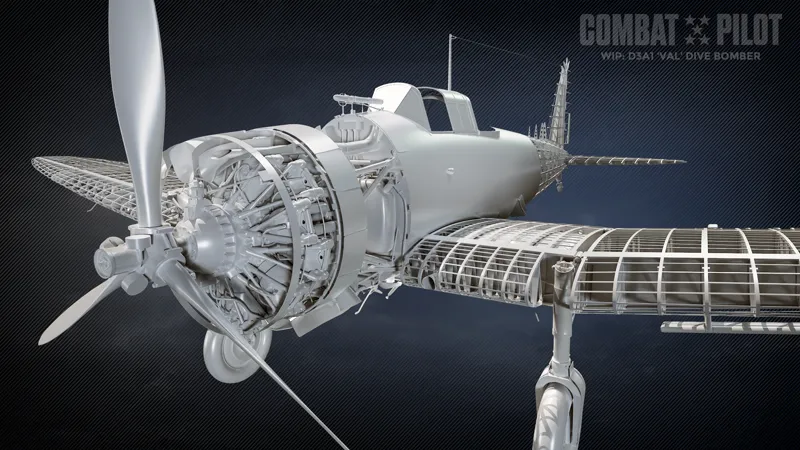
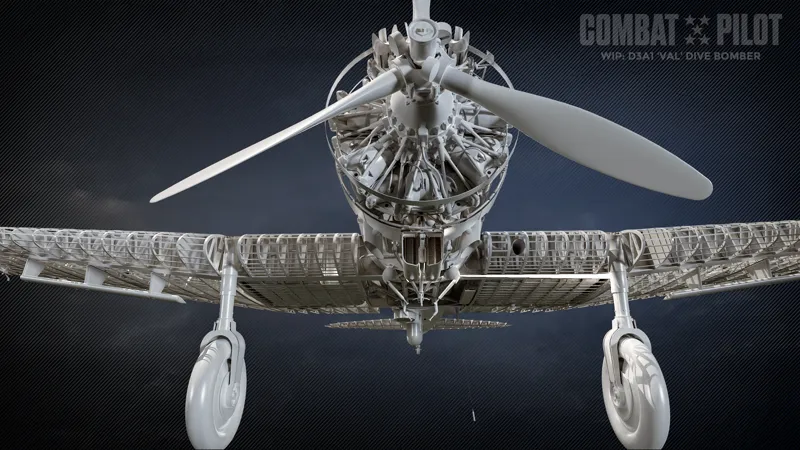
Wow! That's a tremendous and excellent 3D modeling work. Form and dimensions seem perfect visually. And still you have to add all the different textures, paints, animating all the moving parts etc. I am impressed by the internal structural details. You basically constructed a Val bottom up. The damage model can be extremely detailed at this point. Physics of damage and destruction will be a very important effort I can imagine. It will be a very busy end of year.
Looking forward to flying the Val, but PoW and Repulse were sunk by Nells and Bettys. Never been any mention of Vals on the scene.
This will be fun to fly! Im stoked to see what else you guys come up with!
Exciting news , great detail ! Thank you for the update !
This is great! Looking good! I have a few questions: Will the Val make it into CQ? When multiplayer rolls out, will two people be able to fly front and back seats together online? Finally (and most importantly), will we be able to take advantage of eye tracking in VR?
The Val is not the focus of CQ, but we will see how it progresses.
Thx for the info.
Excellent summary of and background on the Val. No doubt Combat Pilot will do a great job modeling this important aircraft.