



Good for Three Sides
Good for the seller. Good for the buyer. Good for society.
Prosperity is coming to Honcho, but why? Here's a quick look at not only the mechanical justification for this feature, but why thematically, it's important to the game. For this, we'll explore the old Japanese idea of 三方よし (Sanpō-yoshi).
"Good for three sides" is the idea that commerce should benefit the seller, the customer, and the community. From the Ōmi merchants to Honda's “Three Joys,” let's explore the spirit behind Honcho.
What is Sanpō-yoshi?
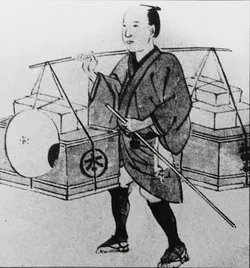
Sanpō-yoshi is an Japanese business philosophy originating from the Ōmi merchants of Japan. The term can roughly mean "good for three sides." A deeper examination of the meaning can be translated to "Good for the seller, good for the buyer and good for society."
The idea is simple. Good business benefits the customer, the seller and greater society. Acting with trust, fair dealing and contribution to community around them, lead to greater success for all.
The most immediate western comparison I could think of for this was "a rising tide raises all ships". A merchant's success should help create the conditions for others to prosper, also.
If you'd like to understand more, economist and investor Otto Oehring has a great write up on this: Japan's Ancient Ohmi Merchants and provides many sources.
Honda's Three Joy's
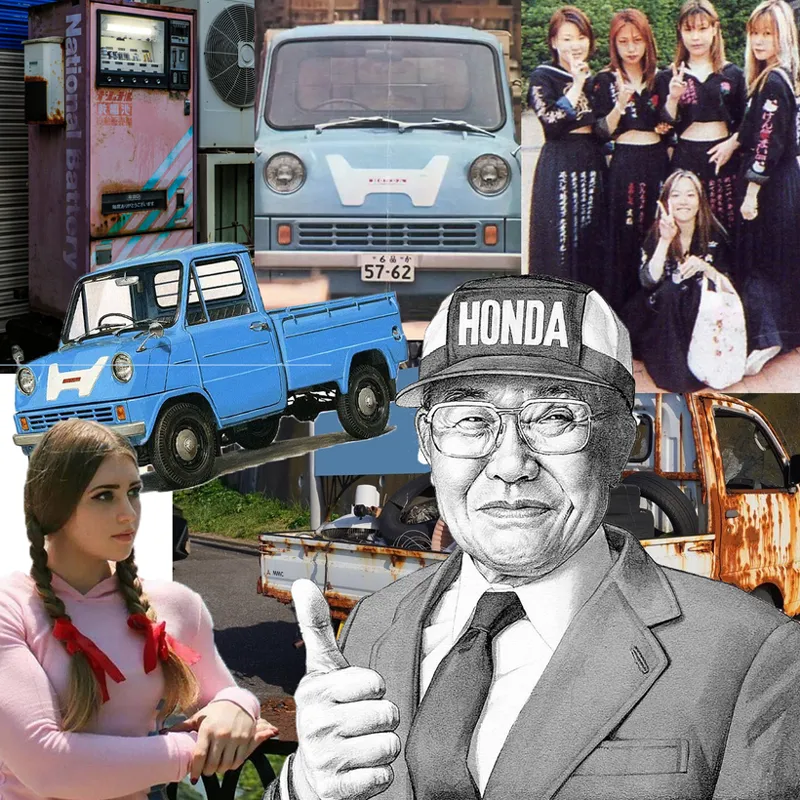
Sanpō-yoshi has endured outside of the Edo period. Soichiro Honda presented his "The Three Joys" in Honda Monthly No. 4 on December 1, 1951. The Three Joys set out the company philosophy as follows:
The joy of producing
The joy of selling
The joy of buying
Veteran Honda workers reflect on the statement with great appreciation.
A Honda employee reflects upon reading the company statement."It required tremendous insight to create that statement of Company Principle. I don't think that any of the other major companies have anything similar. And then there were the 'Three Joys' with their very down-to-earth language that was even easier to relate to. There are many companies that use the Japanese character 'wa,' or peace and harmony, as a kind of decorative element in their statements of corporate objectives, but I ask you, is any company going to prosper just with peace and harmony?"
Prosperity as a Mechanic
Originally penned in the design as Wa(和) - the harmony of a thing, reading through the Honda workers reflection upon other companies using this term weightlessly, and Honda himself selecting to use plain language, the mechanic was simply renamed Prosperity. KISS (keep it simple, stupid) plays a part here, but it should be no mystery that Honcho is largely a love letter to the Mr. Honda's philosophy.
How and why then, does prosperity fit into a game about little trucks and vending machines?
🌱 → 🌾 → 🌾✨
By now the why should be clear. Honcho is a game about engaging in capitalist endeavours. Benefiting through arbitrage and making money. Great effort is being made to ensure that the vending game tycoonism element of the game isn't just about racking up more money as a high score and spending it on trinkets. But how?
Here's how prosperity will work.
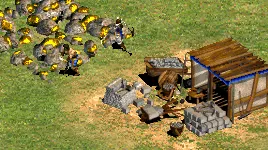
Each region (or prefecture) in the game has a prosperity value. Starting at 0, this value influences a lot of the mechanics in the game. Things like:
Condition of the roads
🌱 Expect pot-holes leading to higher tyre wear at low prosperity
🌾 Smoother driving with good quality roads at higher prosperity
Higher rarity of items
🌱 At low prosperity, expect to find poorly maintained rusted parts in kusahiro, and plundered goods.
🌾At higher prosperity, players will notice the fruits of the road will provide more and at higher quality.
Population
🌱 At low prosperity, roads will be empty and street filled with few customers
🌾 As this value increases, expect to see more vehicles on the road and more customers with higher disposable income
And as prosperity increase, players will notice even more benefits
Lower fuel prices
fuller shelves
etc.
To increase the Prosperity of a region, players will need to engage with the vending machine systems in the game. Purchase locations, install machines and ensure fair prices are set to reach the highest prosperity for each region.
Or if you like to play morally evil, you can set prices high, leave machines in a poor state and plunder the local communities to purchase your silly trinkets. Though the benefits here are simply more money.
Smash Capitalism?
These days it's easy increasingly harder to argue for capitalist systems. Smashing the system to rebuild isn't just trendy, it feels outright necessary.
In a 1848 speech "On the Question of Free Trade", Marx shocked his audience by declaring his support for Free Trade.
Karl Marx, On the Question of Free Trade, 1848"But, in general, the protective system of our day is conservative, while the free trade system is destructive. It breaks up old nationalities and pushes the antagonism of the proletariat and the bourgeoisie to the extreme point. In a word, the free trade system hastens the social revolution. It is in this revolutionary sense alone, gentlemen, that I vote in favor of free trade."
Marx believed that unregulated competition would lead to monopolies (!), driving down wages (!) and make life so unbearable for the working classes that they would eventually overthrow the entire capitalist system (...).
Clearly, Marx didn't anticipate the numbing effect of slop (formerly video games).
🌱
So, in a system without revolution, where the thing I'm making likely contributes to the apathy of it's players, it is probably worth thinking about what I want my mechanics to mean to people. My three joys.
Good for the developer, good for the player, good for society.
🌾
If you'd like to park your cynicism like me and try practising Sanpō-yoshi, a more succinct guide can be found here.
0.5 will contain the prosperity feature. As it's being hooked into a lot of systems, more testing and refinement is still needed. No date as of yet.
Thanks,
Greg
Comments (4)
Hello, if you don't mind me asking for this next update would you be able to add the ability for the bed to be more transparent on how much energy you have. the guessing game is simply an unfun mechanic when it comes to having to guess how much sleep you need without wasting time. even if you hide the stat and add a full sleep button or equivalent it would be much better
Of course, the original system was drawn from the Elder Scrolls series but I've now made the following amendments to improve feedback. - Digital watch now displays a "charge" showing how much energy Keiko has. - Sleep UI now displays the energy increase, as well as Keiko's energy level from that sleep: e.g. +5% (85%)
This sounds great, and the write-up on this was a fun read. I can also appreciate that a system like this lends itself nicely to iterating on later in development without having to refactor a bunch of earlier work. Like if you were to add a system where players and NPCs can get cool hats, you can peg NPC hat choices to prosperity. From the humble newsboy cap to the decadent 10 gallon. :-)
That's actually an awesome concept.