


Paralives: Built on Passion, Bound by Budget | Early Access Review
With The Sims still searching for its magnum opus after two decades, Paradox's troubled Life by You canceled before it ever launched, and Krafton's inZOI navigating its own complex hurdles in Early Access, the search for a viable alternative continues.
In a market so thoroughly dominated by a franchise that, for all its faults, remains an unmatched giant, does Paralives—an Early Access title crafted over six years by a small Canadian team of just 15—offer a compelling reason to look beyond the established mainstay?
A free Early Access copy of Paralives was provided by Paralives Studio. This did not influence my thoughts, critiques, or opinions on the game.
Part 1: The First 15 Minutes
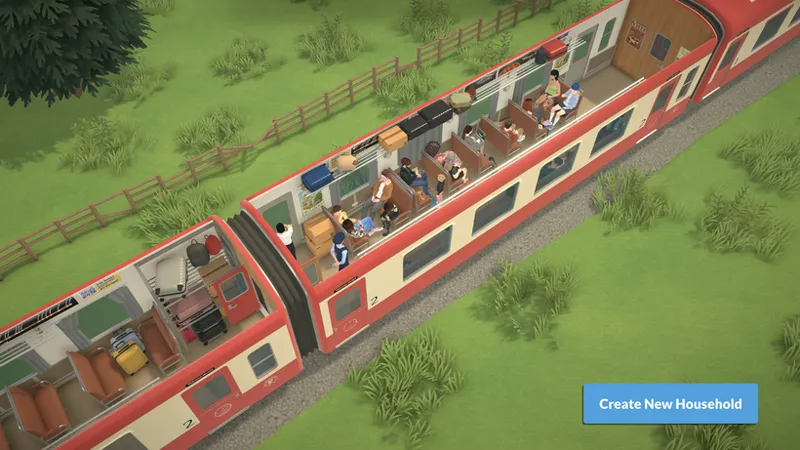
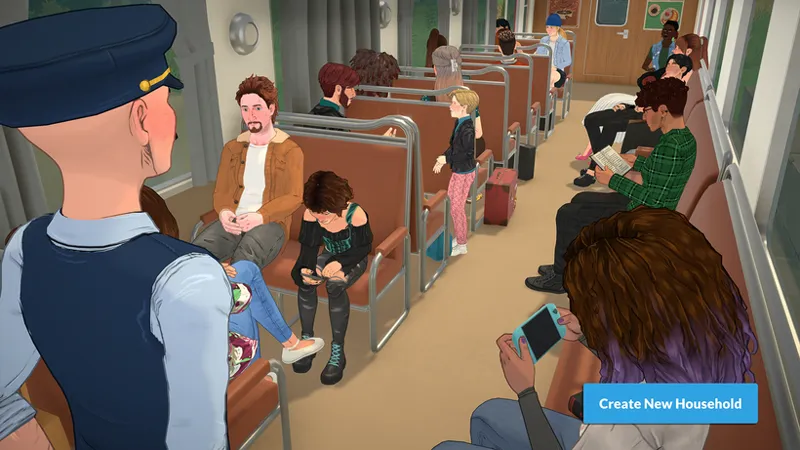
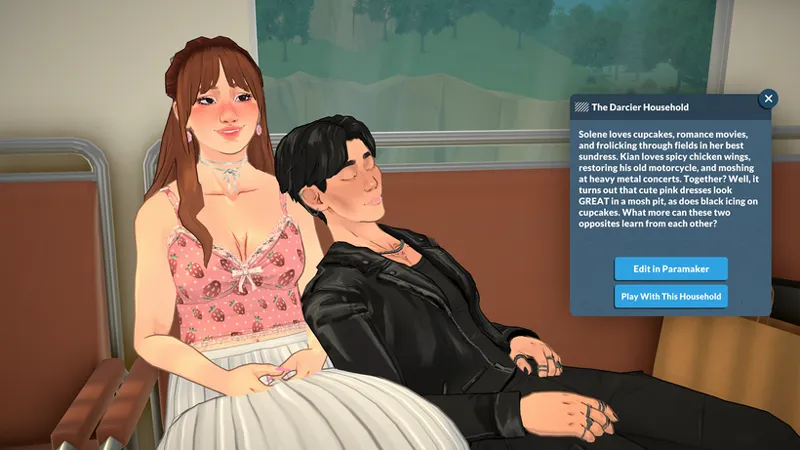
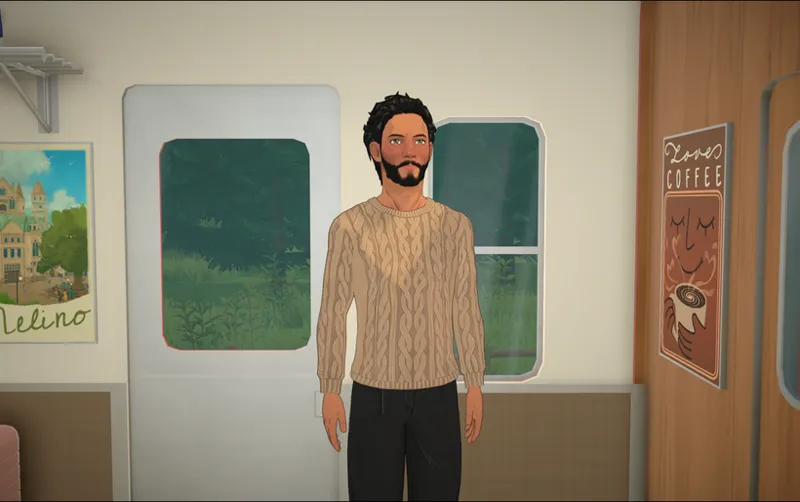
First impressions matter most, and Paralives is well aware of it. The game opens with a surprising tutorial set on a train that briefly introduces the general controls, then immediately lets you choose a premade family. These families come with distinct backstories and unique animations. You can also create your own household right there on the train while the countryside moves outside the window. This introductory sequence is exactly how things should be done; I was hooked straight away, realizing this was a thoughtful experience rather than a hollow "we’re better than the other guys" tech demo.
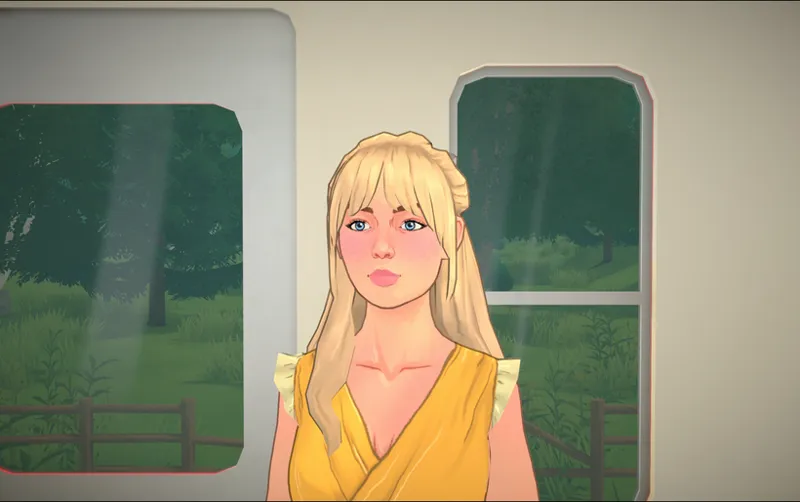
Playing house wouldn’t be possible without characters, and the Paramaker stands out as one of the strongest elements of the entire game. Frankly, it is probably the only aspect that does not feel like an Early Access feature. It is a complete, polished system ready to be expanded with assets over time. It hits well above standard indie expectations, looking as though everything on the developers' initial to-do list has already been executed.
While some of the UX requires work—rotating your Parafolk via right-click is not immediately obvious (especially on a trackpad), and specific sub-menus for face sliders can be confusing—the overall system feels much better than expected. There are a few bugs, such as forehead and cheek presets overriding one another, and the tool does suffer from frame drops when actively moving sliders, but the foundation is excellent.
The design of the Parafolks is unique and highly pleasant, which is crucial since unappealing character models make it difficult to bond with your creations. Their heavily stylized art style ensures they never look like generic human characters. When you see a Para, you know it’s from Paralives. You can hate them or you can love them, but they are everything but a generic human character that could appear in any random game. The only drawback is a slightly low fidelity on certain assets, particularly the hair meshes, which sits right on the borderline between an intentional stylized choice and a clever way to save performance costs to keep the game running light.
Paras' personalities are currently limited, relying on a basic attribute point system and general 'vibes' rather than unique traits, leaving characters lacking distinctiveness.
Part 2: Hands-On with Build Mode
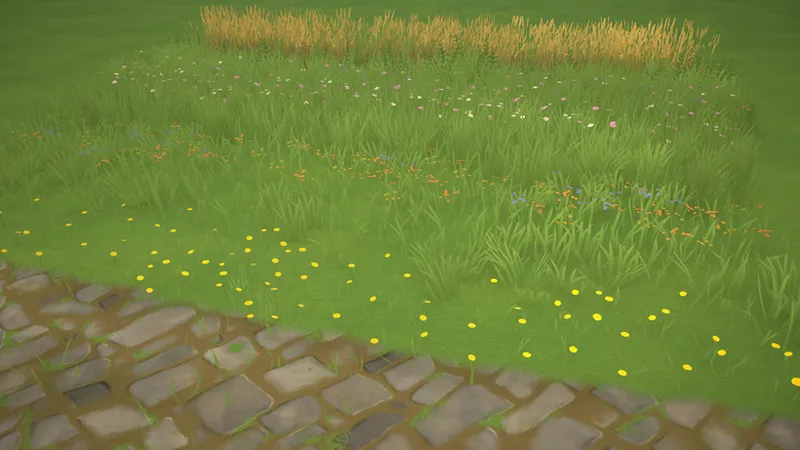
The building interface is genuinely good and has a gentle learning curve. Beyond standard tools, it introduces advanced features that completely change how you build. The ability to freely resize specific objects is absolutely amazing; you no longer have to build a room around a specific piece of furniture—now the furniture is custom-made to fit your house. You can make a sofa custom-fit a tight corner or as wide as a whole theater of seats if you wish. Same goes for windows, which is even more admirable. You can stretch a single window into unlimited variations to fit any architectural need. Another particular, and most likely very niche, aspect I really appreciate are the different terrain paints. They feature actual grass blades of different heights, along with dirt, soil, wildflowers, sand, and various paths—some even complete with 3D-modeled details.
With features this flexible, the current grid and snapping systems have some catching up to do. While building a bathroom, I tried to place wall lamps and was forced to eyeball the alignment completely because they glide freely across surfaces with no height guides or snapping assistance. This exposes a noticeable inconsistency in the UX logic: you learn a specific way things work in one area, but you cannot reliably expect that same logic to apply across the rest of the game.
There is also room for optimization regarding the general click efficiency across the UI: clicking a placed item opens a secondary toolbar first; you must click it a second time to actually pick it up. Saving a custom color with the + icon is easy, but editing that swatch later requires a right-click and selecting "Edit" from a dropdown menu. When landscaping, the tool deactivates after placing a single tree, forcing you to re-select it from the catalog every single time. There is no hotkey to return to the regular selection cursor, forcing constant manual clicking on the top toolbar icon. Essential options, like adding furniture to your inventory, are hidden away under a secondary dropdown menu.
Part 3: Live Mode
Unarguably, Live Mode is where a life sim is truly put to the test, and it is easily the most challenging aspect of development. Not only are you expected to deliver features and mundane everyday activities to compete with the established giant we all know, but you also have to find ways to make the experience truly yours.
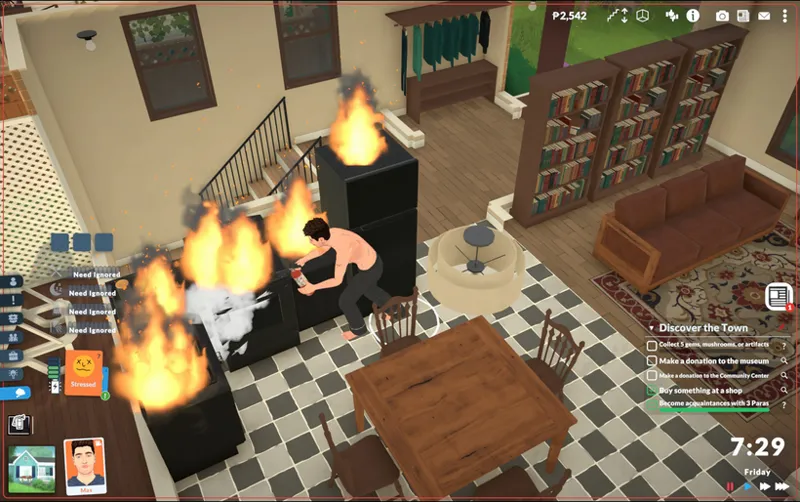
Paras eat, go to sleep, work, burn toast, and can even catch on fire (with the firefighters refusing to come even after calling for their help twice). The real question is: did Paralives manage to make this experience their own? They seem to be on a good track, even if there are more than a few hiccups along the path.
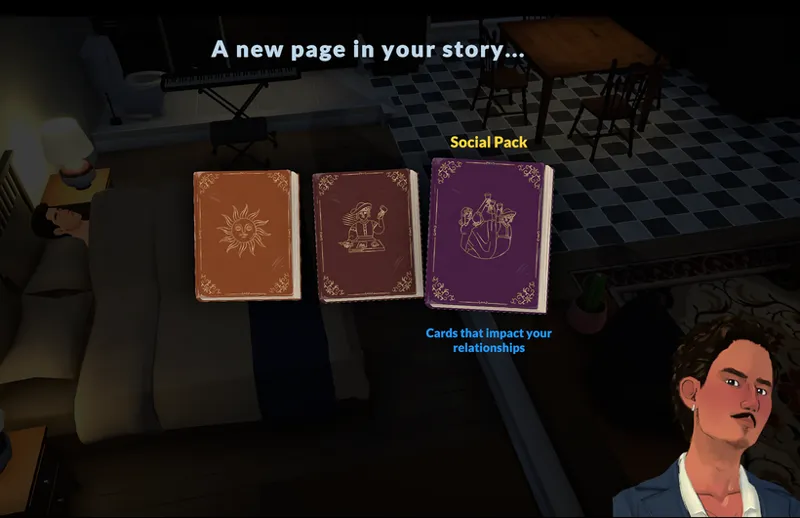
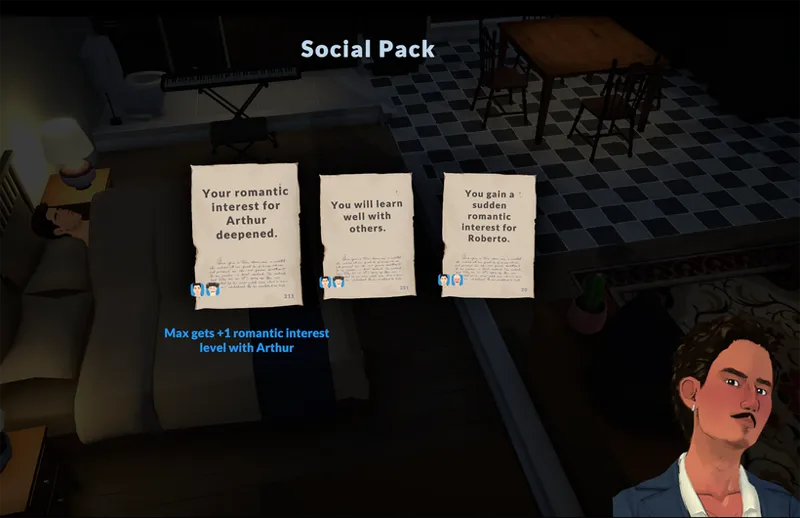
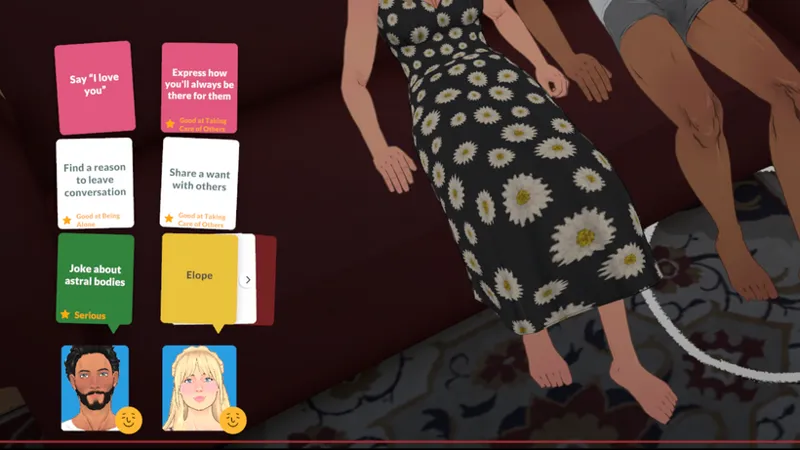
Despite the bugs, Paralives successfully establishes its own identity through some clever gameplay systems. The night-time "Storyteller" system offers a choice between tarot-like cards that grant unique perks or relationship boosts for the next day. One of the best things a game like this can do is make its mechanics intelligently respond to what is happening in your playthrough, and being given an option to increase romantic relationship building with a crush after a series of failed attempts fits nicely into that.
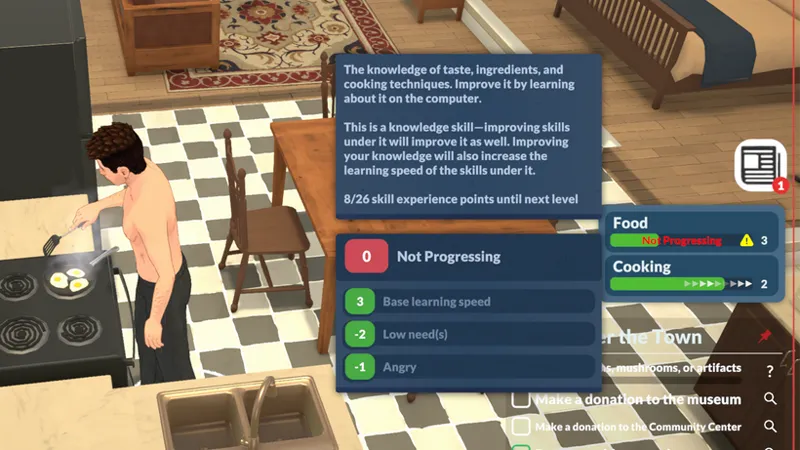
The skill system is equally well thought out, logically dividing traits into broader categories (like Food or Fitness) before branching into specific sub-skills (like cooking or dancing), with progress dynamically tied to your Para's mood and allocated talent points.
Coming home sick damages a Para's mood, but you have personality-driven solutions, like having a housemate cook healing chicken soup or consulting a neighbor in the healthcare field. Through these interconnected mechanics, the game avoids feeling like a cheap knock-off.
The game introduces its own distinguished underlying point mechanics while still playing into well-known, established concepts. If future gameplay loops continue to intersect and rely on one another, providing meaningful interaction between various aspects of the simulation, Paralives is on the right track to offer a genuinely interesting experience to explore. The current lack of depth—or rather, the limitation in the available Live Mode gameplay—is nothing that cannot be added later. It isn't an inherent problem; it is simply the nature of an early product that will continue to be shaped with time.
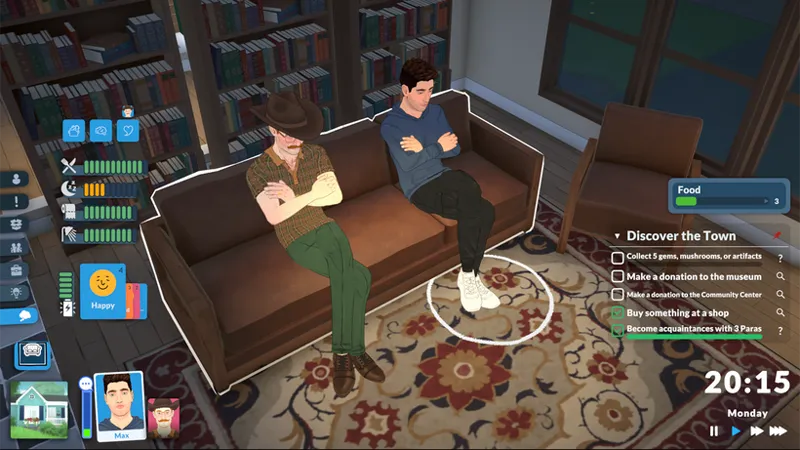
Socialization takes a unique route by replacing endless click-menus with a clean social bar that fills up over time, debloating the entire experience. While it feels slightly repetitive due to a small pool of interactions, it is an interesting, fresh approach to the mechanic. Ultimately, the Paras' stories are just as dependent on the player as the player is on the Paras' current choice of social cards.
At this stage of development, the visual layer has yet to fully mirror the depth of these underlying systems. Interacting feels weirdly detached because animations are often missing or glitched; two Paras can sit on a couch to "talk," but they display no voice-overs or facial movements while a progress bar quietly fills up.
Side Note: There are two very welcome Quality of Life features when managing your Parafolks. First, you can pin a favorite interaction for any object to create a quick shortcut; this pinned action can then be triggered instantly with a simple right-click on the object, completely bypassing the interaction menu. Second is the ability to easily reorder your active interaction queue. It is an extremely simple mechanical addition, yet it proves beyond useful when you want to adjust your Para's schedule on the fly without being forced to cancel the entire queue and re-click every single object.
Part 4: The Open World
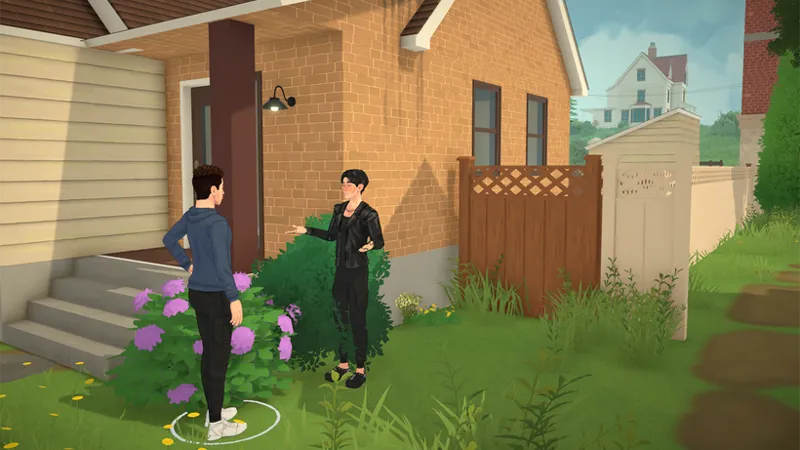
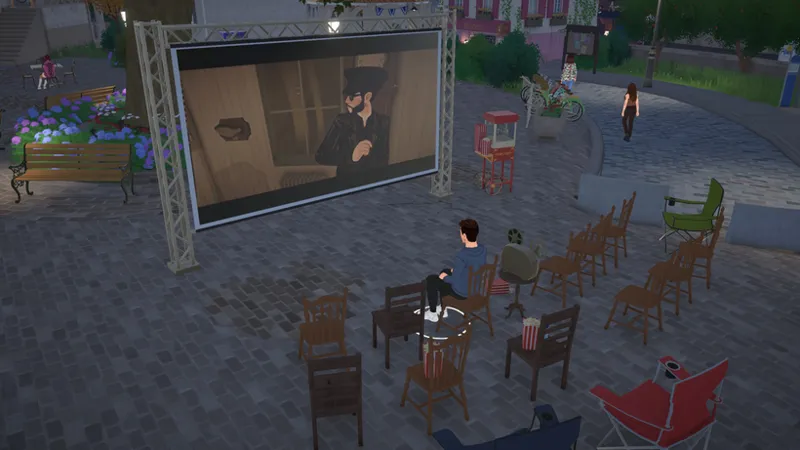
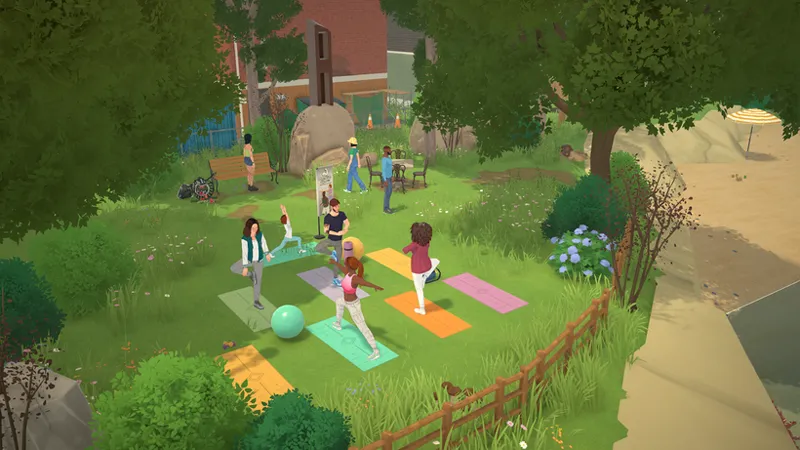
The open world successfully avoids the "ghost-town" curse, and I was positively surprised by the high volume of random walkbys. There is always someone walking around the environment to interact with, though the NPCs lack a bit of autonomy at times. For instance, the town features various public activities and scheduled events, like a Sunday Market where you can buy clothing and eat ice cream, or an evening movie screening. However, these events currently feel quiet due to a lack of NPC scripting. During the movie screening, no other Parafolks cared to visit or join, leaving my Parafolk sitting entirely alone.
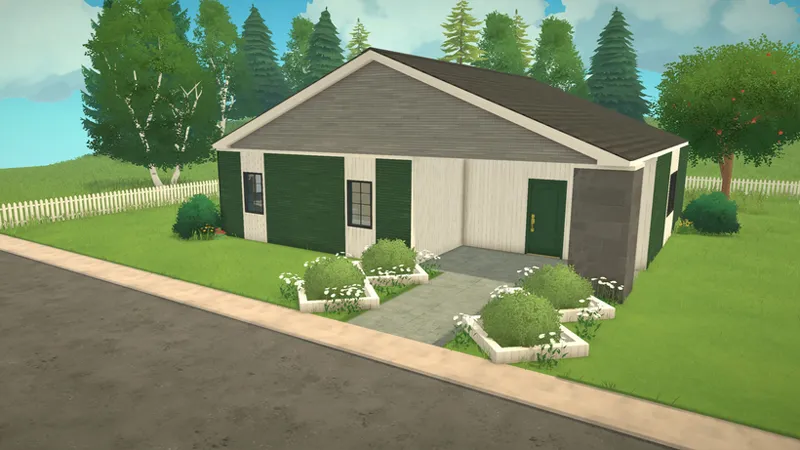
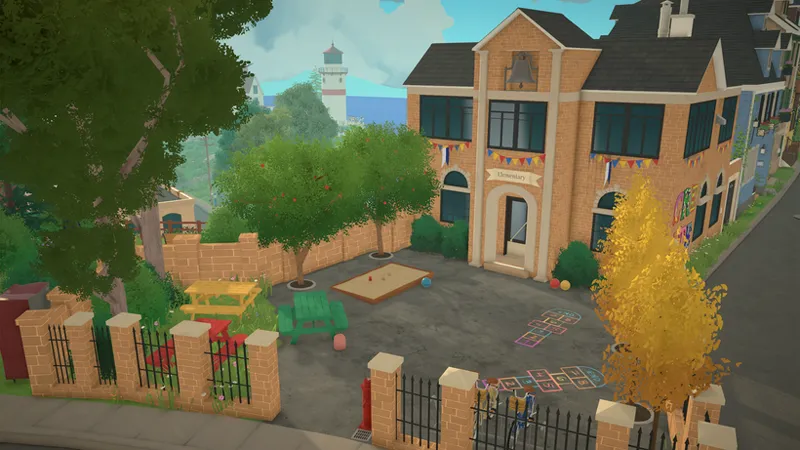
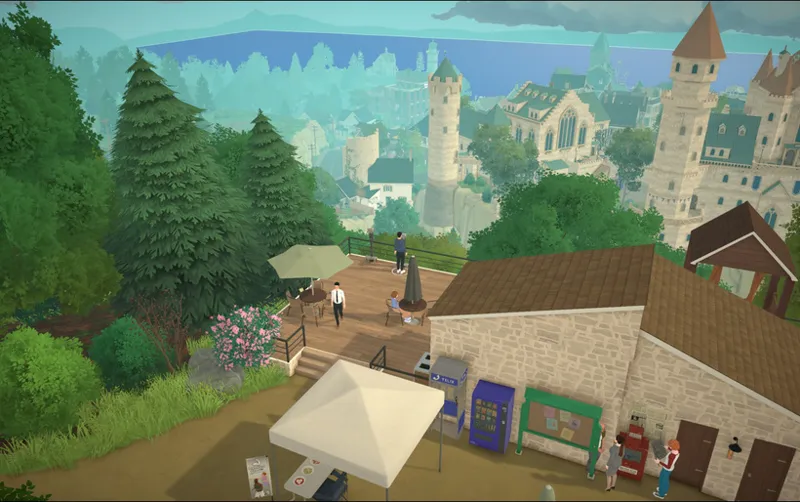
On the ground level, the town of Melino is beautifully designed, feeling incredibly cozy and full of charming details. Wandering through its winding pathways, stumbling upon hidden parks, and exploring distinct areas like the old town gives the environment a genuinely warm, inviting feeling. However, looking at the world map on a grand scale, the layout can feel a bit tight. The map is supposed to feature four distinct districts, but because the lots are packed close together, those geographical boundaries blur a bit, slightly shrinking the overall sense of scale and scope.
This compact design can also lead to occasional camera friction, causing the viewport to drop unexpectedly into awkward places when navigating tighter corners.
The town is highly memorable to explore on foot, though the layout would benefit from a slightly more sprawling design with open nature spaces to give the districts a bit more room to breathe. When everything on the map is a functional feature, it loses the organic breathing room that makes a world feel vast. Without empty areas of pure nature that don't particularly invite any gameplay, but simply exist to frame the town, Melino feels less like a real sprawling countryside and more like an artificial, heavily condensed set where every single corner has to be utilized.
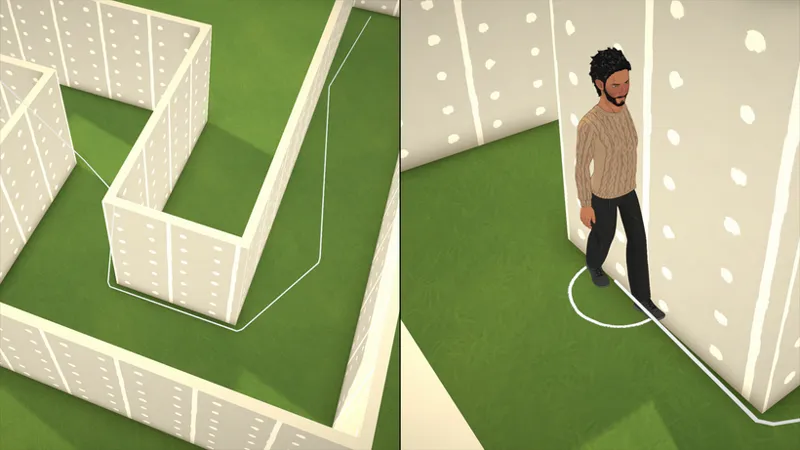
The pathfinding and travel systems are where the game’s early state is most apparent. Parafolks completely ignore structured walkways, sidewalks, and roads to calculate the absolute shortest geometric path, routinely cutting through wild bushes, steep hills, and neighbors' yards. When on active lots, they awkwardly hug the walls completely. Turning on the path-visualization tool in the settings reveals just how unnaturally close to the walls the game routes them.
Travel is also restricted by the current lack of cars or bikes. It took my Parafolk almost two hours just to walk across the map to their job, severely eating into their daily routine (though it didn't appear to affect their salary, as jobs are shift-based rather than earned hourly). The bus teleporter costs three Paradimes but is entirely user-driven; if you don't manually micro-manage the command, your Para will autonomously walk or jog the entire distance. Map navigation adds to this friction, as clicking a map tag only opens a text box showing lot information with no contextual "Visit" button, forcing you to exit map view, zoom in manually, and click the physical ground to travel.
While these are exactly the types of optimization quirks that future updates will hopefully smooth out, they are a bit noticeable at this stage.
Part 5: The Graphical and Technical Wall
Paralives utilizes a heavily stylized dual-approach: 3D environments paired with drawn, 2D-like characters. While this gives the game a highly unique visual identity, the stylized nature means certain areas lack handcrafted depth, leaving furniture and assets looking a bit flat.
Similarly, the indoor lighting is still very much a work in progress. There is no proper interior light simulation just yet, leaving rooms looking washed out at times and devoid of contrast or ambient occlusion. While there is a menu toggle to change this behavior, by default light pours unrealistically straight down through the ceiling. Placed lamps act as isolated bright spots rather than tools to dynamically "paint" a room with cozy light and colors, making the nightly interior atmosphere feel somewhat dated compared to older titles.
The acoustic atmosphere follows a very similar pattern of strong core ideas clashing with early technical tuning. The overall soundtrack is very good. The music is genuinely beautiful, bringing a calm, soothing vibe that perfectly captures the comforting nostalgia of classic life simulators while still establishing its own musical identity. The environmental sound design is equally nice, adding subtle layers of immersion with ambient details like birds chirping outside or the realistic, low humming of the kitchen refrigerator. Certain interface sound effects, though—like the heavy rewinding sound used for time controls—are far too sharp and prominent. Instead of blending delicately into the background, these sound effects can feel a bit too dominant and distracting.
Performance-wise, I tested the gameplay across three separate machine configurations (both Mac and Windows). Good performance is entirely dependent on hardware power, running smoothly only on an almost top-tier desktop setup.
Because the game is explicitly in Early Access, these widespread performance, scaling, and frame rate issues will hopefully improve significantly with future technical updates.
Part 6: The Grand Scale
It is entirely pointless to give Paralives a standard rating on a scale from 0 to 10 right now. This product represents the term "Early Access" in the most literal way possible. If you enter this game expecting the deep features of a long-standing giant like The Sims, you won't find it. There is an immense amount of content missing, and the $40 price tag feels less like buying a fully playable video game and more like a financial reward to the developers for their hard work.
But these rough edges do not suggest developer incompetence. Paralives serves as a clear proof of concept for how brutally difficult and expensive it is to build a life simulator from scratch. We watched Paradox’s Life by You get canceled entirely before even reaching Early Access, despite a massive $20 million corporate budget.
In sharp contrast, the tiny indie team at Paralives Studio managed a modest, crowdfunded budget of roughly $3 million over six years. For that amount of money, delivering a playable foundation that possesses genuine sparks of ambition, clear artistic style, and a highly unique soul is a massive achievement. That level of charm cannot be guaranteed by just throwing massive piles of corporate money at a wall and hoping it sticks.
Paralives is explicitly not trying to directly compete with or clone existing giants on day one. It is here to carve out its own distinct, personal space in the life simulation market—even if that space remains small for now and requires a fair amount of player patience, indulgence, and understanding. Ultimately, this game stands out because it is clearly the result of pure passion from a dedicated, tight-knit development team, rather than a cynical product driven by corporate greed.
Post Scriptum: "Should I buy it?"
At $39.99, the entry price matches that of a standard The Sims 4 expansion pack, but provides a complete standalone framework alongside a promise of free future updates and expansions. For core fans of the genre who regularly invest in life-sim DLCs, purchasing Paralives now is a straightforward decision that secures a growing title for years to come. On the other hand, casual players looking for a fully fleshed-out experience should hold off for now; with the game expected to remain in Early Access for roughly two years, it is worth waiting patiently for a full version before diving in to make sure the purchase feels entirely justified.
Comments (30)
a beautiful, thoroughly researched and well written post. "post scriptum" -- Now you're just showing off and casually letting your supporters know, YES PEASANT, I am smarter than you. And just accept it! ^.^ Honestly, I don't know why i thought the game was cheaper than $40 bucks. After watching way too many people on YouTube with their Para videos, I decided it wasn't for me, just yet anyway. I found that even though everyone was flabbergasted at the Paramaker and Build Mode, once they were done creating their household, there wasn't much to do other than look for collectibles, and go to work. Since Paras don't get excited or show emotion at big life events like friends, having a family, dating or death, it didn't seem like it was worth it in the end. If everything's the same to the Paras, then nothing really matters. I mean, that's just my opinion on the whole thing. I can see if you are an avid builder, I'm sure plenty pf people bought it for that reason alone. But when it comes to leading a fulfilled or even a chaotic life in Melino, it just doesn't hold any water on that front. Yet, anyway.
I'm playing it too. Honestly I don't like it that much right now because it takes a lot getting used to and it's just very early early access... I hated Sims 4 when it launched! (And that was a full release.) So I'm very optimistic about Paralives, I'm sure I'll love it later on.
Thank you for your report :-)
So at the moment it's another pretty building simulator? Because based on the "vibes" and points system, it seems the characters will, once again, be lacking just as in the sims 4.... 😪😕
I bought it last night, gonna try playing today. I own dozens of packs for the sims so this $40 is like a drop in the bucket with the promise of a really good life sim when it’s finished. I hope they use the money they’ve made wisely and continue to improve it. I enjoyed reading this review.
If you compare it to Sims 1 - how do you think it sits on par with that? I think its a bit unrealistic to compare this to our sims 4 versions which has had many years to get it right (and still havent!!!) So i think if we go back and compare to the original sims, perhaps people may be more willing to overlook the major differences we are so used to playing with nowadays..
Amazing review and so well put without speaking negatively about the game, but moreso on it's phenomenal potential. I also love how you hit every nail on the head with the building issues, NPCs, and necessary animations that are currently missing. I'm positive the devs are well aware of this simply bc of how much they've put into the base game and communicating their roadmaps for the future. A one-time $40 payment for the stage they've set was incredibly gracious. They got my vote 💕
Nice detailed review with which I agree for the most part. What prompted me to get it on day 1 was what I saw (with all the rough edges) and that contrary to that big giant in this niche, this can grow into something special with the rollout to and support/feedback of a large player base. Just imagine where this other game would be today if they had listened to their players instead of their greed ...
thank you so much for your review! i'm particularly interested in the graphic section of your review where you mentioned the flatness of the objects and the lighting was caused by the unique 3d + 2d integration. do you think the graphics would improve in the future? or is it going to be set like this because how the game engine was built around it. i really want to invest in this game because i'm a builder, and seeing how much customization there is to the build mode compared to the certain giant, it really makes me wonder how much more i could build with this game. but i really don't know about the graphics... and i don't think i could get used to it because it has no depth to it...
No. I think Paralives content creators should open a dedicated account and stop boring Simmers with clunky images and depressing colors. Paralives doesn't have any graphics options. For us, it's an extremely unpleasant experience; it's like being in an exclusive club and watching primitives tear raw meat apart. Please.
I’ve been seeing so many reviews and gameplay walkthroughs and I will say if I had the money I would’ve bought it the second it was available. It looks really promising and I can’t wait to see what the devs do down the line.
From what I can tell, my laptop with integrated graphics and 32GB ram should play it. It will try it out when I get paid next. I can always refund it if it doesn't work.
I was pleasantly surprised by how well it ran on my computer considering the open-world mechanic and the customization in the paramaker. I was happy to spend the money with the launch discount and am looking forward to watching it grow. I'm struggling with the camera only because the world really is tightly packed, but I think with practice I'll get it. I'm not as sure about build mode, but I'm not great at building in Sims 4 after 12 years either, lol.
Really well written
I sincerely appreciate your detailed feedback! Hopefully updates keep coming and improvements do too
whether or not this game is complete or not, I've decided to buy this game for not only trying it out but also financially support the team, even if it's incomplete it would help the game get better with the sales and the feedback from players
This was the kind of review I’ve been looking for, thank you so much!
Im gonna wait to buy it until they add more stuff amd weather. Also to be honest, I think the art style is ugly to me. I hate the cartoon art style in ANY life sim game. I like my life sims game looking gorgeous and realistic. Which is why for now I'll stick tk Inzoi and my cc and mods for sims 4. But I hope they do well.
AI slop isn't exactly a feasible competitor in the life simulation games industry. Inzoi is painful to look at and feels like a shell of a game. Paralives might not be your style, but at least it has a style thought out and designed mindfully by a team of artists and game engineers. Aligning AI slop with the term "gorgeous" feels a bit detached and hollow.
Thank you so much for this. Am looking forward to playing the game out of early access and supporting the team how I can along the way!
Very well written and well thought out post, not that we expect anything less! Thank you!
Kinda reminds me of Runescape!
Very well written!
Thanks so much for the detailed review, Matt!
"casual players looking for a fully fleshed-out experience should hold off for now" I would say to those too that the dev team of paralives already cut ties to patreon payments and will be doing work with only the game revenew from now on. So if you want this to prospere and become a true "sims killer" or a match at least, a match that is not hold by the leash of a big corpo that just want to see numbers, give it a buy; it is a sims dlc for an entire game that is going to deliver, they delivered early access and that says a lot.
Thanks for this useful review. I think I'll go ahead and buy it . I love the look and charm of it.
Great review!!! Recognized the TS3 starter immediately, lollll
From all the early early access content I’ve watched (and it has been sooo much) I 100% agree with this review. I am still buying it today and can barely wait till I’m off work to play it.
I would know that TS3 starter home anywhere! Well played.
just bought! super excited to hear more of your thoughts Matt!!