
[COLUMN] Wonder Man Has Some Thoughts About the State of the Marvel Cinematic Universe | by Darren Mooney
Note: This piece contains spoilers for Wonder Man, which is now streaming in its entirety on Disney+. The show is a bit light and a bit sluggish in its pacing, but I had a good time with it. It helps that the series has a clear identity, big themes, good character work and two of the best working actors today. It’s a television show that actually feels like a television show. Maybe the second-best of the live action Marvel Studios shows behind Loki. So, if you want to check it out, feel free to bookmark and come back.
Jean-Luc Godard once argued that every film is a documentary of its actors, an observation that Jacques Rivette refined into the belief that every film is in some way a documentary of its own making. This seems particularly applicable to films and television shows that are, like Marvel Studios’ Wonder Man, about the production of films and television shows.
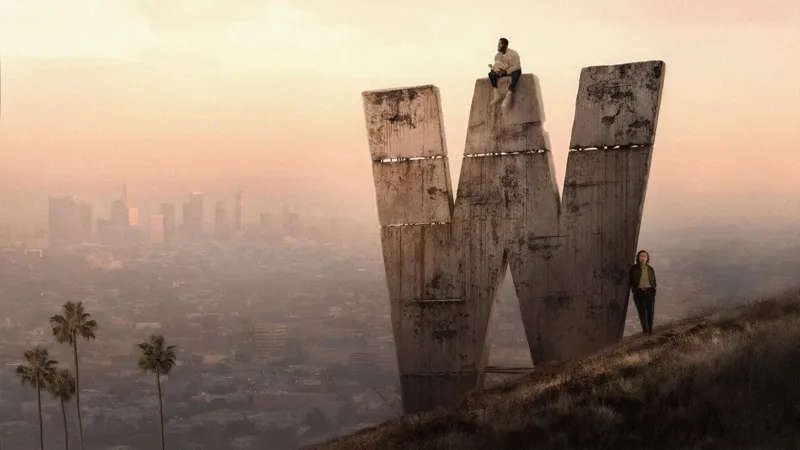
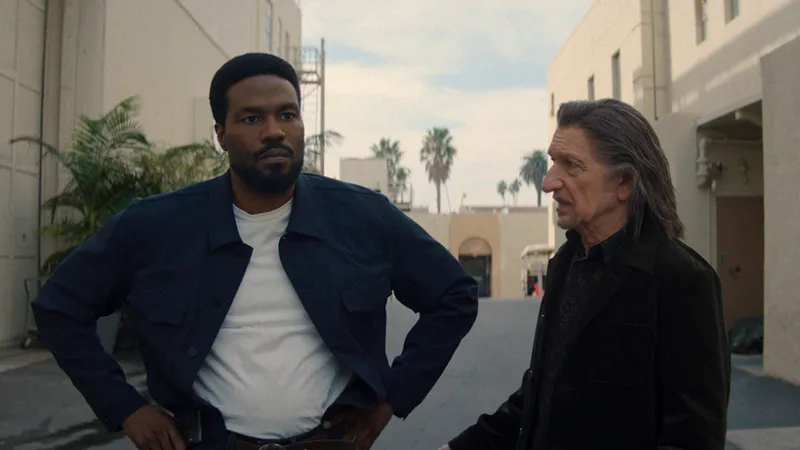
Set within the Marvel Cinematic Universe, Wonder Man focuses on a cinematic reboot of the eponymous superhero, overseen by arthouse director Von Kovak (Zlatko Burić), who believes that he can create something that is both “human and spectacular.” The series follows a young actor named Simon Williams (Yahya Abdul-Mateen II) who is aggressively pursuing the lead role in the film, along with veteran performer Trevor Slattery (Ben Kingsley).
Wonder Man is co-created by director Destin Daniel Cretton. Cretton has extensive experience in the shared superhero universe. Not only does he direct the first two episodes of Wonder Man, he previously directed Shang-Chi and the Legend of the Ten Rings and was the first choice to direct the movie formerly known as Avengers: The Kang Dynasty before he moved on to direct the upcoming Spider-Man: Brand New Day. Cretton is, to put it frankly, up to his knees in this stuff. He knows it.
Part of what is really interesting about Wonder Man is how committed the show is to its premise. Many of these Marvel Studios shows often feel like generic superhero blockbusters stretched across four to five hours and cut into arbitrary chunks. Something like WandaVision might begin as a formally adventurous exploration of the history of the television sitcom, but it inevitably descends into a fairly generic climax in which characters shoot color-coded laser beams at each other.
In contrast, Wonder Man remains much more tightly focused on its characters and their world. The show even has neatly structured self-contained episodes, such as the fourth episode which serves as a black-and-white vignette on the career of superpowered actor DeMarr Davis (Byron Bowers) in the style of Atlanta and the fifth episode which finds Simon and Trevor embroiled in an escalating feud between Los Angeles teenagers that feels like an overt homage to Barry.
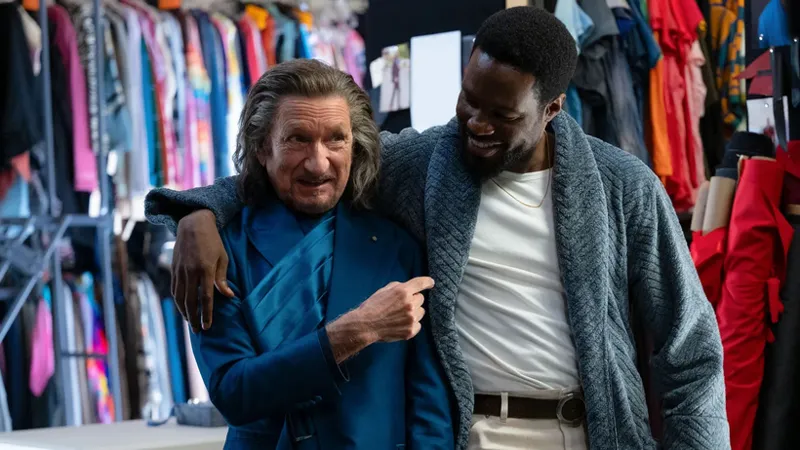
It is a surprisingly fun show which believes enough in its own premise that it doesn’t have to lean on cameos and continuity. It helps that the series is working with two of the best performers in the business and that there is a real warmth between Abdul-Mateen and Kingsley. The show trusts Williams and Slattery to carry the audience along, to invest in the unlikely friendship between the pair as it ebbs and flows, as each discovers more about the other.
However, there is something more profound stirring beneath the show’s surface. As with recent shows like Ironheart or Marvel Zombies, there is a sense in which Wonder Man is in conversation with the larger Marvel Cinematic Universe. To the credit of Cretton and showrunner Andrew Guest, this conversation runs a little deeper than the cheap shots that one might expect in a series about the production of a modern superhero movie. Wonder Man has bigger ideas on its mind.
In particular, the show is cleverly in conversation with how entertainment companies in general and Marvel Studios in particular have treated performers of color, and the complicated relationship that exists between the American preoccupation with celebrity and racial identity. It is a series that is, in no small part, about how the industry treats two non-white performers and the very delicate balance that these people have to walk within fame.
It is revealed quite early in the show that Simon Williams has superpowers. He burnt down his family’s kitchen as a child. He shatters the wall in his apartment when he lashes out. However, he has to conceal those powers in order to continue working in the industry, even when auditioning to play the role of a superhero. Wonder Man never delves into how Simon got his powers. They seem to be intrinsic to his identity. He seems to have been born with them and has no control of them.
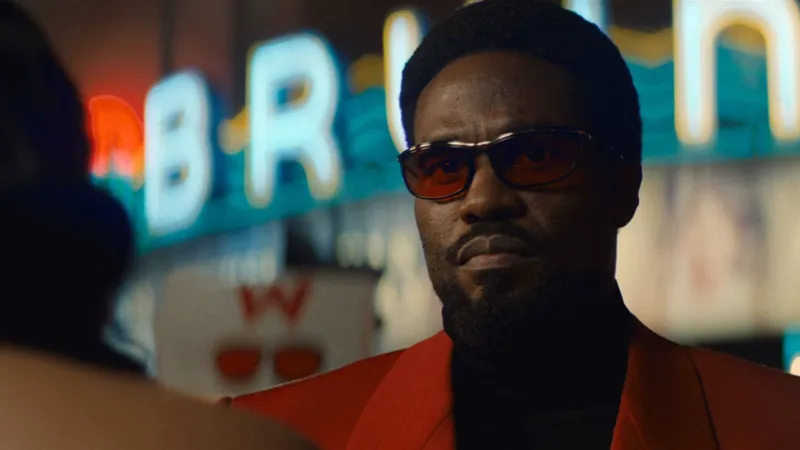
To audition, Simon has to sign “a Doorman Waiver.” This is a reference to Davis, who operated under the superhero alias of “the Doorman” and had the ability to use his body to physically transport people. Davis used his gift to become a minor celebrity and actor. However, despite his desire to be taken seriously and to prove that he was “much more than just a catchphrase”, he was often reduced to a superpower punchline with his trademark one-liner “ding dong.”
There are shades of Spike Lee’s Bamboozled to the story of DeMarr “the Doorman” Davis. He is a performer of color who is quickly reduced to a joke and a meme. With his body as a portal, he is treated as a literal utility, something to be used, exploited and then discarded. Inevitably, he turns to alcohol to sustain himself. This culminates in a freak accident that leads to the disappearance of beloved actor and trip-hop artist J-Gad (Josh Gad).
Wonder Man never explicitly broaches the idea of race, but it simmers through the show. The need for Simon to control his temper and to bottle up his emotions, knowing that any outward manifestation of his emotional state will lead to him being blacklisted within the industry evokes the stereotype of “the angry Black man”, the double standards to which people of color are held. It is clear that Simon and DeMarr are held to different standards than Steve Rogers (Chris Evans).
Simon’s superpowers become a metaphor for his identity, parts of himself that don’t conform to social expectation. In some ways, Wonder Man feels quite close to an X-Men story. It’s possible to read Simon’s hidden abilities as a commentary on race or sexual orientation. “I know how hard it can be Simon,” his father (Bechir Sylvain) tells him as a child. “At this age, kids are cruel. They sniff out anyone who’s… different. But sometimes, different can also be great.”
Simon is in some ways closeted. “Simon, I know,” his ex-girlfriend (Olivia Thirlby) confesses. “We lived together. I loved you. I knew for a long time that you are… different. I just didn’t want to say anything, because it didn’t feel like it was my place. And of course I understood why you had to be careful why no one could know. But you could have trusted me. I was always waiting for you to trust me.” She ends by telling him, “And I hope one day you find someone that you can trust. Someone that you can really be yourself with.” Of course Simon is an actor. His entire life is a performance.
This double standard has implications outside of the entertainment industry. It’s weird to think of Wonder Man as an extension of Cretton’s work on films like Just Mercy, but there is an interesting recurring subplot focused on the Department of Damage Control, headed by Secretary Heyerdahl (Dan Donohue). The Department of Damage Control has built “an incredibly expensive, state-of-the-art, high-security prison.” There’s just one problem. Heyerdahl needs to justify his budget.
“Our prison is half-empty,” he warns his staff. “Half-empty! And the congressional budget office is up our ass looking at every nickel-and-dime we’re costing the taxpayer. We’re facing significant budget cuts.” As such, his subordinates are tasked with finding – or creating – criminals in order to justify the expenditure. Given how heavily the superhero genre has been informed by the War on Terror, it’s refreshing to see Wonder Man deal with the capitalist carceral state, driven by profit motive.
There is something very interesting in the show’s use of Trevor Slattery as a vehicle to explore this idea. Introduced in Iron Man 3, Slattery was originally hired by Aldrich Killian (Guy Pearce) to pose as “the Mandarin”, a terrorist created by an American arms manufacturer to justify the War on Terror. In Wonder Man, Slattery discovers that he is unable to escape his past, blackmailed by Department of Damage Control Agent Cleary (Arian Moayed) to help justify an arrest of Simon Williams.
Kingsley is the son of a white part-Jewish Englishwoman and a Gujarati Indian doctor who was born in Kenya. Across his career, Kingsley has been able to play just about ethnicity imaginable. Trevor Slattery is a proud Englishman, but the Mandarin is ambiguously and generically “foreign.” The name is obviously Chinese, but his theatre of operations appears to be based in Afghanistan. There is a clear sense that Trevor and the Mandarin exist outside the boundaries of “whiteness.”
As with Simon, there is a clear sense that Slattery is being held to an unfair double standard. He was an actor hired by a billionaire, who had no idea that he was being used as a justification for American foreign wars. He was later abducted from his prison cell by crime lord Xu Wenwu (Tony Leung) against his will, but Cleary argues that Slattery should be sent back to prison for failure to serve his sentence. Slattery can’t seem to escape the Mandarin, a racist stereotype created by a white man.
There is something vaguely self-aware in all of this. Wonder Man seems to be exploring the way in which major studios in general and Marvel Studios more specifically have treated performers of color over the past number of years. In the wake of Avengers: Endgame, the company pushed forward a young and diverse line-up of heroes to represent contemporary America. Women and people of color were given positions of prominence in popular culture.
Sam Wilson (Anthony Mackie) picked up the shield and adopted the mantle of Captain America. Riri Williams (Dominique Thorne) announced herself as Ironheart. Shuri (Letitia Wright) assumed the role of Black Panther. Kate Bishop (Hailee Steinfeld) became Hawkeye. Jane Foster (Natalie Portman) picked up Mjölnir. Carol Danvers (Brie Larson) was introduced as a new powerhouse of this shared universe. Two-time Academy Award winner Mahershala Ali was cast as Blade.
The company pushed characters like Kamala Khan (Iman Vellani) and America Chavez (Xochitl Gomez) to the fore. It produced shows for heroes like She-Hulk (Tatiana Maslany) and Moon Knight (Oscar Isaac). In the most optimistic reading, Marvel Studios, which had taken ten years to make a movie with a Black lead and eleven years to make a movie with a female lead, were finally sharing the spotlight with a more diverse assembly of heroes that represented contemporary America.
However, there was a more cynical way of looking at things. With “the Infinity Saga” wrapping up with Avengers: Endgame, providing an obvious disembarkation point for the fans who had been watching since Iron Man, this younger and more diverse selection of characters allowed Marvel to gain some positive press and social media sentiment. This wouldn’t be an issue, if the company actually invested in this new slate of characters.
Instead, despite positioning these heroes as the future of the franchise, the studio undercut them. Characters like Kamala Khan, She-Hulk and Moon Knight were relegated to streaming shows that were lower profile than the films. Those characters in films were crowded out by the ghosts of the company’s less diverse past. Jane Foster couldn’t be Thor like she was in the comics, because she was in a movie led by Chris Hemsworth. Sam Wilson’s big blockbuster debut ended up being a stealth sequel to The Incredible Hulk from 2008. America Chavez, a character whose power is traversing the multiverse, has appeared once in “the Multiverse Saga.” Blade didn’t even get a movie.
Marvel effectively marched these actors and characters off a glass cliff, positioning them as the face of the brand in the midst of the inevitable wave of superhero fatigue that followed more than a decade of media saturation. It is frustrating because when those characters were given the space to perform unburdened by nostalgia, they demonstrated their viability. Ryan Coogler’s Black Panther and Black Panther: Wakanda Forever were massive hits, as was Destin Daniel Cretton’s Shang-Chi and the Legend of the Ten Rings in the midst of the global pandemic.
However, much like Cleary makes it clear that Simon and Trevor have little autonomy over their lives and careers, it quickly became clear that Marvel Studios would abandon these actors and characters at the first sign of trouble. Robert Downey Jr. is returning as the lead of Avengers: Doomsday. The first trailers showcase the return of Chris Evans and Chris Hemsworth. Whatever the company was building with these characters has been discarded. They’ve been cast by the wayside. Actors like Kumail Nanjiani have talked about how it feels to be chewed up and spit out by that machinery.
These actors have become targets of sustained hate campaigns driven by angry grifters. Actors on other Disney properties – including Jodie Turner-Smith and Amandla Stenberg on The Acolyte – have talked about how little these companies do to protect their casts. This anxiety simmers through Wonder Man, the story of two actors of color starring in a gigantic summer blockbuster who know they could be thrown out at any moment. Trevor is ultimately forced to reprise his role as the Mandarin to protect Simon, and is replaced in the film by white actor Joey Pantaliano (himself).
While there’s very little interesting or exciting about Doomsday, there is a sense that some of the smaller and more marginal projects at the edges of the shared universe are unpacking the cynicism of this shift in direction. Coogler produced Ironheart, a show about how people of colour often have to make deals with the devil in order to be allowed to develop their own ideas. Marvel Zombies feels like a metaphor for the way that characters like Kate Bishop and Kamala Khan have been consigned to a literal dead-end narrative.
Wonder Man feels like it is part of that same wave of meta-commentary, a movie about two actors starring in a big franchise film who ultimately know that they have little control of their own narratives and are subject to cynical forces outside of their control. It’s ultimately sweet that Wonder Man ends with Simon using his powers to literally break Trevor out of prison, throwing away his stardom so that they can both finally be truly free.
Comments (5)
"this conversation runs a little deeper than the cheap shots that one might expect in a series about the production of a modern superhero movie" I must admit I couldn't get past the first comedic scene of actor-being-problematic-on-set, even though I -was- watching this for the comedic potential in movie production. I think it's the concept of cringe comedy in general that rubs me the wrong way? The immediate reaction that I don't want to spend my time with that character? Is it my attention span?
Interesting. I'm not a cringe comedy guy. I cannot stand either version of "The Office" and bounced off Gervais before it was fashionable. But this never struck me as that. (I actually really liked the care that the show put into Simon's worldview. There is a well-observed difference between Simon and Trevor's acting philosophy, where Simon is the "serious" young American actor who feels like acting needs to be hard and complicated, and Trevor is the old British stage ham, who is like, "What does it say in the script?" I was talking to somebody at the weekend who remarked that it reminded them of Hopkins talking about roles like "Thor" - and he's great in the first and third "Thor" films - where he'd famously write "N.A.R." on his pages - "no acting required.")
A great article as usual, Darren, though I do have thoughts. It took a while for Marvel to focus on non-white and female heroes, with varying success. By the time this change occurred, much of the creative spark had left the studio, and aside from Black Panther, the movies just weren’t very good. The Eternals was a strange art house film with one of the most awkward love scenes ever put to film; Shang Chi had a good first 2/3rds, then devolved into a Kaiju fight, and I thought She-Hulk was once of the worst television series that I’d ever seen. The writing was truly awful. Also, one of the secret strengths of the MCU was its casting, with Chadwick Boseman, RDJ, Chris Evans, Chris Helmsworth, and Scarlett Johansson being perfect for their roles. I can’t say that later MCU works. Brie Larson is an Oscar winner, but was flat and disinterested as Carol Danvers. Tatiana Maslany is a wonderful actor, and earned an Emmy, but was horribly miscast as the titular character. It’s unfortunate that these characters were introduced at the same time when both the MCU declined and superhero fatigue occurred. Even the Thunderbolts, which got good reviews, and featured two female characters, one of which is biracial, was a financial flop.
I'm just glad that one of my favorite comedians/improv musicians, Zeke Nicholson, is a writer on a big property like "Wonder Man."
Honestly, I really like hanging out with Yahya Abdul Mateen II and Be Kingsley.