
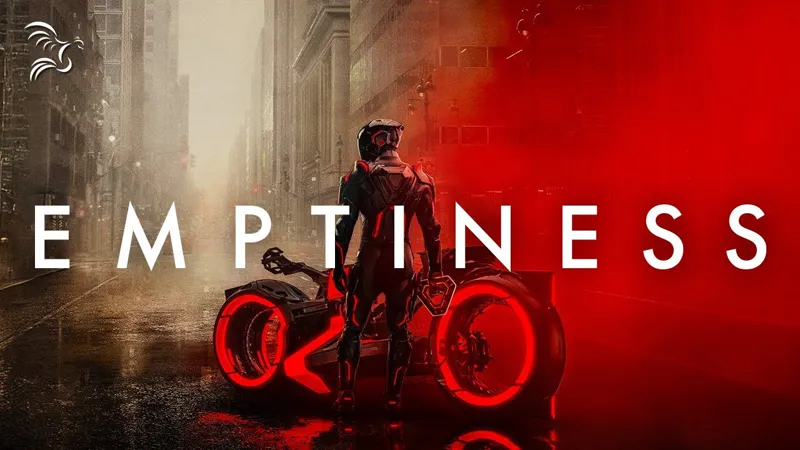
TRON: Ares and the Literal Emptiness of Modern Blockbusters | The Backdrop
This week's episode of The Backdrop is now available!
TRON: Ares and the Literal Emptiness of Modern Blockbusters | The Backdrop (YouTube)
Comments (16)
Excellent work, and well worth the length. I always enjoy learning something new about cinema and I’m reminded again to give Thunderbolts a go. I’m suddenly taken back to parts of big movies that actually made me emotional and it’s often that small moment of personal sacrifice or empathy for a stranger. Having watched m3gan 2 yesterday I was wondering about why it was just so… lame, and one of the reasons was that for all the talk of an AI apocalypse, we never actually see anyone panic, or react, outside of the main characters. Tell don’t show indeed.
The political zeitgeist in the US and UK since 2016 (thanks to Trump 1 and Brexit respectively) has had a strong overtone of 'ignore the likely consequences'. Politicians and voters are increasingly playing the 'do as you will shall be the whole of the law' game as if future consequences have been abolished by edict. The 'nobody got hurt' element of modern city destruction movies seems just an extension of that sort of thinking. Now everyone is acting like we're not on the brink of a global economic meltdown because of the AI investment bubble being about to burst. The Obama-era movies were, I think, so caring as a reaction to 2008 and the subsequent 99%ers. How will entertainment react to an even bigger economic crash? Best Backdrop to date. Many thanks.
None of this is particularly new, mind. Can arguably be traced back to Ronald Reagan even before the End Of History era that consequences simply aren't a thing that happens to America, and it's very bipartisan.
I thought Wonder Woman handled this really well despite the big punch up taking place in an empty air field. Wonder Woman has the choice to either stop bombers or missiles (I can't remember which it was) full of nerve gas that are going to kill a lot of people or engage in a big punch up. She chooses to have the big punch up & let the bombers/missiles go because of the religious indoctrination she was subjected to while growing up. She does this even though she's immune to the nerve gas so there's no risk to her of going after the bombers/missiles. This leads to Chris Evans character sacrificing himself to stop the bombers/missiles and save thousands of people. Wonder Woman wins the big punch up but gets functionally defeated. "Stopping Ares" doesn't stop World War I, the way she thinks it will. And, it doesn't prevent World War II. It accomplishes nothing. It leads to her disillusionment with her religious upbringing. She doesn't go back home. She doesn't keep trying to live "as a hero". She goes to a quiet job and normal-ish life seemingly haunted by her decision to have the punch up vs. save people. Its the only super hero movie I can think where the hero/hero's ethos is defeated. Yes, the sequel killed this, but not going into the sequel
I am very fond of the original “Wonder Wonan” in part for the reason you mentioned: superheroes can’t stop real world trauma, no matter how many times we write it into the climax of the movie.
I'm seeing a lot of people in Youtube comments retroactively going "Um actually Tron Legacy was a fantastic movie and it defined my childhood" despite how unimpressive it was on a narrative level. It certainly *looked* nice and the VFX people did a great job but I'd struggle to call it anything other than decent. The TV show it spawned was a lot more interesting, had a lot more visual variety and even worldbuilding variety (the main antagonist had stretchy arms that could kill programs like the discs they use) and, while a traditional story about overthrowing a fascist dictatorship, grounded both its protagonist (by emphasizing that he isn't anything more than a dude trained to fight with no other special powers) and its antagonists. (the main villain even has a nightmare sequence where the hero succeeds in freeing the Grid from his rule) In reference to the topic of the film: ah yes, the framerate dimension. A magical place with little to no visual decoration outside of clear indicators where the ground starts and stops so as to not distract the audience from the action taking place on screen and to minimize the load being placed on the console to keep framerates at a buttery smooth 60 fps as much as possible. While I don't *feel* strongly one way or another, I do think that you're right about a lot of films either handwaving or retconning collateral damage in cinematic climaxes with massive budgets like this. Cities are destroyed but no one gets hurt. In all fairness though, when the Zach Snyder's Superman and Batman v. Superman took place in crowded metropolitan areas, that was the biggest topic of discussion surrounding those films. People pointed and said "hey, Superman would never destroy a city with people still in it just to fight the bad guy" so I think everything after that has been a deliberate attempt to avoid killing faceless bystanders. So I think putting the fights in the framerate dimension is an acceptable alternative to demigods beating the snot out of each other while they destroy peoples' homes and workplaces. But it'd be foolish to say that's the only solution as well, there could just as easily be a fight on a smaller scale where not a whole lot is destroyed or there could be no fight at all. (although this would just cause more problems than it solves from the audiences who came to see someone get punched through a wall on ten separate occasions) I think the big issue with sequences like this is that directors (creatives in general, really) assume empathy on the part of the audience, that we're going to be sad when someone gets their house broken in half by a dude flying through the roof rather than feeling just mildly engaged because it's something we've seen a million times before. We're supposed to feel bad, but I know I don't care when I see a city get destroyed.
I think the thing is that I feel empathy for people, not property.
The emptiness of blockbuster cities is especially unsettling when considered in tandem with the growth of AI. It feels increasingly like the tech overlords, whether consciously or not, are trying to build a world populated solely by the Forbes billionaire list, with the rest of us replaced by machines. (Not that they are actively plotting to exterminate large swaths of the population, simply that they wouldn't really care if it did happen.) In this context, empty blockbuster cities seem like they are building audience buy-in to a cargo cult version of urbanity -- cities solely composed by the sum of their infrastructure and objects -- in which actual humanity is all but erased.
Great breakdown and explanation.
They could just make a superhero movie that doesn’t have apocalyptic stakes. Sam Raimi’s Spider-Man ends with a fight over Kirsten Dunst and a school bus full of kids. What’s wrong with that? Warner Bros could make one movie, as an experiment, where Batman DOESN’T need to save Gotham from destruction. At this point the destruction of Gotham means nothing to me, it happens so often. Adapt Joker’s Five Fold Revenge as a feature length film and see how that goes. Just the Joker wanting to kill exactly five guys.
This was phenomenal. Much like a great film, you touched on several interesting ideas and cultural trends and wove them together really well. Thanks for making this.
This is my favorite episode of this so far. Really well done.
Absolutely wonderful as usual. The way you break things down, always gives me an appreciation for media I'd never even have considered watching like Thunderbolts.
Really enjoyed this, thanks!
Ares is such a baffling business decision for me. With its NIN soundtrack it's like it was made for Gen Xers like me, but we ain't going out to the theater to see this. We wait until it's free on streaming so we can put it on in the background while we do something else.
It’s interesting because this feels like one of those pivots towards Gen Z boys you hear about. You can already imagine the executive, “They like games, right? Video games?” But then reviving an eighties property with a nostalgic cameo from Jeff Bridges? A strange choice. Baffling stuff.