
[COLUMN] Maybe We Don't Need a Buffy, the Vampire Slayer Relaunch | by Darren Mooney
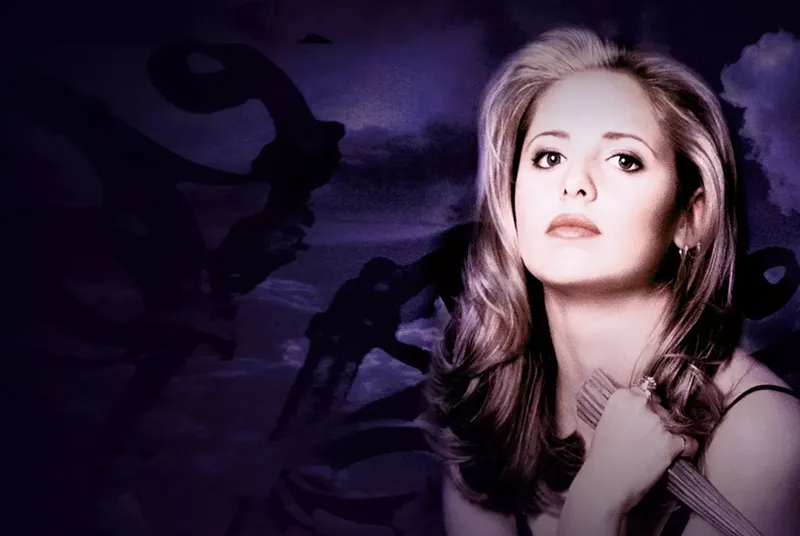
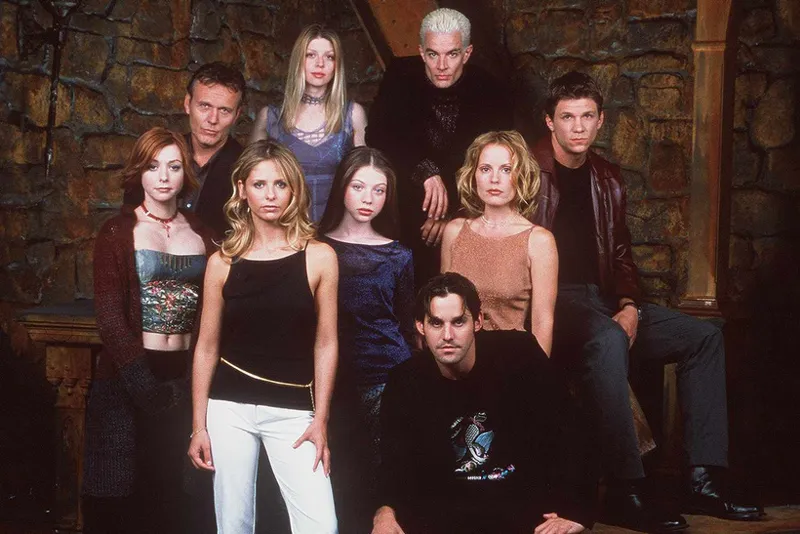
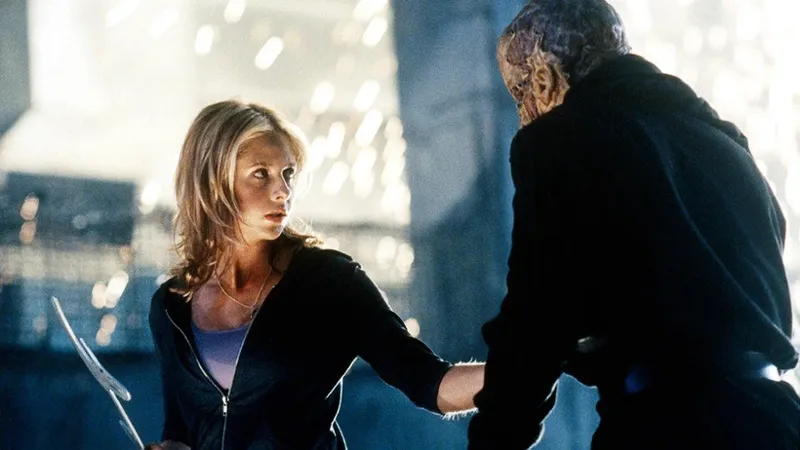
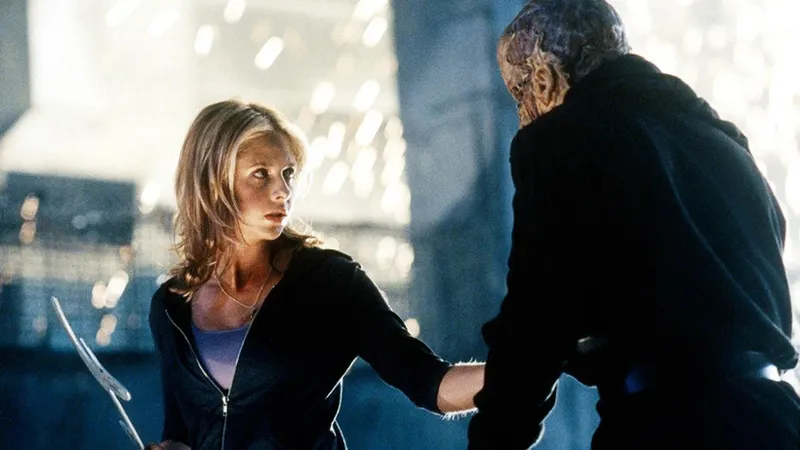
It was announced last week that Disney was working on a relaunch of the beloved 1990s television series Buffy, the Vampire Slayer, with the premiere to be directed by Oscar-winner Chloé Zhao and featuring Sarah Michelle Gellar reprising her role as Buffy Summers.
This is somehow both a little surprising and completely inevitable. It is inevitable because nothing is allowed to stay dead in the modern entertainment landscape. As if to underscore this point, Gellar first hinted at her openness to returning for a Buffy revival while promoting her role on Dexter: Original Sin. Indeed, Buffy has already been revived in multiple formats, including a series of canonical comic books and a sequel podcast that was killed by Disney.
It is also an entirely predictable move from Disney itself. The company’s purchase of Fox was motivated in part by a desire to access its library of intellectual properties to bulk up Disney’s streaming offerings. Prey was a Predator sequel that went straight to streaming. Alien: Romulus was originally intended for Hulu. Later this year, Noah Hawley’s Alien: Earth will bring the iconic xenomorph to the small screen.
The studio that attempted to turn Willow into an expensive streaming show (and then deleted it from their library after the cult hit failed to break out) was always going to see Buffy, the Vampire Slayer as a potentially lucrative nostalgic cash-in. After all, the audience that grew up watching Buffy, the Vampire Slayer on the WB and UPN is now the ideal target market for streaming services. These are now adults who may be ageing out of going to the cinema, but can afford a Disney+ subscription.
If anything, it is a surprise the company waited this long. The market has been flooded with revivals of 1990s television shows like The X-Files, Sex and the City, Will and Grace, Frasier, Mad About You, That ’70s Show, Twin Peaks and Beverly Hills 90210, to say nothing of reboots like Bel-Air or looming revivals like The Nanny. Of course, there are probably reasons for this. Most obviously, Disney’s purchase of Fox only finalized in March 2019, just a year before the pandemic.
Indeed, it seems notable that the announcement of the Buffy relaunch coincides with the sense that Disney has finally got complete control of the assets it acquired with Fox. The studio is still integrating the X-Men into its shared Marvel Cinematic Universe, relaunching X-Men: The Animated Series just last year. The first Alien television series is launching later this year. It’s entirely possible that this Buffy revival came together as quickly as it could have.
Of course, there may be other reasons that it took so long for Buffy to be resurrected. Most obviously, Buffy is the brainchild of Joss Whedon. Whedon was television royalty, and his fingerprints are all over Buffy. It is worth acknowledging that Buffy was relaunched from a failed feature film based on a Whedon script, cementing the idea that much of Buffy’s creative success was down to its writer given that television is traditionally seen as “a writer’s medium.”
Much of what made Buffy so unique came directly from Whedon, including the heavy emphasis on monster-as-metaphor storytelling and Whedon’s trademark “Whedonspeak” which was a feature of his work on other shows like Angel, Firefly and Dollhouse and even films like The Avengers. Whedon was one of the first generation of television auteurs alongside Chris Carter on The X-Files or Aaron Sorkin on The West Wing, paving the way for prestige showrunners like David Chase or David Simon.
As such, the legacy of Buffy is incredibly compromised by the very serious allegations that have been made against Joss Whedon by actors like Charisma Carpenter and Gal Gadot or his ex-wife Kai Cole, not to mention many of the cast and crew who worked with him but spoke on condition of anonymity. According to actress Michelle Trachtenberg, who was a teenager on the set of Buffy, there was reportedly an unofficial rule that Whedon could not be left alone with her.
There is an ongoing debate about how best to deal with work by problematic artists. Obviously, this is a very subjective issue. There is no single right answer. However, that issue becomes particularly complicated when so much of the artist is in the work itself. It’s easy to understand why Netflix cancelled The Sandman, given the extent to which the eponymous character is a stand-in for author Neil Gaiman.
Whedon will not be returning for the relaunch. However, as the creator of the characters and the property, this reboot will still enrich him. He will earn money for doing nothing. Given how much of Buffy was tied up in Whedon’s sensibility, his writing style and his personality which will (rightly) be absent from the relaunch, and the fact that using the title means having to pay him, it does raise a pretty reasonable question about why those involved would not just make a new show.
After all, director Chloé Zhao has a very obvious and honest affection for vampires. In February 2021, it was announced that Zhao was making a “sci-fi western” Dracula movie at Universal. The project seemed to stall, with Zhao “still writing the script” in March 2023. With the release of Renfield, Abigail, The Last Voyage of the Demeter and even Nosferatu over the past two years, Universal may be all Dracula-ed out. Still, why not make that project or something like it?
The answer is simple: more people will watch a relaunched Buffy, the Vampire Slayer (or subscribe to Disney+ for a relaunched Buffy, the Vampire Slayer) than will tune into a new show with a similar premise. It is the cold hard math of the modern marketplace, and it explains why even prestigious television production houses like HBO have gone all-in on franchises and spin-offs like The Penguin, Dune: Prophecy, House of the Dragon, … And Just Like That, The Many Saints of Newark and so on.
There is something bleak in this. Critics like Emily Nussbaum have justifiably argued that Buffy, the Vampire Slayer deserves to be considered as a forerunner to the so-called “Golden Age of Television” that is often argued to begin with The Sopranos. Nussbaum contended that, just like The Sopranos, Buffy came to “represent the new style of TV making” at the turn of the millennium. Buffy was a watershed moment in culture, inspiring a generation of television critics, including Nussbaum.
To put it simply, Buffy does not need or require any sort of follow-up. “I am very proud of the show that we created and it doesn’t need to be done,” Sarah Michelle Gellar stated in December 2022, one year before her conversion on the road to Disney+. “We wrapped that up.” She is correct. What more needs to be said about Buffy Summers? What dangling emotional, character or plot arc demands resolution after two decades?
It is easy to be overly precious about this sort of thing. The Many Saints of Newark did not, in any meaningful way, diminish The Sopranos. On paper, Better Call Saul seemed like a cheap cash-in on the success of Breaking Bad, but went on to expand and enrich it. At the same time, how many of these revivals and spin-offs have that level of nuance and complexity to them? Better Call Saul worked because it had a continuity of creative talent that is (once again, correctly) absent here.
In many ways, this cynicism over the announcement of the relaunch of Buffy, the Vampire Slayer is not necessarily about Buffy, the Vampire Slayer. It is, instead, the end result of a decade of this sort of nostalgic cash-in. After all, it has only been a decade since Matt Singer coined the term “legacyquel” to apply to films like Creed and The Force Awakens, but it somehow feels so much longer. There had always been projects like that, but suddenly they were inescapable.
There was always going to be a point where diminishing returns set in, and the novelty of seeing one’s “old faves” return would finally wear thin. That point is not marked by any specific film or television show. It happens on a case-by-case basis. It is a war of attrition. Maybe it’s “somehow Palpatine returned”, maybe it’s the second Indiana Jones legacyquel, maybe it’s the reverential Ghostbusters movie, maybe it’s the Frasier reboot without the rest of the cast.
For years, television was seen as “a vast wasteland.” It was considered a lesser artform than film, in part because its boundaries were more nakedly defined by commercialism than even film. The length and structure of a television episode was not determined by dramatic necessity, but by commercial mandate. Length and structure are important in defining art. As such, the idea of an ending – and who gets to decide when and how that ending arrives – is important.
One of the key moments in the evolution of television as an artform was when it came to understand the importance of an ending. Historically, television shows ran until the point that they became too expensive, which meant that it was very rare for a show to go out at its critical, commercial or creative peak. Instead, shows typically had to be allowed to go bad, to lose enough of the audience that the studio decided to cancel it. That’s why so many shows run longer than needed.
One of the defining features of the Golden Age of Television was the freedom that many showrunners enjoyed to end their shows on their own terms, rather than allowing them to run so long that they disappeared into obscurity. Shows like The Sopranos, Mad Men and Breaking Bad all have definitive endings where the showrunner decided to stop. Giving that power to a creative – allowing them to decide where a story ends – allows them to give shape to the art.
To be clear, there were always shows that had satisfying endings like MASH, The Mary Tyler Moore Show and even Buffy, the Vampire Slayer. However, this often felt like luck. For every show that ended well, there was another that ran too long like The X-Files, Heroes, The Office, Scrubs and so on. This is arguably still the case on network television. A television show that has a satisfying ending is a rare thing. Realizing the value of that was an important step in the medium’s evolution.
In some ways, this trend is just the end result of the “contentification” of media, which increasingly feels like a very particular form of “enshittification.” It is not about quality. It is not about artistic merit. It is not about satisfaction or narrative or character. It is only about more. It is about the belief that every film and television show exists not with any value of itself, but instead as an object from which future potential value might be wrung.
Nothing is ever truly over. Nothing is ever truly dead, even actors. This is the end theory of art as a service industry, where the goal is to keep feeding the customer what they think they want. This is the appeal of generative artificial intelligence, a machine that cannot make anything new but can recombine existing elements in infinite combinations, just churning out more, more, more, unburdened by anything as trite as artistic integrity.
Buffy, the Vampire Slayer was a beautiful and brilliant television show. It spoke to an entire generation. It also had an ending, and that ending is part of what made it so wonderful. It’s worth thinking about that before exhuming the grave and sinking one’s fangs into the corpse, in the hope of one last hit.
Comments (23)
The “theory of art as a service industry” is a lens that’s I’ve felt but hadn’t articulated. Thank you, I needed that language.
Yep. When I stated looking at it that way, it made a lot of sense.
But see here's the thing: the original isn't some unassailable classic, unfortunately it's a TV show and comic book series that contains Xander. One of the worst characters to ever exist in fiction. Particularly because: unlike the likes of Freeza, Walter White, and Satan the Adversary: Xander is supposed to be a "relatable hero who's usually right, ACTUALLY." Oh and they happily took money to do an anti-drug PSA episode, left the evil mantis teacher plot thread hanging, and had the entire Riley season. In case the "Xander exists" point wasn't enough. I don't brook with instant jaded cynicism when something comes back after an extended hiatus. Yeah, it usually sucks, but between Mad Max: Fury Road, Twin Peaks: The Return, and X-Men '97, the hits HIT HARD. And while "continuity of creators" is all well-and-good I don't think it's the "end all be all." Regardless of creator's current rep.
I think if you are talking about the two recent "Mad Max" sequels and "Twin Peaks: The Return", the involvement of the original auteurs is a major part of why those projects worked, and why they felt like organic extensions of the original projects. Which is obviously (and correctly) off the table here. (I thought "X-Men '97" was fine, but I think it's a niche revival. It's not a project with comparable cultural import to the other two examples or the original series.)
They should talk a leaf from Yahtzee's suggestion and instead of bringing back beloved shows for an unneeded last gasp, remake and revive shows that got cancelled before their prime or were a mess in the first place. Heck, X-Men '97 was quite beloved for picking up right where they left off with an actual animation budget.
Fuckin the zombie corpse of last century dead media
Undead media.
Ugh this whole situation is so sad and gross. I can’t wait for the talented people hired to do this get blamed for it’s underperformance, or for Disney to hold off on something vibrant like Buffy was for the same reason (as Whedon and Gaiman enjoy the millions they made).
Yep. Though I don’t know they’ve been named as showrunners, the Zimmerman Sisters who are writing the pilot ran “Poker Face” for Rian Johnson, so they’re obviously talented. (They wrote the Gordon-Levitt/Hsu episode, as I recall.)
I'm honestly tempted to make a joke that the revival/reboot/whatever may be worth it if it means the whole Buffy 'Season Eight' comic-series is now retroactively invalid, since while it had a good start, the reveal of who the 'Big Bad' was has always really annoyed me in terms of continuity... but beyond that, this does feel like, to quote Rick Sanchez, 'a shameless cash-grab', yes.
To be fair, that’s always the way, also happened with the “X-Files” comic series, which was continuity until the show came back.
Still putting off that Section 31 article I see.
To be fair, I don’t know there’s anything to say about that. (It’s bad, but not in especially interesting or illuminating ways.)
The plot of the last couple seasons of Buffy hinged on what a mistake it was to bring back someone who had died and moved on to a peaceful afterlife. There might be something to learn from that.
Oh, but then we’d have to engage with the content of the “content.”
I had mixed feelings about the ending to Buffy and Angel myself so i'm all in favor of the revival frankly. If only for the possibility of bringing back Tara, fridging her was one of the biggest sins in television history as far as i'm concerned, Whedon and his writers really whiffed big time on there and failed to meet the moment so if this revival can fix that that alone justifies it's existence for me.
So, when will we get 'Cultural Fracking' shirts? What's kinda weird is though that they went for Buffy of all things and not, let's say... Firefly
Honestly, kinda glad “Firefly” remains largely untouched after “Serenity.”
"It is not about quality. It is not about artistic merit. It is not about satisfaction or narrative or character. It is only about more." Mhm. They spend so much money on obvious crap. The business genius at play is beyond me.
Well, depressingly, it works. People pay to see these movies and shows.
I was a huge Buffy and Angel fan at the time, watching each new episode and spending hours dissecting each show, both in person and online. Still, I do not see the need for a revival. What’s to be explored? Buffy leading a new Slayer or Slayers could be interesting, but that was already done in the final season, and not particularly well. Also, it was the dynamic amongst the main characters that I enjoyed the most, especially as the series progressed. I’m pretty sure that the other actors from the original series won’t be involved, and Buffy without Willow or Xander or Giles just doesn’t work for me. Truthfully, I found Buffy to be the least interesting character on the show. She’s not the worst one; that was Dawn, and I challenge you to find a Buffy fan that disagrees. Moreover, I don’t trust Zhao with the production. The Eternals was terrible. As you said in the article, Whedon had his fingerprints all over the show; it was entirely his voice and worldview, presented as a feminist story, but through a male lens. That distance allowed the show to explore darker themes than have been discussed otherwise. Of course, Whedon’s preachings turned out to be bullshit, as such declarations often are.
I honestly thought they’d already done this and it had failed, but I might be thinking of Charmed? In any event, this seems to be doomed to failure because anyone invested in the Buffy-verse has already devoured the books, comics etc and in many cases decided to let it go because of the weirdness that came with it. I’m sure it’ll pull good numbers initially but sadly I reckon this’ll be a forgotten footnote very soon. I do appreciate your takedown of Whedon in this though, it really needs to be better known.
Whedon is one of those guys like Gaiman, where it really stings, you know? And they are formative writers for me. And it makes it quite hard to go back to the things that they did that I loved, because so much of them is in that, if that makes sense?