

Retrospective: Shadow of a Doubt/Suspicion
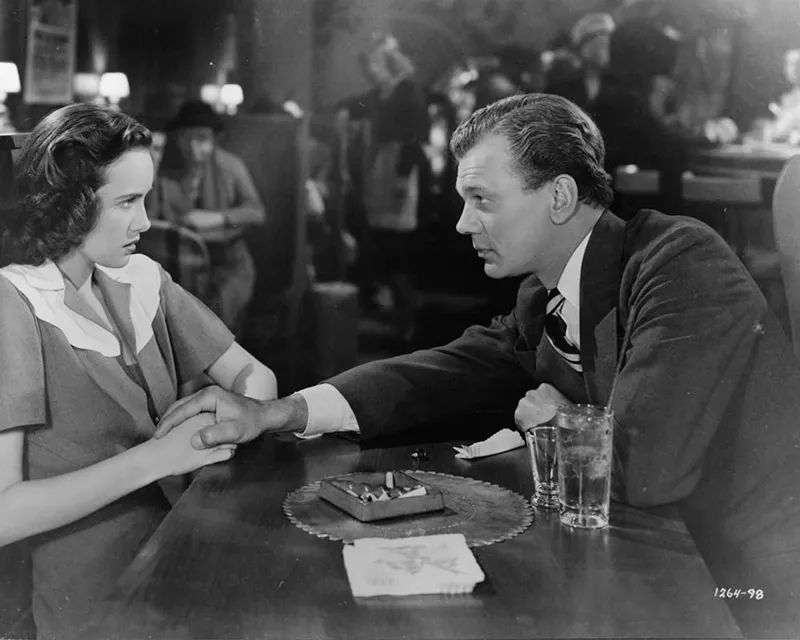
Shadow of a Doubt begins with two intertwined souls bedridden by unhappiness 2,900 miles apart. Charlie (Teresa Wright) and her Uncle Charlie (Joseph Cotten) are lounging in bed while older people stand over them asking what's wrong in shots that mirror each other (Hitchcock flips the shot when he shuts to Teresa Wright's Charlie, positioning the characters so they look like they're at opposite ends of the same room). Life in different strata of class society crushes both Charlies. When they meet, they have something of a psychic link — kindred souls struggling with the same ennui.
There's an incestuous tinge to their relationship — an obsessiveness that remarkably sneaked past the Hays Code in 1943. The first half of the movie is a meticulously drawn portrait of class envy and emotional incest that comes to a predictable (though not inappropriate) crescendo when Charlie discovers why her uncle is on the run. Sadly, the movie chickens out at that point, dropping its story about a young woman being slowly victimized by her lecherous uncle into a game of Clue. A better movie would have made Charlie complicit in her uncle's scheme for at least a little while, but Charlie becomes an innocent waif who loses any agency once she commits to being a good girl. The ending in particular is just embarrassing — a waste of what could have been a great movie.
Oddly, Hitchcock fared better on similar thematic grounds a couple years earlier in Notorious. The story is similar — a nefarious bounder (Cary Grant) targets a well-off woman (Joan Fontaine) and proceeds to gaslight the fuck out of her, keeping her trapped into a patriarchal class society that grants women no egress except death. Grant plays the character like Sean Connery's Bond: a malevolently charming cad who knows women are too afraid not to give him what he wants. Fontaine's character is smart and resourceful, but she can only do so much against the web of deceit woven by Grant's character. Many women know this game: loving a man who expects his girlfriend to be his mother, watching him lie and lie again about getting a job, withholding basic necessities from her, the flood of gratitude after he gives her what she's needed the whole time, only after creating even more problems. The RKO-imposed ending only marginally deflates the movie — Hitchcock, Grant and Fontaine do their damnedest to sell it, and it's just ambiguous enough to work. Anyone who's seen The Sopranos knows that the story of violence is a mobius strip — a saga of repetitive violence and emotional violations that seems to go on forever.