





A Rocket Casts A Shadow On Its Own Exhaust Trail
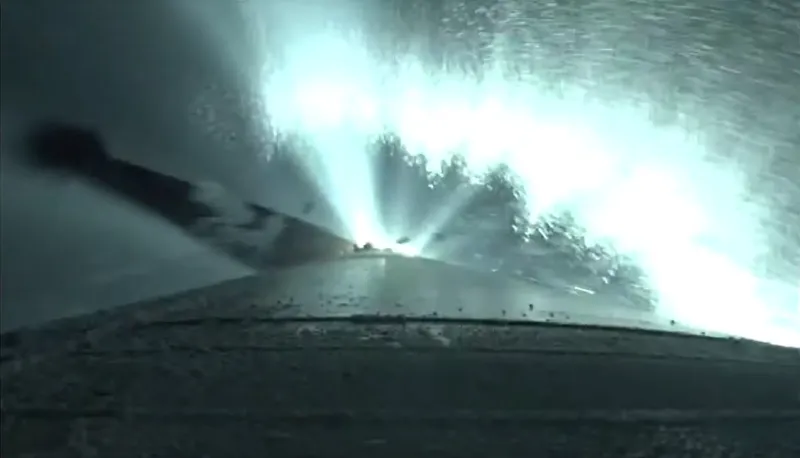
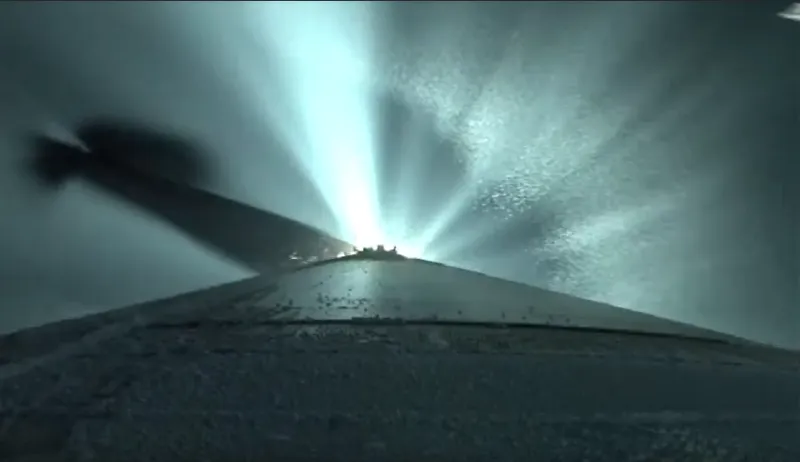
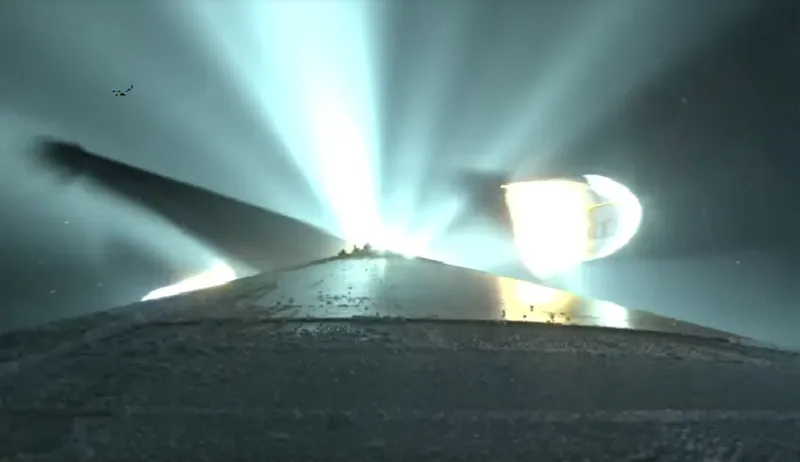
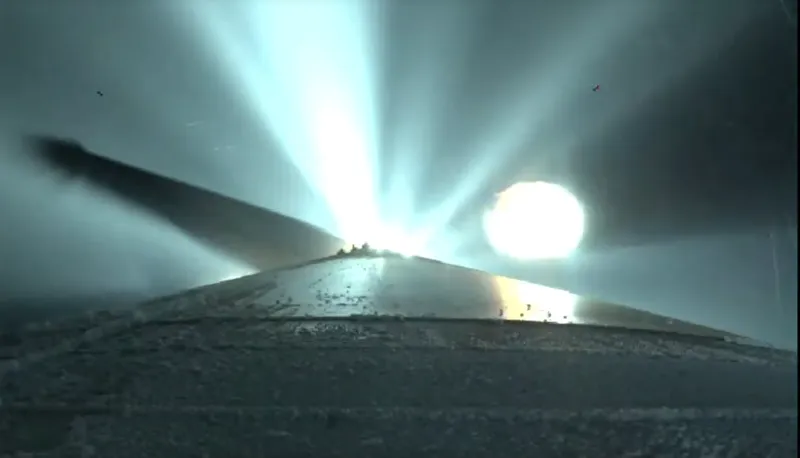
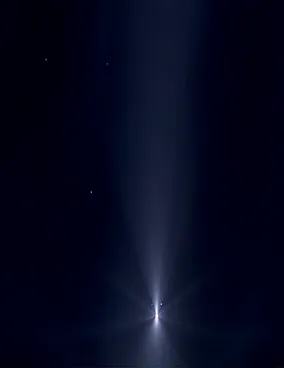
This morning's AEHF-5 launch by the ULA was rather spectacular, there were some minor delays and the rocket lifted off about 40 minutes before sunrise. This lead to a highly visible trail which was visible from hundreds of miles away, but the on-board camera also recorded something I don't remember seeing in a launch.
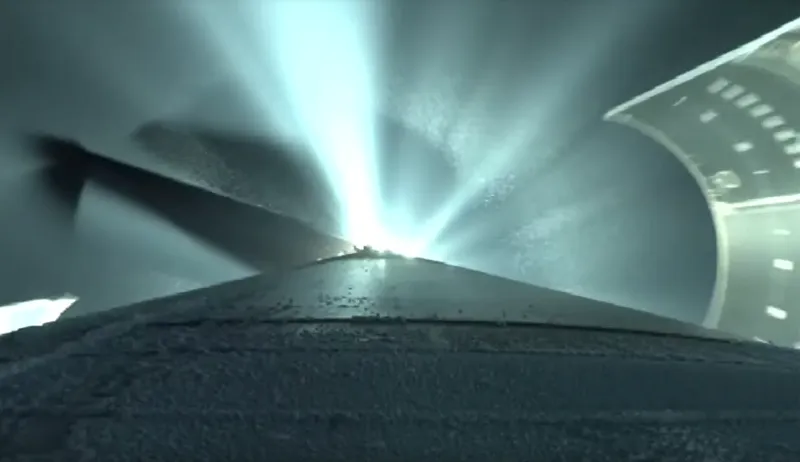
After the rocket got high enough to be illuminated by the sun the exhaust was illuminated, because the rocket was at high altitude the exhaust expands rapidly forming a conical shape that was able to resolve the shadow of the rocket. If you look carefully you can see the profile of the rocket with the fairing being wider than the booster core.
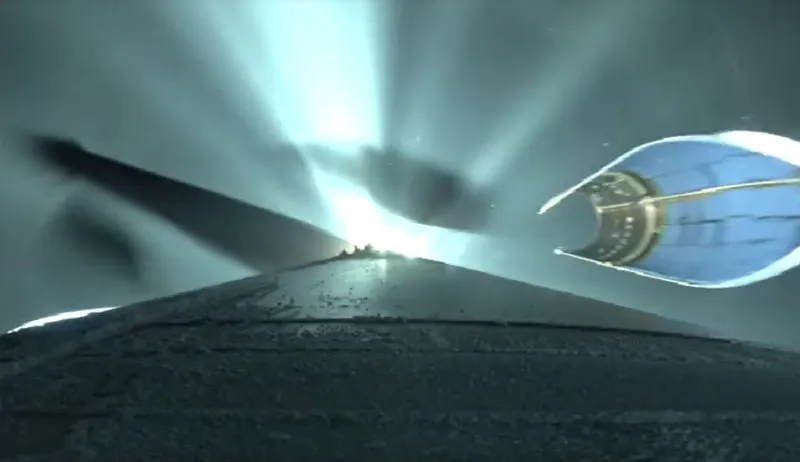
During fairing separation we can see the shadow of the massive Atlas V fairings as they fall off the rocket, and when one of them falls through the plume it stops radial flow, so we see another dark region where the fairing has blocked the exhaust, so there's nothing to reflect the sunlight.
I have a small video clip of it here if you don't want to dig through the full launch broadcast:
https://twitter.com/DJSnM/status/1159409309962256384?s=20
There were of course plenty of photographers on the ground who caught their own versions
https://twitter.com/search?q=%23AEHF5&src=typeahead_click&f=image
https://twitter.com/johnkrausphotos/status/1159448916708024320?s=20
Comments (4)
Hi Scott I would like to ask you a question. I hope this is the right spot for it. When Virgin Orbit launches its rocket from under the belly of the 747, is the only benefit of that the fact that the first 600mi/hr or whatever of delta-v is in the bag, or are there other benefits to the approach they take. I’m assuming there must be other benefits because otherwise that seems like a really hard and complicated way to do nothing more than a little bit of initial acceleration
This is super cool! Thank you for pointing it out!
I think it might just be a visual effect of the shadow angle, but it's hard to be sure, I've never seen any official comment on the timing.
Looks like the two fairing halfs are separating a few moments apart. Why does that happen?