



My Favourite Thing to Paint With Oils
Out of all the surfaces we encounter on miniatures, there’s one I find more challenging and subtle to render than almost any other. No, it’s not metallics although they’re a close second.
I’m talking about skin
Well-painted skin tones have humbled me time and time again in my journey as an artist. There are several reasons why skin is so tricky and therefore so rewarding when you get it right.
Firstly, skin is translucent.
It takes on different tones across different parts of the body. The anatomy beneath it, the variation in skin thickness, and the subtle volumes of the human form all affect how the surface appears. Compare that with something more opaque and uniformly coloured, like a piece of cloth, and it’s clear why skin becomes complicated.
Add the enormous variation in skin color between different people, and the idea of one universal “skin tone” starts to dissolve quickly. Artistically, almost any colour can become part of a skin tone.
That complexity is one of the reasons I enjoy painting skin with oils.
Oils make it much easier to adjust subtle colour shifts without rebuilding the entire transition. I can introduce more red, violet, green, or yellow directly into the wet surface and then soften it into the surrounding colour.
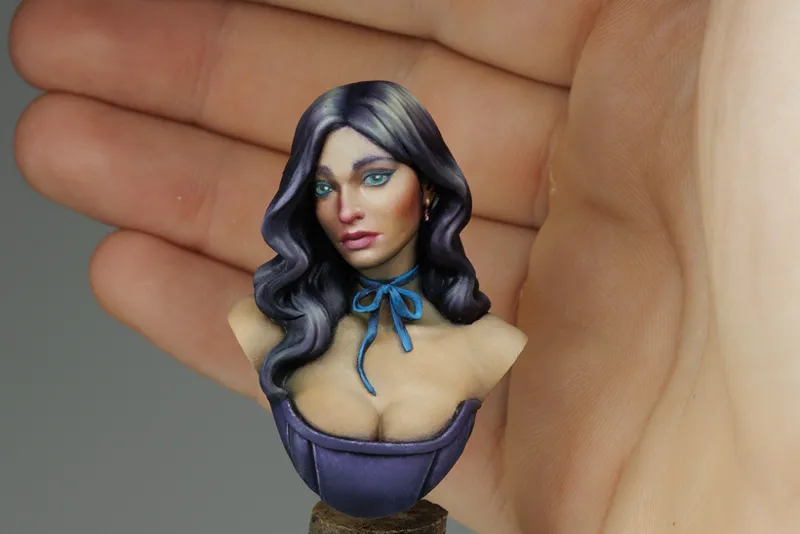
With this figure, I add Alizarin Crimson, a rich, slightly cool red to push more blood and warmth into the darker midtones around the centre of the face. In a few brushstrokes, I can create a variation that would otherwise require many careful acrylic glazes and adjustments.
The ability to keep changing the surface while preserving the blend makes oils particularly well suited to faces. But it still requires control.
You need to understand where to place the colours, how much paint to use, and when to stop blending before all the variation disappears.
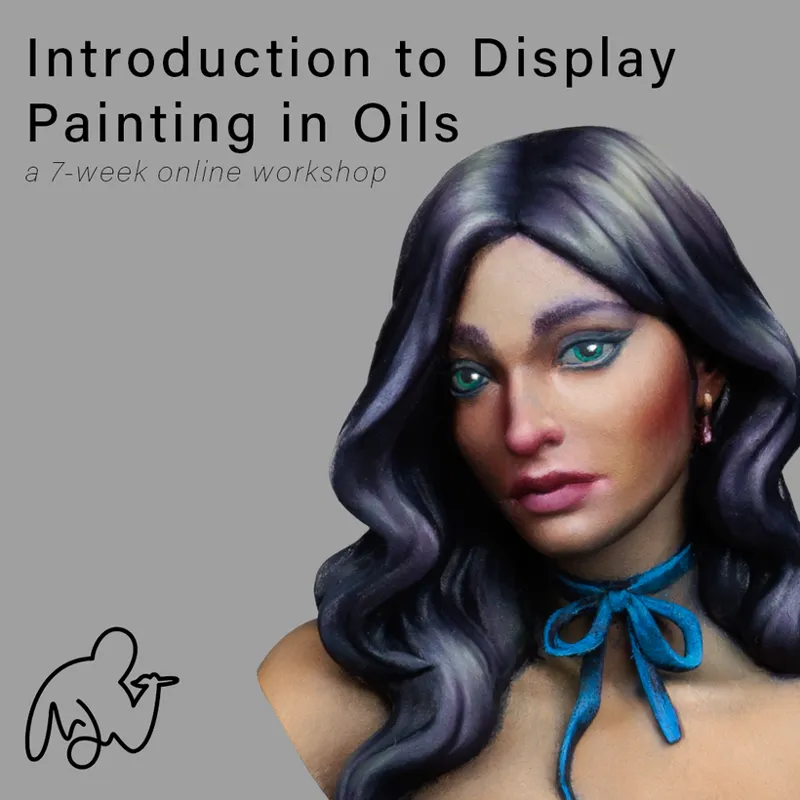
That’s something we spend a lot of time on inside Introduction to Display Painting in Oils.
Over seven weeks, we go through the complete process of painting the workshop bust - from the first color mixtures and skin layers to the hair, fabric, and final details.
You’ll also be able to submit your progress and receive feedback as the face develops. That means you’re not left trying to decide alone whether the problem is your colour, your values, your placement, or the way you’ve blended the surface.
If you’d like to learn how I approach convincing skin tones with oil paints, you can read more about the workshop below.