

These Colors Are Ruining Your Painting
There’s a trap that can happen when painting miniatures.
It can weaken the impact of a paint job especially when we’re trying our hardest to create the smoothest blends possible.
The obsession with smooth blends can lead to a flat and timid-looking result. Smoothness is beautiful, but it only works when the contrast underneath it is strong enough. As we blend neighbouring colours together, we often reduce the local contrast between them.
Push that process too far and the surface becomes muddy, overworked, and overblended.
The midtones become desaturated. The shadows become washed out and too bright. And although the transitions may be smooth, the miniature loses its structure and impact.
A good paint job needs a balance.
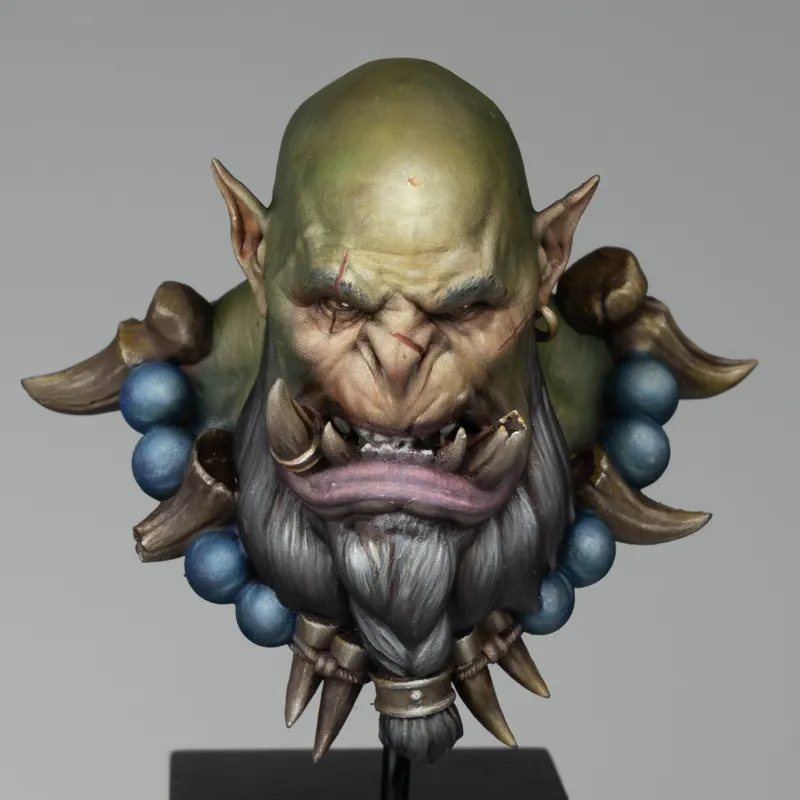
The values and contrasts need to be clear, while the final finish remains polished and controlled. When I paint with oils, I constantly revisit the surface and push that contrast again. With the Orc bust above I balanced the smooth blends of oil paints with scars and textures in the skin.
I added stronger highlights. I reintroduced deeper shadows. Then I blend the borders without completely destroying those decisions. This back-and-forth is a key part of the process. It doesn’t work if you become timid and too careful.
You have to be willing to add a thick, bold mark to a surface even when that surface was already perfectly blended. Luckily, with oils, it’s relatively simple to soften the transition again afterwards.
The difficult part is often recognising what the actual problem is.
Is the colour too desaturated? Are the shadows too bright? Is the highlight too large? Or have you simply blended everything for too long?
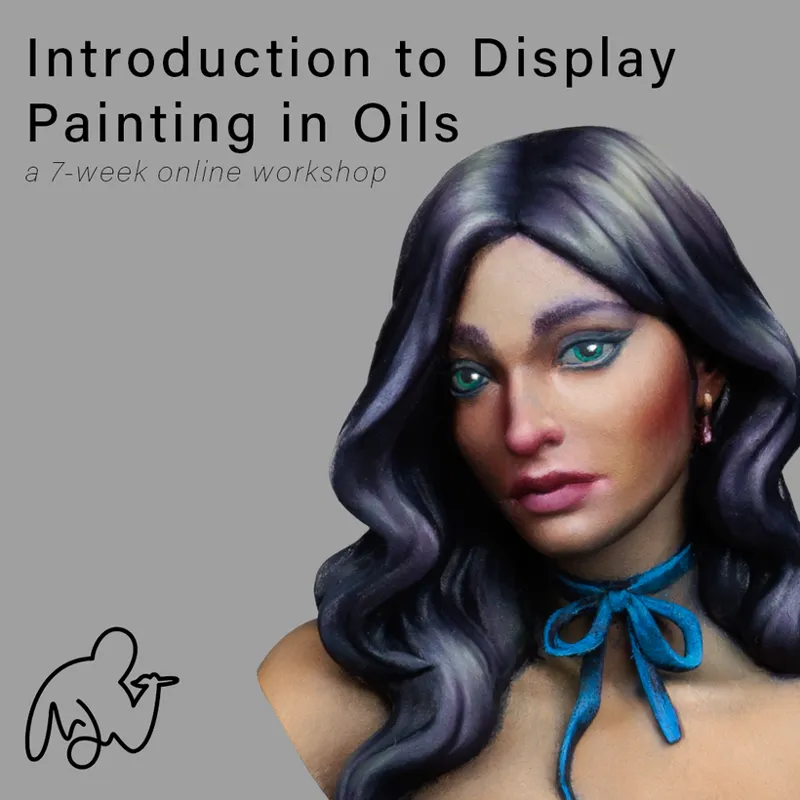
That kind of diagnosis can be difficult when you’ve spent hours staring at your own miniature. It’s also exactly the kind of problem we work through during the feedback streams in my online workshop, Introduction to Display Painting in Oils.
Students can submit their progress, and I’ll show them where the contrast has been lost, what I would adjust, and how to improve their work.
Sometimes I’ll use a digital paint-over to make the correction clear directly on the student’s own model.
If you want to learn a repeatable process for building, blending, and then restoring contrast with oils, you can read more about the next cohort here: