
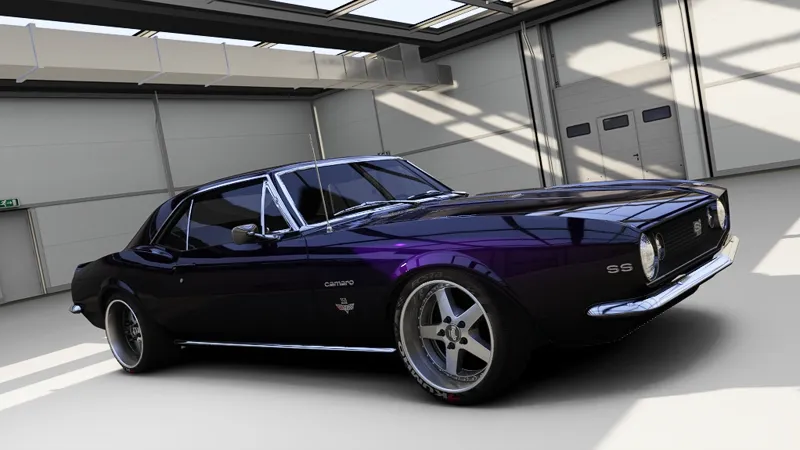

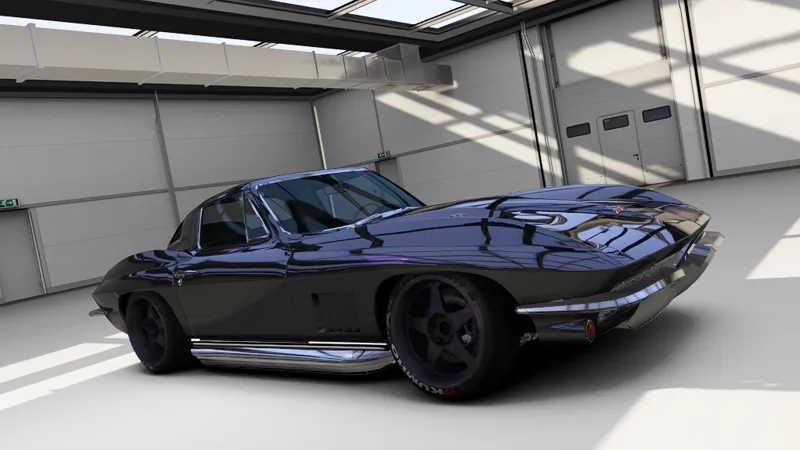


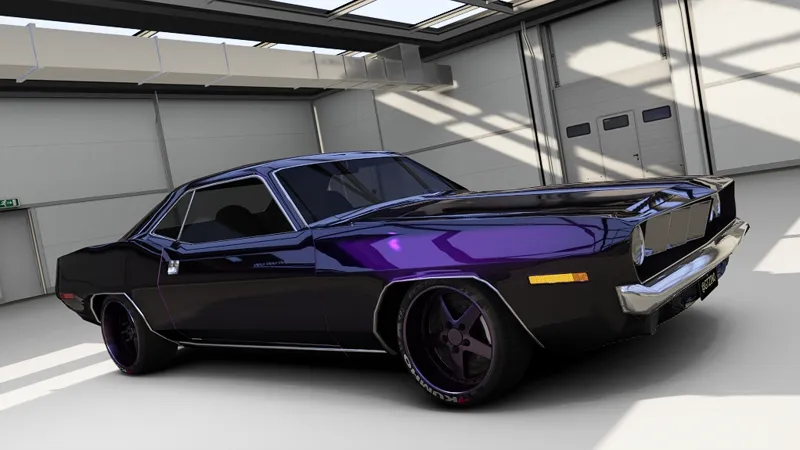

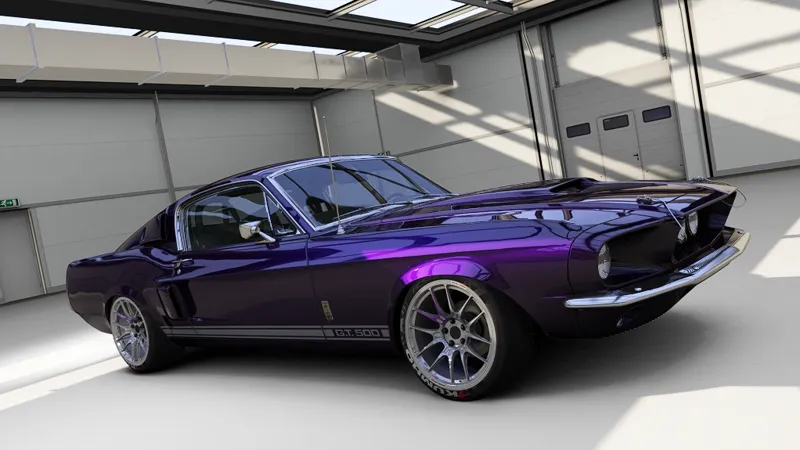

U.$.Drift Mk2 : Current Progress
Had GPT Write Some Information on Things I've Been Focusing on For the Cars .
🛠️ What You’ll Feel Behind the Wheel
- Rolling into a corner and feeling the front end push before it hooks
- Rear squat under throttle that actually helps rotate the car
- Subtle weight shifts giving feedback through the wheel
- Losing grip slowly, so you can save it if your hands are fast enough
- Power transitions that feel organic, not instant or arcade
This pack is designed for people who want to improve.
- You’ll need patience. You’ll need mechanical sympathy.-
But if you want to understand what it feels like to drift a real 1960s-1980s street car—with all the quirks and joy that come with it—
X10DD.Muscle is built for you.
Factory curb weights, COSMIC suspension geometry, and welded rear axles give them a weighty, moment-driven feel you won’t find in any other pack.
🏁 Built to Teach Control, Not Forgive Mistakes
- Each chassis retains its full factory weight, anywhere from 1500–1800kg, meaning momentum matters.
- Initiations require commitment.
- You’ll feel the car roll into angle—not snap—and you’ll need to use weight transfer, throttle modulation, and proper countersteer to keep things locked in.
🦵 Drivetrain Weight Transfer is Real Now
- Clutch kicks feel like hits.
The car jolts when you dump the clutch, just like in real life. It’s not instant angle—there’s a moment of torque delivery delay, weight squat, and then grip loss.
- Throttle isn’t digital anymore.
Light throttle at low RPM doesn’t instantly spin wheels—it leans into torque.
Big throttle surges the car forward with force.
- This means smoother throttle = better grip, and poor throttle = spinouts. You’ll feel the car communicating through throttle.
🛞 60° DriftPro Front Kits
To compensate for heavy chassis, each car features a fictional aftermarket 60° drift angle kit.
It allows big steering lock without compromising transitional stability.
Rather than feeling like a “pivot car,” these feel like you’re muscling real steel sideways.
Expect:
- Faster steering response
- More angle before max lock
- Predictable return-to-center feel
- Minimal oversteer correction “snap-back”
🔩 Double Wishbone & Welded Axle – Suspension You Can Feel
- These cars use period-correct geometry:
- Double wishbone front gives precise camber gain and steering feel
- Rear Welded Axle introduces a solid, planted rear end—but also binds under throttle, just like a real street car with a locker or spool
You’ll feel it:
- Over bumps, the rear wants to lift slightly, not float
- Power-on transitions are rougher, heavier—more real
- Entry grip is higher, but rotational inertia is slower, requiring better weight shifting and line choice
- Spring rates, ARBs, ride height, and CG are set up to mirror stock behavior, then tuned just enough to allow drift driving—without losing that big-body muscle car - sway and rebound you’d expect from a 60s street build.
⚙️ Drivetrain Realism, Not Simcade Power
- Each power curve is based on actual dyno data or period-correct simulations.
- Turbo cars make power late. NA cars rev clean but fall off top-end.
- Torque kicks in at the proper RPM, and gearing reflects original transmission setups (or realistic aftermarket swaps like T56 6-speeds or 4L80Es).
- This affects your entry speed, clutch behavior, and how much torque you can put down mid-drift.
Cars don’t overperform. They just reward driving well.
Tire Wear & Damage Effects
- These cars include enhanced tire visual and grip wear behavior:
- As tires degrade, the tread pattern visibly fades, layer by layer.
- Long drifts or burnouts result in progressive loss of definition, showing just how far you've pushed your set.
- Even flatspotting or harsh slides can leave visible banding or uneven tread, all synced to your tire health.
- The wear isn’t just visual—grip and balance degrade with abuse, so you’ll feel the car begin to float or understeer when overworked.
Mesh-Based Visual Body Damage
- Unlike texture-only damage systems, these cars feature actual mesh deformation on key panels. That means when you make contact:
- Fenders, doors, bumpers, and quarter panels physically dent and bend
- Scrapes and taps don’t just look painted on — the surface shape actually warps
- Tandem contact shows up in replays as crumpled corners, not just scuff marks
- The damage is persistent, dynamic, and based on speed and contact angle
- This creates a more immersive experience—especially in door-to-door runs—where your car begins to look like it’s been through a session. Subtle taps leave -
- scarring, while big wall hits fold bodywork just like real drift event carnage.
Drift hard. Show the scars.
✅ COSMIC Suspension (X10DD):
- Built using real-time, fully articulated arms, pivots, kingpins, sliders — like a real car
- Every joint in the suspension physically exists, and moves in 3D space under load
- Camber, caster, and toe respond to compression and angle exactly like they would IRL
- The car loads up properly before sliding, giving a progressive feel and better control at the edge
- Weight transfer now feels like mass shifting—not just a grip number changing
- You feel the car rotate under you, not just pivot off the center like a floaty boat
End result:
Transitions feel heavier. Countersteer responds slower—but more predictably.
You can modulate throttle mid-drift and actually catch the car by feel, not guesswork.
🛠 What That Means in Practice:
- You can flick the car with weight transfer and feel it respond like a real 1600+ kg chassis
- Sidewall flex, roll, and dive feel proportionate to your speed, input, and grip level
- You get punished for poor technique, but rewarded for real-world timing and car control
- Close tandems become more natural, because the cars behave like actual vehicles—not like placeholder geometry on rails
- So in short: COSMIC suspensions feel like you’re driving an actual car.
Not a simulation of car math—but a simulation of car mechanics.
If you’ve never used or spent the time to set up your ffb for extended physics, this will feel heavier, slower to react, but way more intuitive and consistent once you adjust. It's what finally brings drifting in Assetto closer to the real thing.