
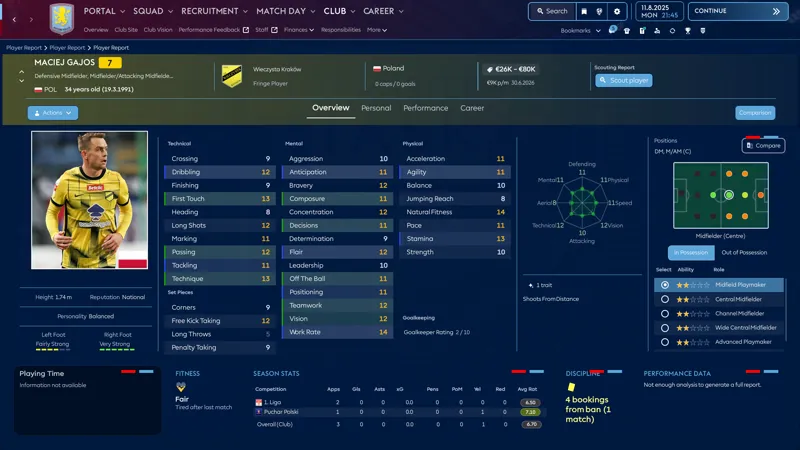
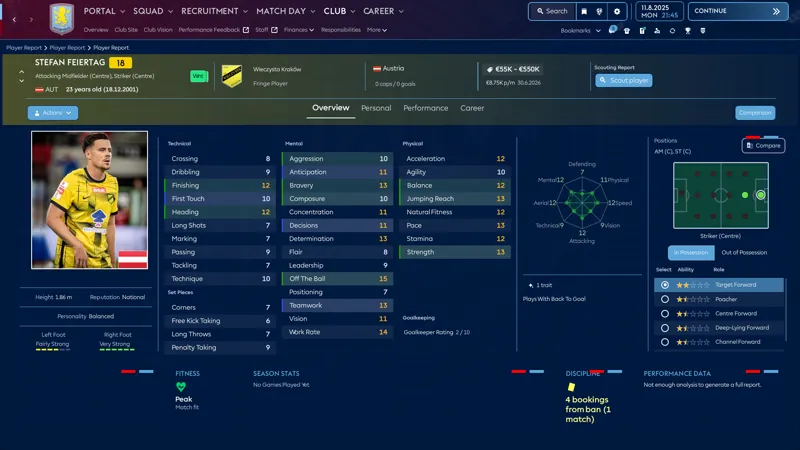
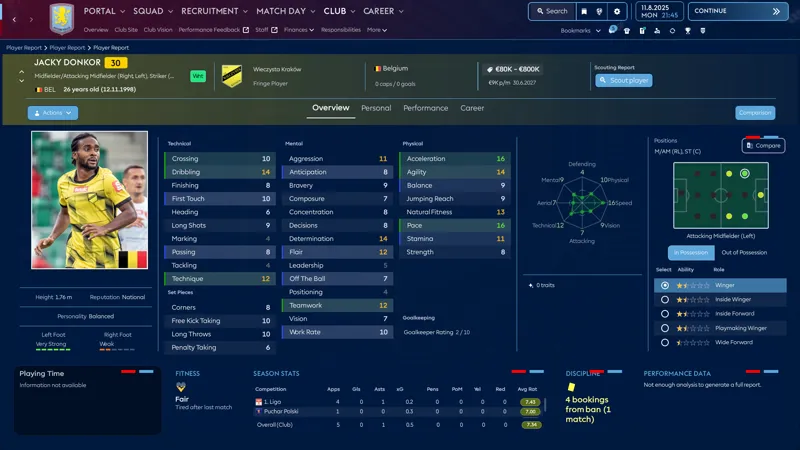
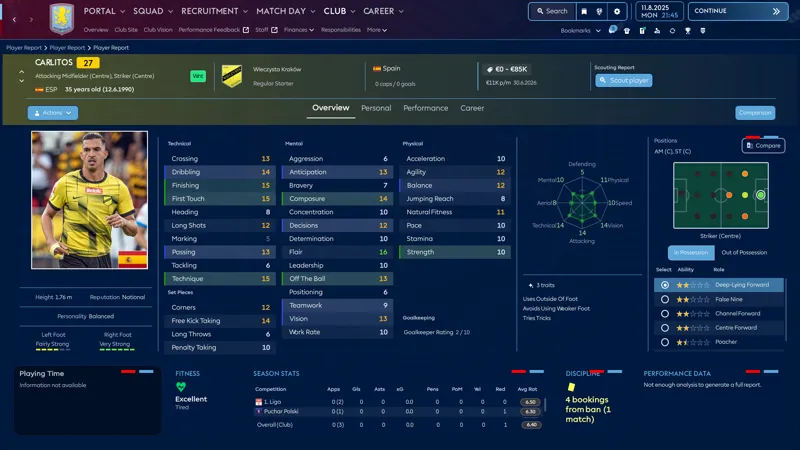
Wieczysta Kraków
Wieczysta Kraków is indeed one of the most unusual and dynamic projects in Polish football in recent years. I checked the latest information from official sources (Polish and English Wikipedia, the club’s official website kswieczysta.com, and fresh 2025–2026 news from Gol24, Przegląd Sportowy, Gazeta Krakowska, and Transfermarkt). Here is the full picture: where the club came from, who owns it, what kind of project it is, and what their real ambitions are. Everything is based on facts, with no speculation.
Where the team came from (history before 2020)
The club was founded in 1942 in the Kraków district of Wieczysta (at that time a small suburb of the village of Rakowice near Kraków). The idea first appeared in 1936 — local residents created the team “Wieczyszczanka”, but it only played friendly matches and quickly disappeared due to lack of money and infrastructure.
Officially, the club was born during the German occupation on the initiative of Edward Ignaszewski: Poles secretly played football on meadows because organized sports were banned. After the war, Wieczysta competed in lower regional leagues (Class B/A, district league, IV league). The highest point was a short spell in the III league in 1966–1968. In the 21st century the club drifted between IV–V–VI leagues; in 2014/15 it even dropped to A-class (7th level). It was a typical small local suburban club with a minimal budget and no serious ambitions.
Who the owners are and what happened in 2020
In June 2020 the club came under the control of Kraków businessman Wojciech Kwiecień. He is the owner of the large pharmacy chain “Słoneczna”, one of the richest Poles, known as the “king of pharmacies”. Kwiecień paid off all the club’s debts (hundreds of thousands of zlotys) and began investing serious money in players, coaches, and infrastructure.
Formally he is not always listed as the 100% owner in the registry, but he makes all the key decisions (president or actual owner — this is his project). Before Wieczysta, Kwiecień tried three times to buy Wisła Kraków (in 2018 he even carried out an audit), but refused because of “skeletons in the documents” and huge debts. He then chose Wieczysta as a “clean slate” — his local club from his “small homeland” in Kraków.
What kind of project this is
This is a classic “one-boss” (wodzowski) project of a single wealthy man. Kwiecień is building the club “from scratch” as his personal ambitious business project:
massive investments in the squad (former Polish national-team players, legionnaires with Champions League and top-league experience);
high salaries (among the highest in the I league);
frequent changes of coaches (Smuda, Peszko, Cecherz, Moskal and others);
infrastructure development (plans for a new stadium, because the current one on Chałupnika 16 does not meet Ekstraklasa requirements).
The club is nicknamed “FC Hollywood” or “the rocket” — rising from the lowest leagues to professional football in 5–6 years. This is not a municipal club or a fan project, but exactly the model “one owner + big money + quick results”. Kwiecień invests his own money because he loves football and wants to make Wieczysta the top club in Kraków (competing with Wisła and Cracovia).
What their ambitions are and where the club stands now (April 2026)
The ambitions are clear and openly stated: to reach Ekstraklasa (the top division) as quickly as possible and become a stable force there. Kwiecień does not hide that he wants to be “number one in Kraków”.
Results under his ownership:
2020/21 — won all 28 matches in the district league (216:8), promoted to IV league.
2021/22 — champions of IV league + playoffs to III league.
2023/24 — champions of III league, promoted to II league.
2024/25 — 3rd place in II league + playoff victory → I league from the 2025/26 season.
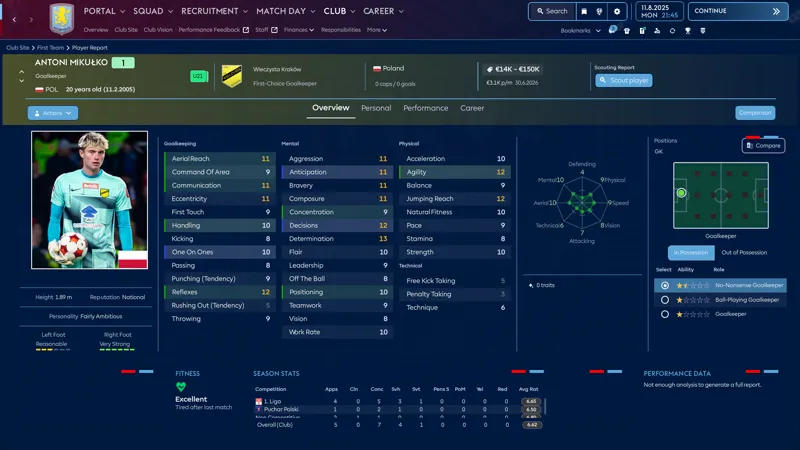
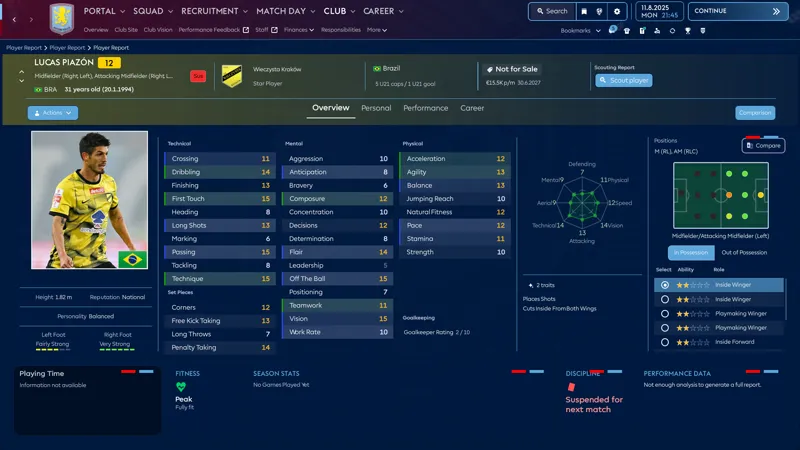
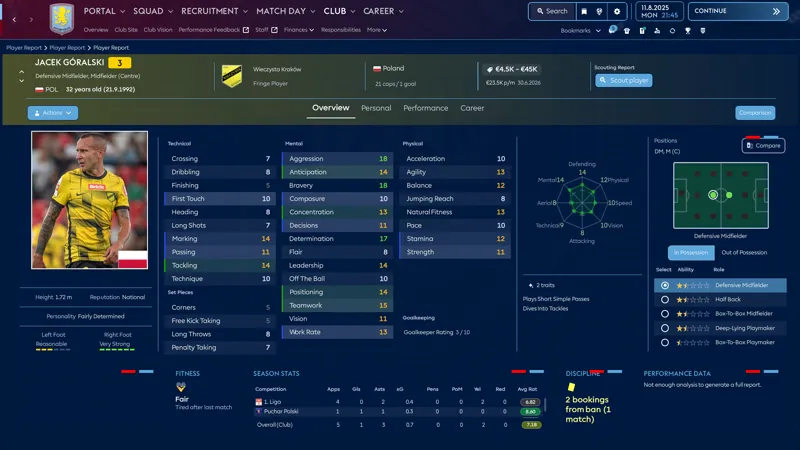
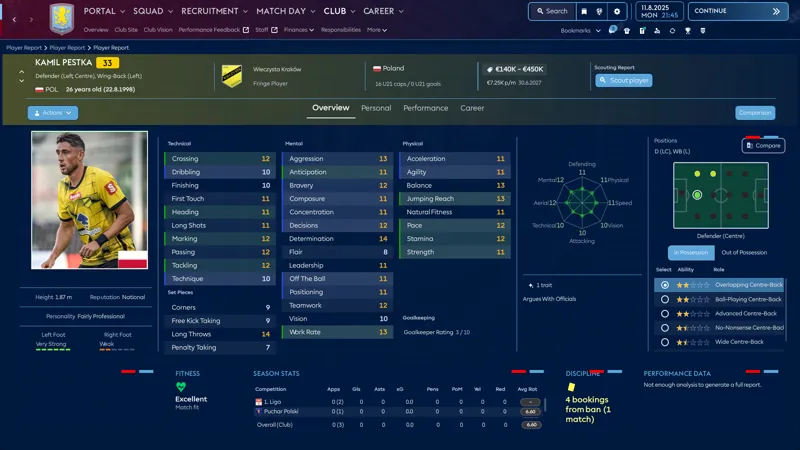
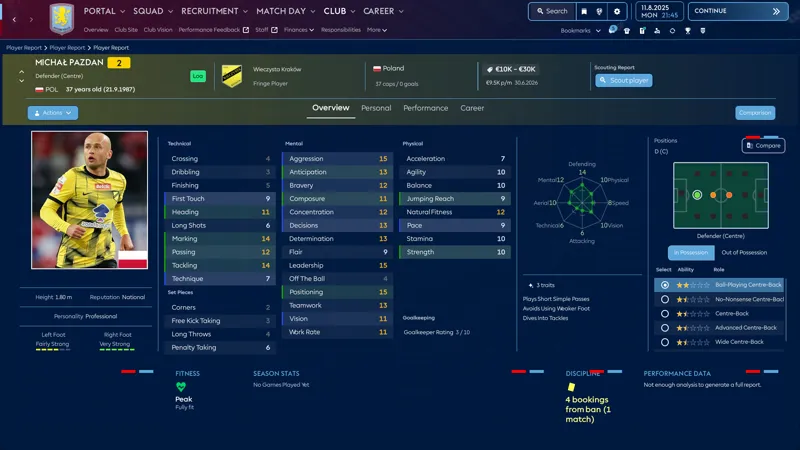
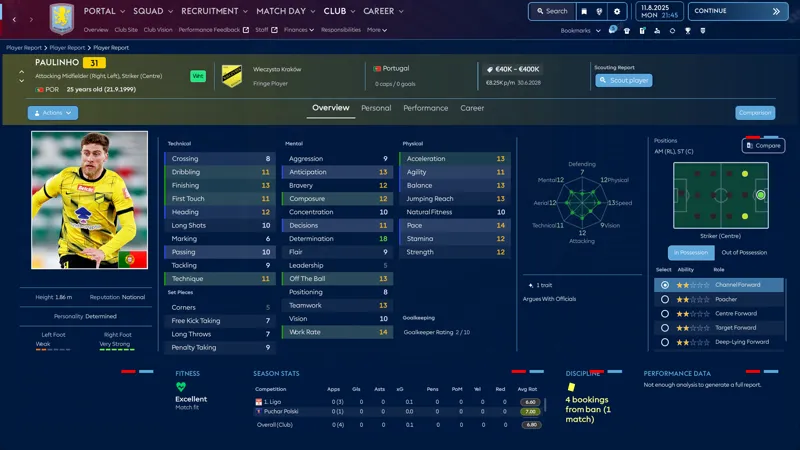
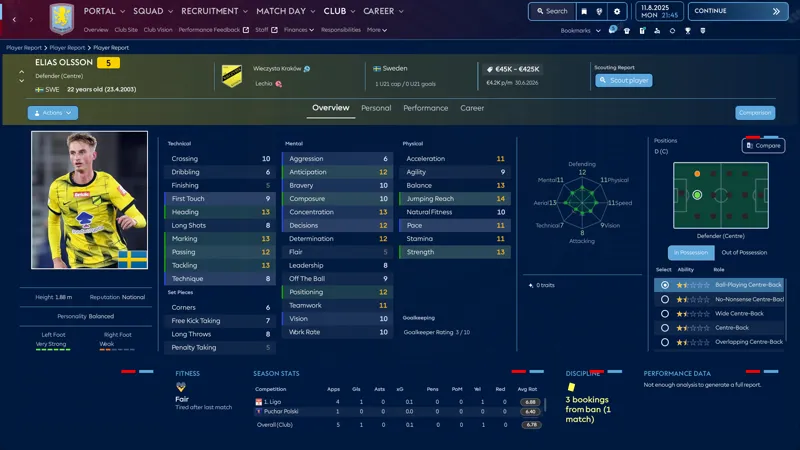
Now (2025/26 season) — playing in Betclic I league (spring part), fighting for direct promotion or playoffs to Ekstraklasa. The squad has been seriously strengthened (Pazdan, Góralski, Trąbka, Piazon, Knežević and others); the budget and transfers are among the highest in the league.
There are also plans for a new stadium (the current one fails Ekstraklasa licensing, so matches are sometimes played at Wisła’s arena or in other cities). Infrastructure is being developed in parallel with the team.
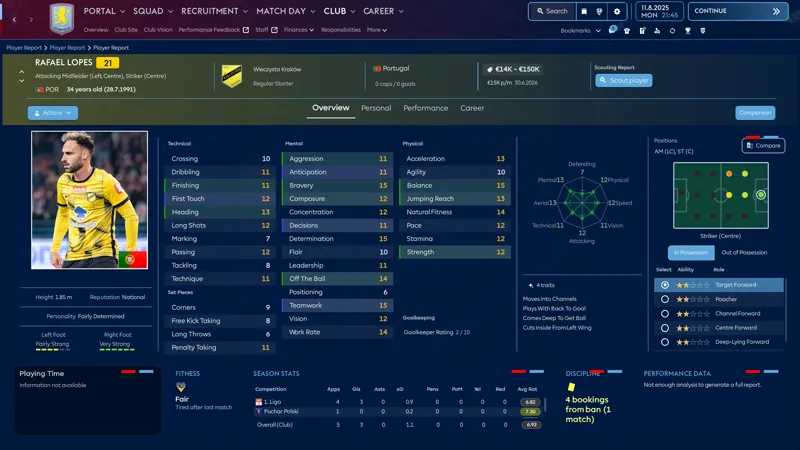
Why the squad is so interesting: it is a mix of experienced “veterans” (former national-team and Ekstraklasa players), promising young Poles, and quality foreign legionnaires. Everything is geared toward big goals — not just signing stars, but building a team that is ready for Ekstraklasa straight away.